What is Voltage Stability?
Voltage** stability** is the ability of an electrical power system to maintain acceptable voltage levels at all buses during normal operation and after disturbances such as load changes, faults, or switching operations.
It ensures that voltage remains within safe limits and prevents voltage collapse.
Why is it Important?
- Maintains reliable power supply to consumers.
- Prevents voltage collapse and widespread blackouts.
- Ensures proper operation of motors, transformers, and electrical equipment.
- Improves the overall stability and efficiency of the power grid.
Causes of Voltage Instability
- Excessive reactive power demand.
- Heavy system loading.
- Long transmission lines.
- Generator or transformer limitations.
- Faults and sudden load increases.
Methods to Improve Voltage Stability
- Install capacitor banks and STATCOM/SVC for reactive power support.
- Use Automatic Voltage Regulators (AVRs).
- Optimize transformer tap changers.
- Reduce excessive loading and improve power factor.
- Strengthen the transmission network.
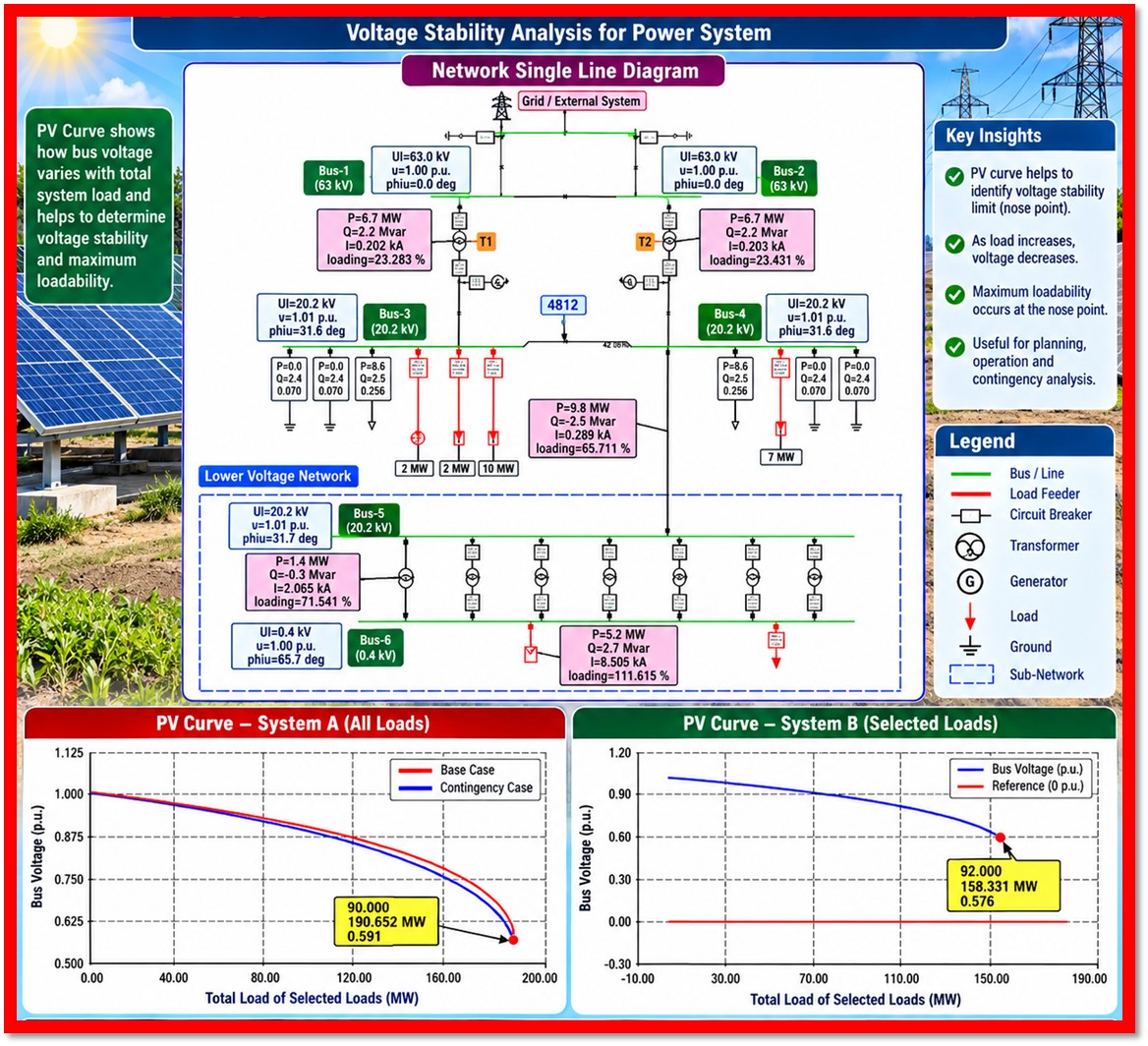
Types of Voltage Stability
| Type | Description |
|---|---|
| Short-term | Voltage response within seconds after a disturbance. |
| Long-term | Voltage behavior over several minutes due to load and control actions. |
Voltage stability is a critical aspect of power system operation, as adequate reactive power support and effective voltage control help keep system voltage within acceptable limits and prevent voltage collapse.