Difference Between A Megger & Hi-Pot
The Megger test and Hi-Pot (High Potential) test are both used in electrical systems to check insulation but they serve different purposes and operate at different stress levels.
Understanding the difference is very important for maintenance, commissioning, and safety.
Megger Test (Insulation Resistance Test)
Purpose
- The Megger test is used to measure insulation resistance.
- It helps assess the overall health of electrical insulation.
How It Works?
- The Megger applies a DC voltage to the equipment under test.
- The typical test voltages range from 250V to 5kV depending on the equipment.
- The instrument measures the resistance offered by the insulation.
Output
- A high resistance value indicates good insulation condition.
- A low resistance value indicates insulation deterioration (or) leakage.
Key Features
- The Megger test is non destructive in nature.
- It is widely used for routine maintenance activities.
- It is simple and quick to perform in the field.
Typical Applications
- The Megger test is commonly used for cables.
- It is used for testing motors.
- It is applied to transformers.
- It is also used in switchgear testing.
Hi-Pot Test (High Voltage Withstand Test)
Purpose
- The Hi-Pot test is used to verify insulation strength.
- It ensures that the insulation can withstand high voltage stress.
How It Works?
- The Hi-Pot test applies a very high voltage to the equipment.
- The applied voltage is higher than the normal operating voltage.
- The test can be performed using AC (or) DC voltage.
- The test checks for insulation breakdown or excessive leakage current.
Output
- A pass result indicates that no breakdown or excessive leakage has occurred.
- A fail result indicates insulation failure or flashover.
Key Features
- The Hi-Pot test can be destructive if insulation is weak.
- It is mainly used during factory testing and commissioning.
- It is more rigorous compared to the Megger test.
Typical Applications
- The Hi-Pot test is used for new equipment testing.
- It is used during cable commissioning.
- It is applied in transformer testing.
- It is also used for electrical panel testing.
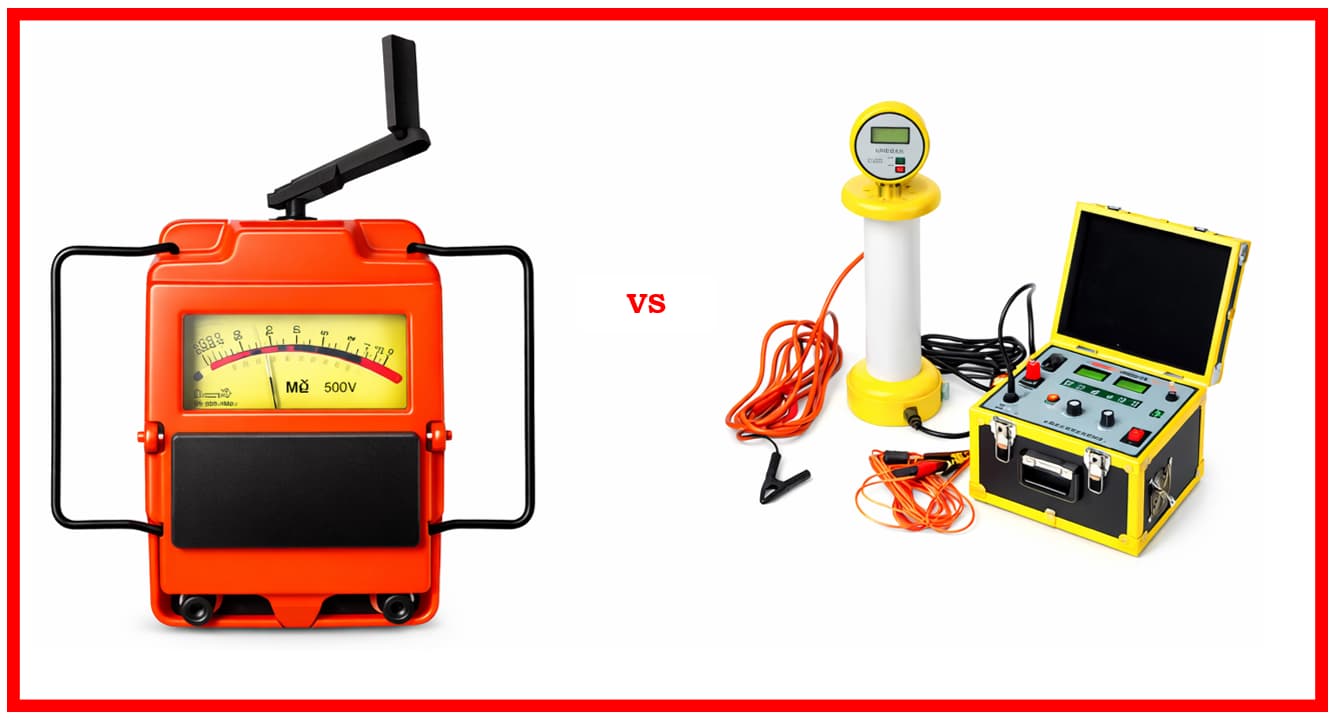
Difference between Megger Test and Hi-Pot Test
Megger Test vs Hi-Pot Test
| Parameter | Megger Test (Insulation Resistance Test) | Hi-Pot Test (High Voltage Withstand Test) |
|---|---|---|
| Purpose | The Megger test is used to measure insulation resistance and evaluate insulation condition. | The Hi-Pot test is used to verify insulation strength under high voltage stress. |
| Working Principle | The Megger test works by applying a DC voltage and measuring the resistance of insulation. | The Hi-Pot test works by applying a very high voltage and checking for breakdown or leakage. |
| Voltage Level | The Megger test uses relatively low DC voltage, typically ranging from 250V to 5kV. | The Hi-Pot test uses very high voltage, usually much higher than normal operating voltage. |
| Nature of Test | The Megger test is non-destructive and does not damage healthy insulation. | The Hi-Pot test can be destructive if the insulation is weak or defective. |
| Measurement Output | The Megger test provides insulation resistance values in mega ohms (MΩ). | The Hi-Pot test evaluates leakage current or detects insulation breakdown. |
| Objective | The Megger test helps identify insulation deterioration, moisture, and leakage paths. | The Hi-Pot test ensures that insulation can withstand high voltage without failure. |
| Usage Stage | The Megger test is mainly used during routine maintenance and troubleshooting. | The Hi-Pot test is mainly used during commissioning and factory testing. |
| Application Areas | The Megger test is commonly applied to cables, motors, transformers, and switchgear. | The Hi-Pot test is commonly applied to new equipment, cables, transformers, and panels. |
| Test Duration | The Megger test is usually performed for a short duration and gives quick results. | The Hi-Pot test requires a specific duration depending on standards and equipment ratings. |
| Safety Level | The Megger test involves lower risk and is relatively safer to perform. | The Hi-Pot test involves high risk and requires strict safety precautions. |
| Field Suitability | The Megger test is suitable for frequent field testing and preventive maintenance. | The Hi-Pot test is not recommended for frequent testing in the field. |
| Condition Indication | The Megger test indicates the condition of insulation over time. | The Hi-Pot test confirms whether insulation can survive extreme voltage stress. |