Why Transmission Lines Do not need a Neutral?
Transmission lines operate on a balanced three-phase system, where the sum of currents in all three phases is zero.
This eliminates the need for a neutral conductor.
In single-phase systems, neutral provides a return path.
In three-phase systems, current flows between phases, so no separate return path (neutral) is required.
Adding a neutral conductor would increase:
- Material cost
- Tower size
- Installation complexity
Hence eliminating neutral makes transmission more economical.
Transmission systems operate at very high voltages (132 kV, 220 kV, 400 kV, etc.), where neutral is not required for load balancing.
Neutral is required in low-voltage distribution systems to supply single-phase loads (homes, lighting, etc.), not in transmission.
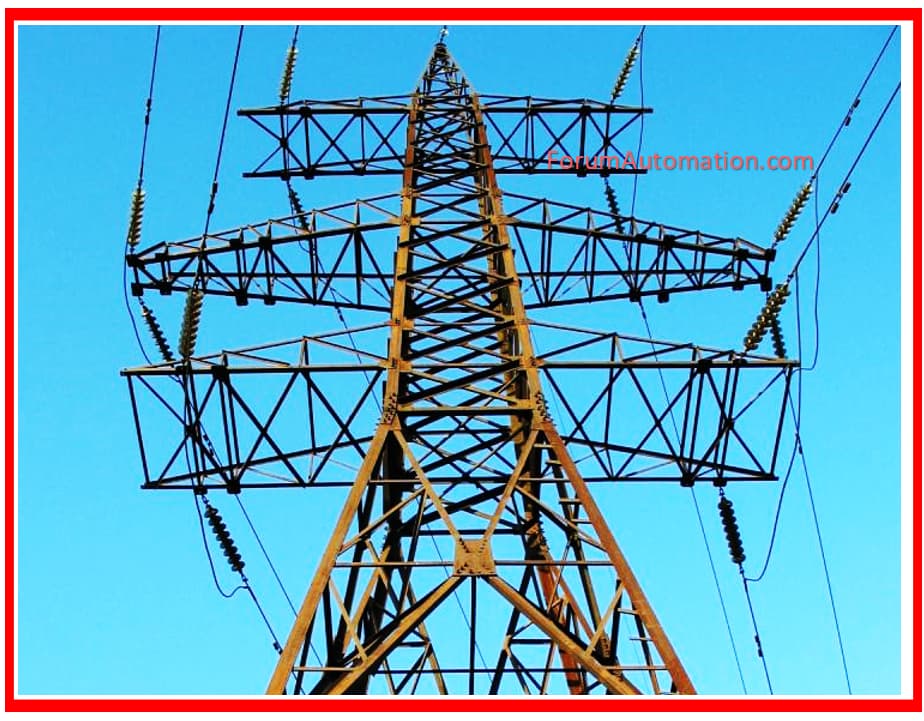
Transmission lines do not need a neutral because they operate on a balanced three-phase system, where currents naturally cancel out, making the neutral conductor unnecessary and uneconomical.