Why should Overload Relay settings be adjusted for High-Inertia Motors?
Reference Image Provided by the Respondent
Reference Image Provided by the Respondent
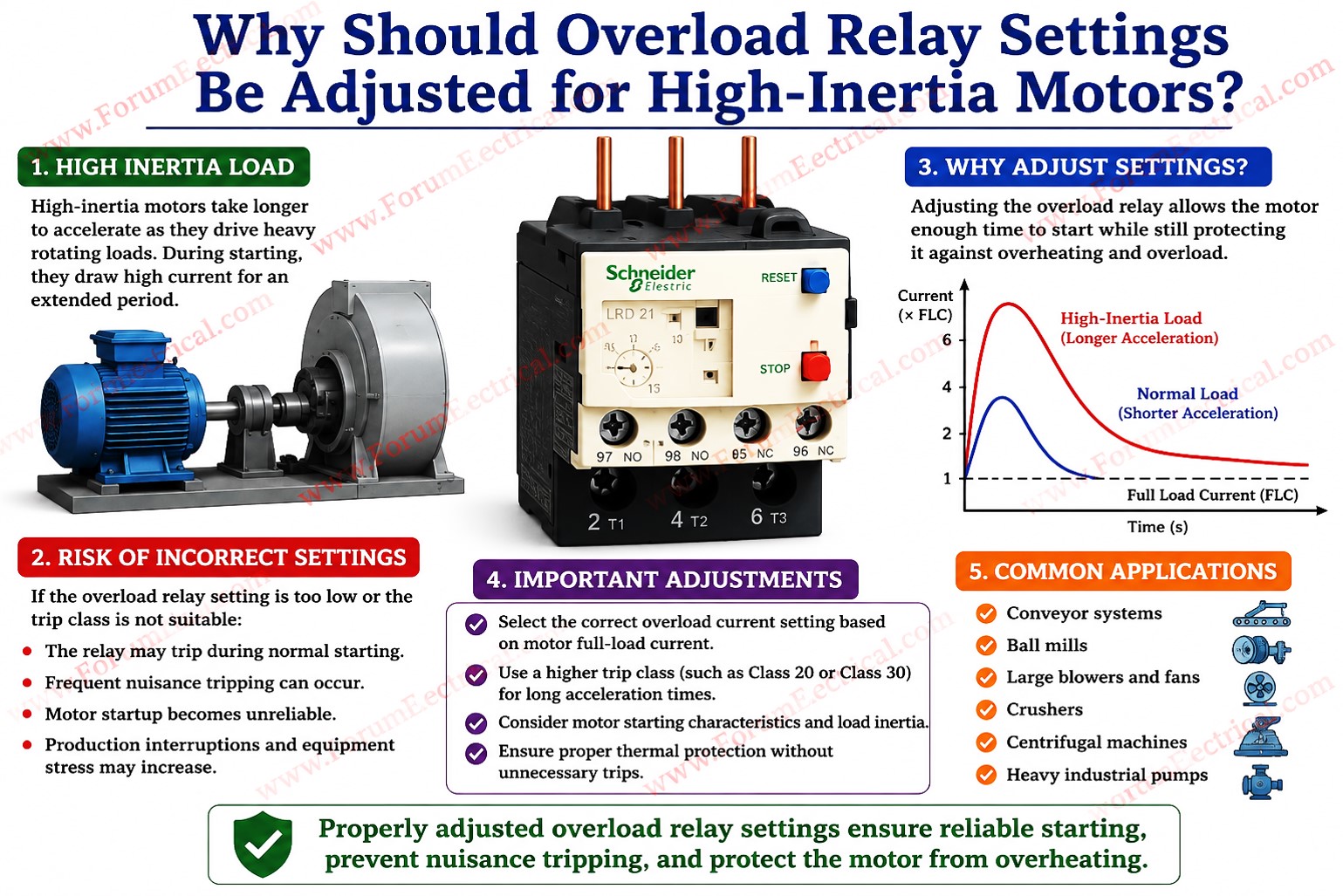
High-inertia motors take a longer time to accelerate because of they drive heavy rotating loads such as
During starting the motor draws high current for an extended period.
If the overload relay setting is too low (or) the trip class is not suitable:
Therefore overload relay settings should be adjusted properly to allow the motor enough starting time while it still protecting it against overheating & overload conditions.
Select the correct overload current setting based on the motor full-load current (FLC).
Use a higher trip class (such as Class 20 / Class 30) for a long acceleration times.
Consider the motor starting characteristics & load inertia.
Ensure a proper thermal protection without any unnecessary trips.