Power factor correction is a key concept in electrical systems that enhances efficiency and overall performance.
What is Power Factor?
Power factor is defined as the ratio of real power (useful output) to apparent power (total supplied power).
What is Low Power Factor?
A low power factor indicates that the system draws more current than required because of reactive power.
What is Reactive Power Factor?
Reactive power does not contribute to useful work but is essential for operating inductive loads such as** motors**, transformers and industrial machines.
Why Power Factor Correction is needed?
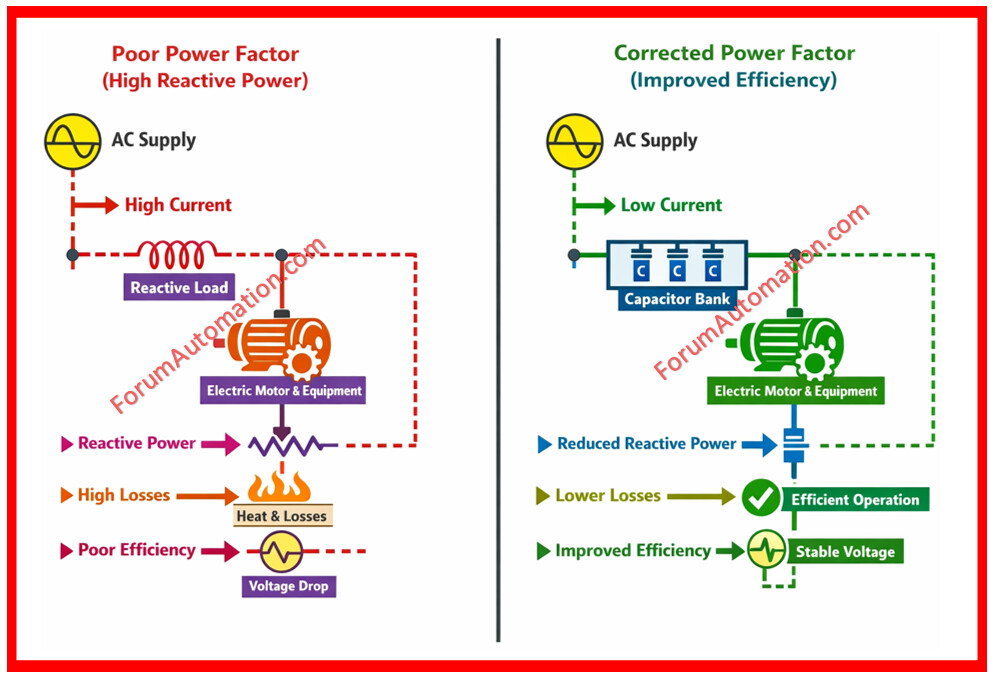
However excessive reactive power leads to issues like
- Increased current flow,
- Higher energy losses,
- Overheating of equipment and
- Poor voltage regulation.
A system with high reactive power resulting in
- Inefficiency,
- Increased losses and
- Higher electricity costs.
a system after power factor correction where reactive power is minimized and efficiency is improved.
Power factor correction is typically achieved using capacitor banks (or) power factor correction equipment. These devices provide reactive power locally, thereby reducing the load on the power supply system.
Advantages of Power Factor Correction
Primary advantages of power factor correction include:
- Reduced energy losses due to lower current.
- Lower electricity costs by avoiding penalties.
- Improved efficiency of electrical equipment.
- Better voltage regulation and stability.
- Increased reliability and longer equipment life.
Overall power factor correction transforms an inefficient electrical system into a stable, economical and energy efficient system.