Why Positive Air Pressure required in Substation Buildings?
Reference Image Provided by the Respondent
Reference Image Provided by the Respondent
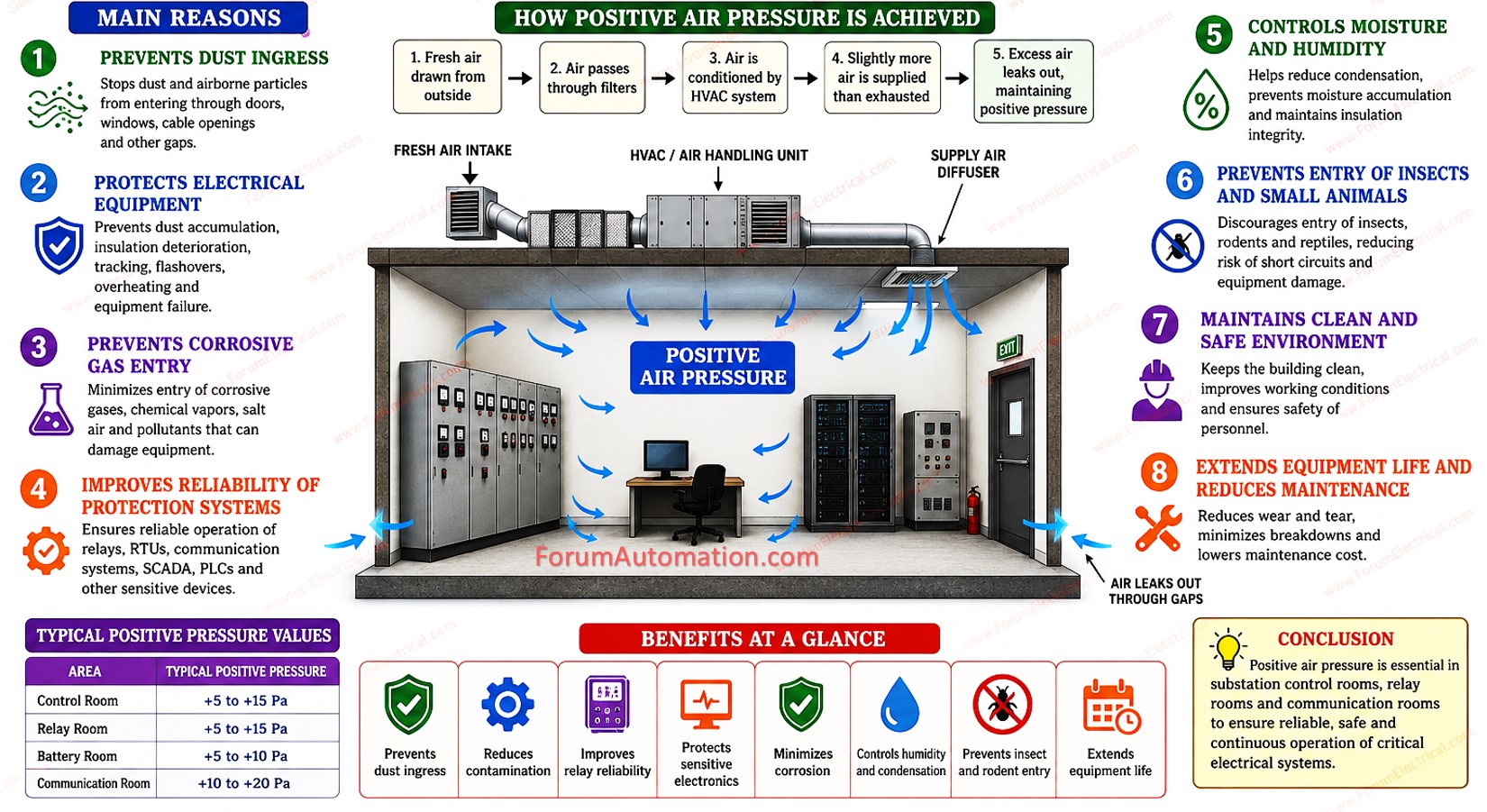
Positive air pressure in a substation buildings means the indoor air pressure is maintained slightly higher than the outside atmosphere by supplying a filtered fresh air through HVAC (or) pressurization systems.
Primary Reasons for Positive Pressure in Substations are
1). Prevents Dust Ingress
2). Protects Electrical Equipment
3). Prevents Corrosive Gas Entry
4). Improves Reliability of Protection Systems
5). Controls Moisture and Humidity
6). Prevents Entry of Insects & Small Animals
Substations contain sensitive equipment such as
Positive pressure prevents dust & airborne contaminants from the entering through doors, windows, cable trenches & small gaps.
Dust accumulation may cause
Maintaining a positive pressure that keeps equipment clean and reliable.
In industrial environments outside air can contain
Positive pressurization use to minimizes the entry of these corrosive contaminants by protecting electrical and electronic equipment.
Modern substations depend heavily on
These systems are sensitive to dust and moisture.
Positive pressure improves the operational reliability and reduces false trips.
Positive pressure combined with air conditioning assists
A slight outward airflow through openings discourages
This reduces the risk of short circuits & equipment damage.
| Area | Typical Positive Pressure |
|---|---|
| Control Room | +5 to +15 Pa |
| Relay Room | +5 to +15 Pa |
| Battery Room | +5 to +10 Pa |
| Communication Room | +10 to +20 Pa |
Values may vary depending on utility standards & HVAC design.