Breaker trip times are not the same in every substation because protection engineers set relay operating times according to the
- Systems protection coordination,
- Fault level, equipment ratings and
- Reliability requirements.
The primary objective is to isolate only the faulty section while keeping the rest of the power system in service.
A breaker with a 1-second trip time is typically used where faster fault clearance is needed to protect critical equipment such as
- Power transformers,
- Busbars,
- Generators (or)
- High-voltage transmission systems
from damage and to maintain system stability.
In opposite a 3-second trip time is usually assigned to a breaker acting as backup protection, allowing downstream relays and breakers sufficient time to clear the fault first.
If the primary protection fails, the backup breaker operates after its intentional delay to isolate the fault.
Therefore, the difference between a 1-second and a 3-second breaker trip does not indicate that one substation is better than another;
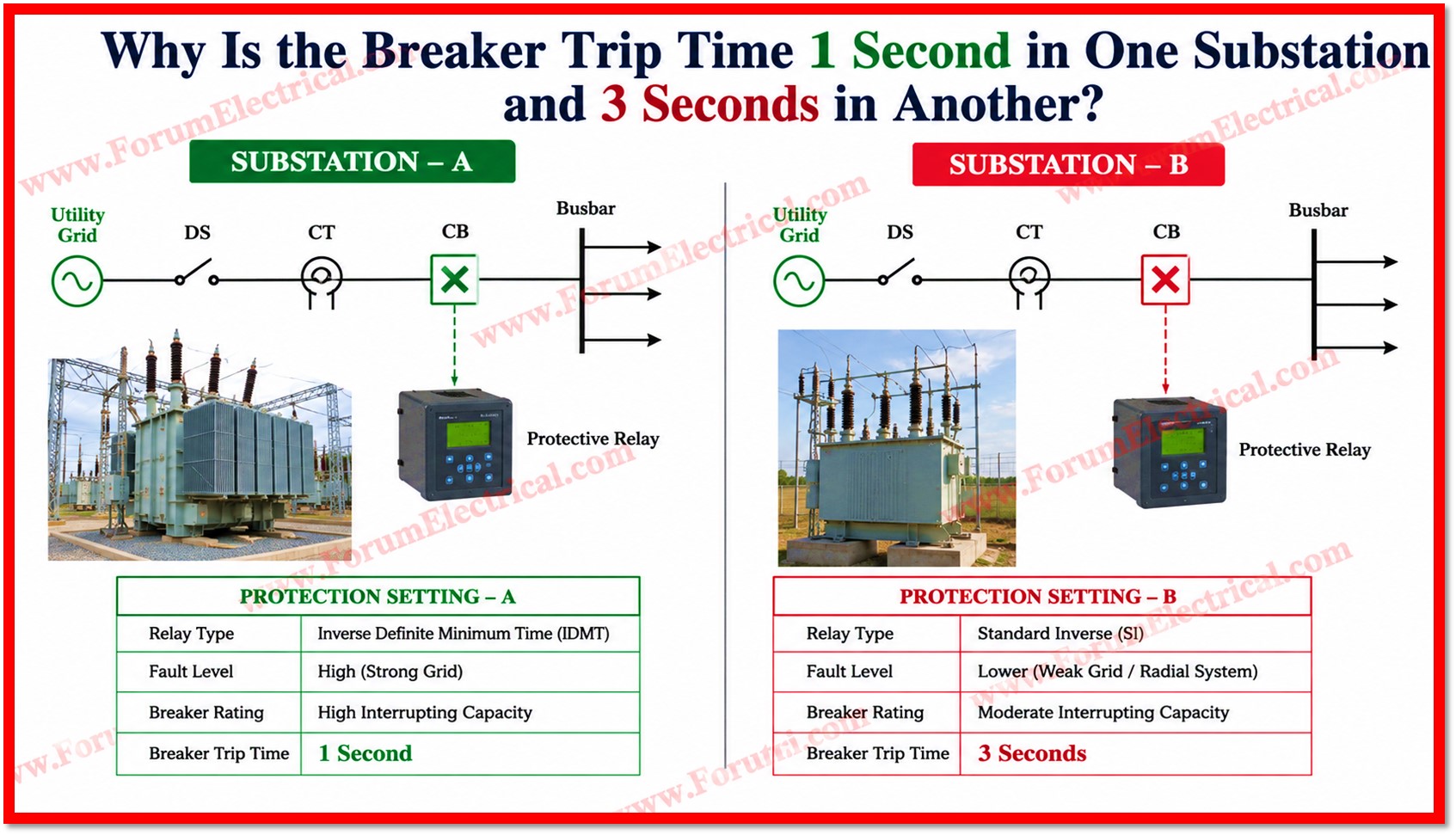
it reflects a carefully designed protection coordination strategy that ensures
- Selective fault isolation,
- Minimizes equipment damage,
- Improves personnel safety and
- Maintains the reliability and continuity of the electrical power system.