Why is Power Factor important in Electrical Systems?
Power factor (PF) is the ratio of real power (kW) to apparent power (kVA), and it indicates how efficiently electrical power is being used.
Improves Energy Efficiency
A high power factor (close to 1) means most of the supplied power is effectively converted into useful work.
A low power factor results in wasted energy due to excessive reactive power.
Reduces Electrical Losses
Low power factor increases current flow in the system, which leads to higher I²R losses in cables, transformers, and equipment.
Minimizes Voltage Drop
Higher current caused by low PF results in greater voltage drop, affecting the performance of motors and electrical equipment.
Saves Electricity Cost
Utilities impose penalties for low power factor, so maintaining a high PF helps reduce electricity bills and avoid penalties.
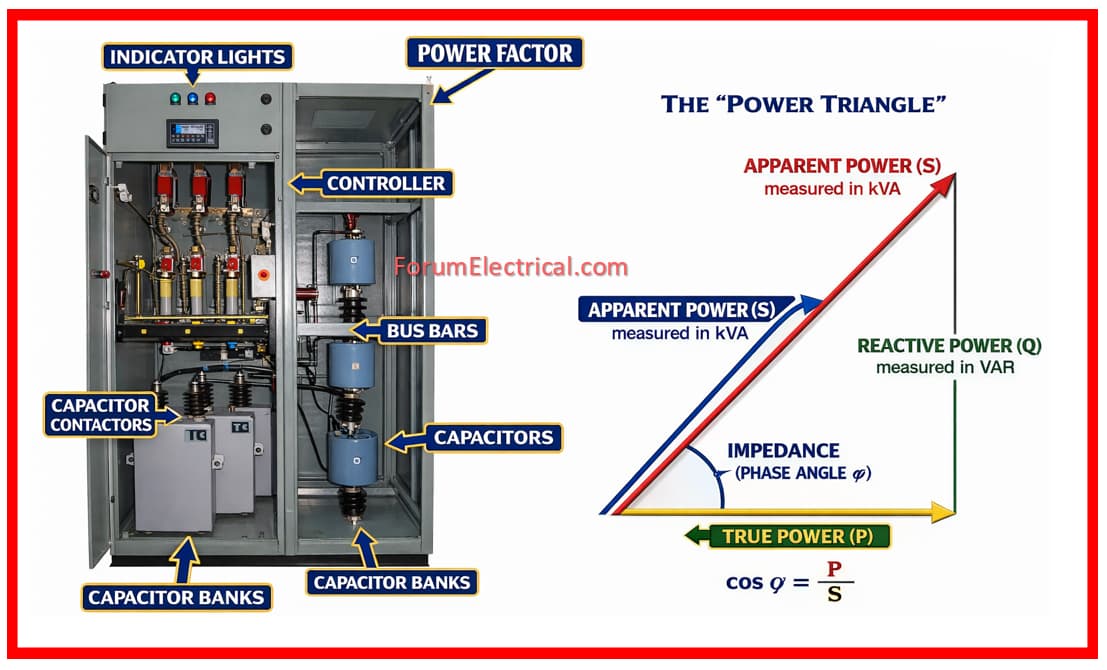
Increases System Capacity
With improved PF, the same system can carry more load without upgrading equipment, improving overall utilization.
Enhances Equipment Life
Lower current reduces heating in electrical components, leading to longer equipment lifespan.
Improves Voltage Regulation
A better PF ensures stable voltage levels, which is essential for sensitive equipment and industrial operations.
Maintaining a high power factor is crucial for improving efficiency, reducing losses, lowering costs and ensuring reliable operation of electrical systems.