Why is Electrical Cable Size selected based on Current-Carrying Capacity?
Electrical cable size is selected according to its current-carrying capacity (ampacity) to prevent excessive conductor heating, insulation damage, premature cable failure, and potential fire hazards.
When electrical current flows through a cable, heat is generated due to conductor resistance (I²R losses). Selecting the correct conductor cross-sectional area ensures that the cable can safely carry the design current without exceeding its permissible operating temperature.
Key Factors Affecting Cable Size Selection:
- Load current and maximum demand.
- Conductor material (Copper or Aluminium).
- Cable insulation type and temperature rating.
- Installation method and ambient temperature.
- Cable grouping and derating factors.
- Voltage drop limitations.
- Short-circuit thermal withstand capacity.
- Protective device rating and coordination.
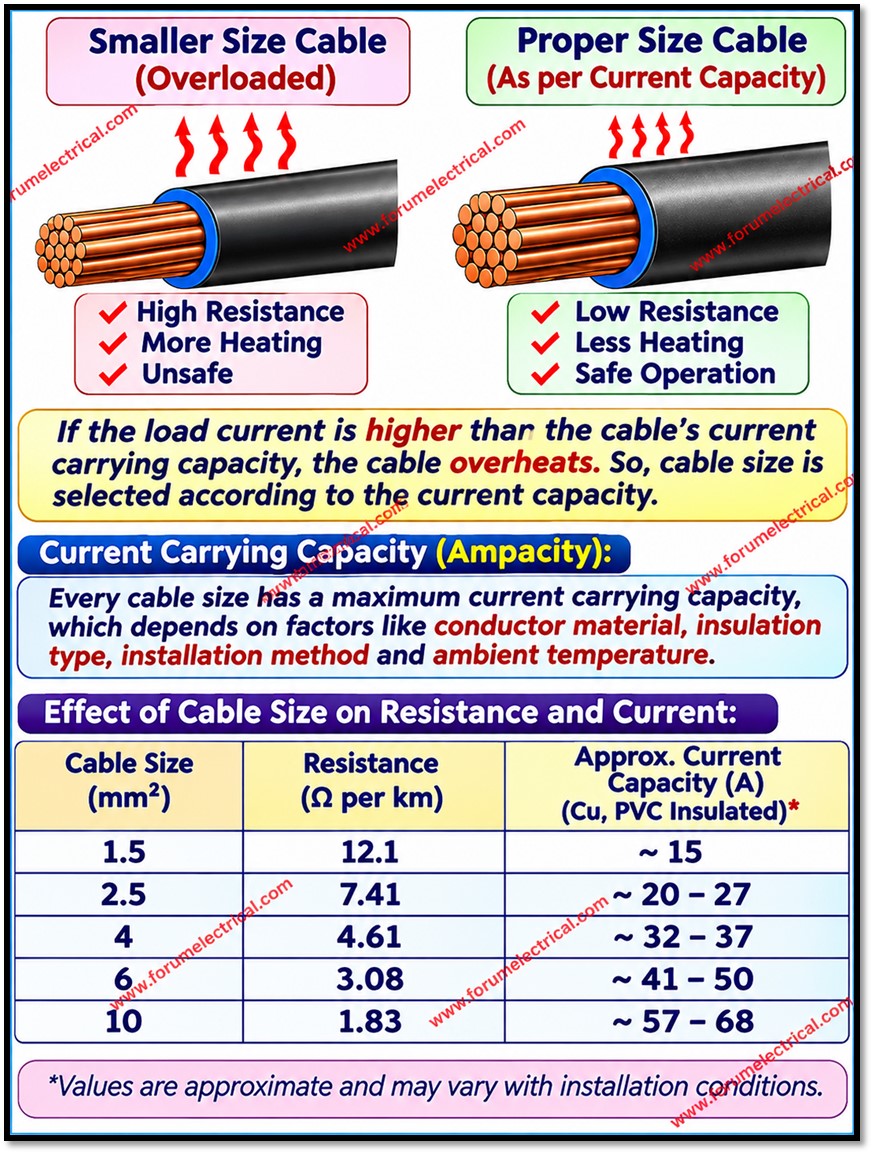
Important Engineering Principle: The cable’s corrected current-carrying capacity must be adequate for the design load and coordinated with the protective device to ensure effective overload and short-circuit protection.