Why critical infrastructures need to comply for OT cyber security norms?
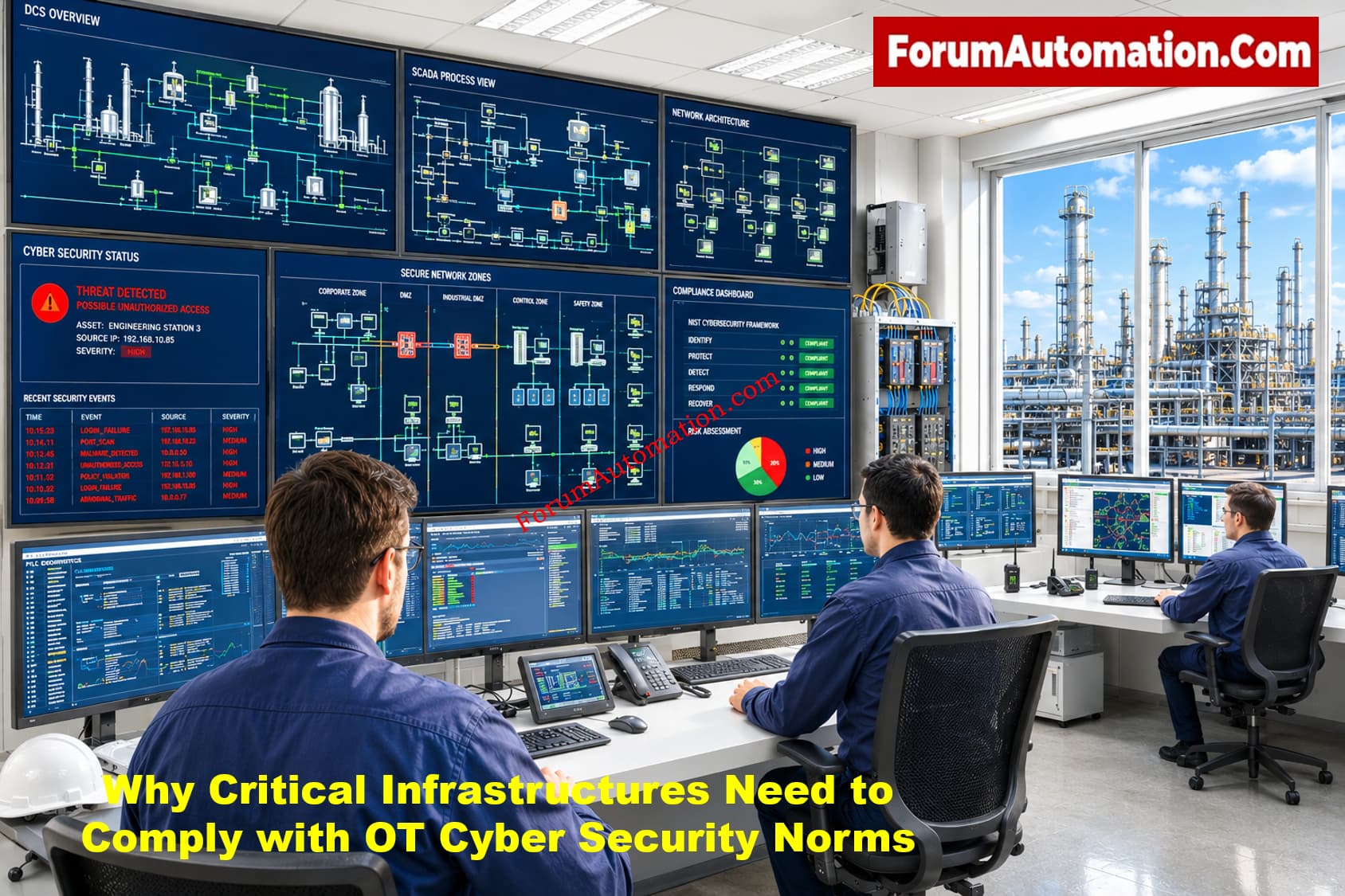
Why Critical Infrastructures Need to Comply with OT Cyber Security Norms
Operational Technology (OT) systems are vital for the safe and reliable running of critical infrastructure assets, including power plants, oil and gas facilities, water treatment plants, chemical industries, transportation systems, and manufacturing plants. Cyber risks can now directly influence physical processes, equipment safety, environmental protection and company continuity, therefore OT cyber security compliance is now a need.
Why OT Cyber Security Compliance Matters
Real world industrial activities are controlled by typical IT systems while OT settings. If the cyberattack is effective, it may lead to:
- Production shutdowns
- Equipment damage
- Process instability
- Environmental incidents
- Safety hazards for personnel
- Significant financial losses
Modern industrial facilities are increasingly connected via the Industrial Internet of Things (IIoT), remote access systems, cloud-based monitoring platforms and integrated control networks. These technologies promote productivity but also raise exposure to cyber risk.
Key Benefits of Compliance
Organizations can achieve compliance with standards such as IEC 62443, NIST Cybersecurity Framework and NERC CIP to:
- Safeguard crucial control systems
- Minimize operational hazards
- Improve incident response capabilities
- Improve the network security architecture
- Regulatory Compliance
- Improve plant availability and dependability
Practical Plant Perspective
Cyber security in real industrial environments is no longer just an IT concern. Protection of PLCs, DCS systems, SCADA networks, field instruments and communication infrastructure is a joint effort by instrumentation engineers, control engineers, EPC contractors and maintenance teams.
OT cyber security standards require a systematic approach to asset management, access control, network segmentation, patching strategy, backup strategy, and constant monitoring. As cyber risks against industrial operations globally increase, compliance is important to the safe, secure and resilient operation of critical infrastructure throughout its operational life cycle.