Why are busbars in switchyard panels commonly painted grey?
Switchyard panel busbars are usually painted grey for a combination of safety, standardization, and practicality reasons—not electrical performance.
1. Standard color coding (IEC / utility practice)
In most power plants and substations (11 kV / 33 kV switchyards like the ones you work on), grey is used as a neutral, standard equipment color.
It avoids confusion with live-phase colors (R-Y-B or red-yellow-blue).
2. Safety & Visibility
Grey gives good contrast with:
- Phase markings
- Danger signs
- Insulation sleeves
It is non-alarming, unlike red or yellow, which are reserved for live or warning indications.
3. Heat & Weather Resistance
Outdoor switchyard busbars and panels are exposed to:
- Sun
- Dust
- Rain
Grey reflects heat better than dark colors and does not fade quickly under UV light.
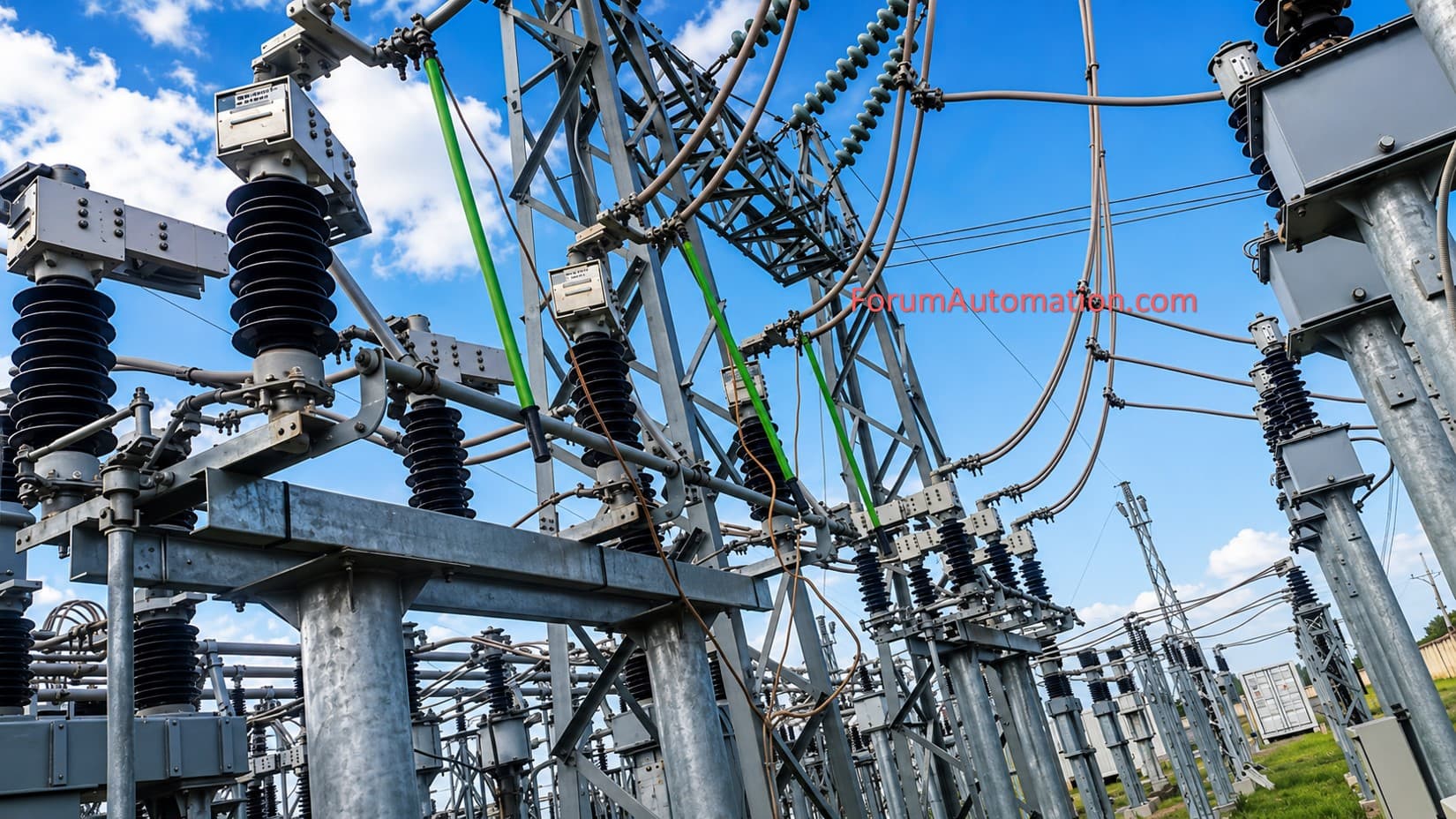
4. Dirt & Maintenance Advantage
Dust, oil mist, and pollution are less visible on grey, so equipment:
- Looks clean longer
- Requires less frequent repainting
- Scratches and corrosion spots are easier to detect than on very dark colors.
5. Corrosion Protection
The grey paint is usually:
- Epoxy-based or polyurethane
- Applied over primer (zinc-rich or red oxide)
- Color itself isn’t for insulation, but the coating protects copper/aluminum busbars and steel supports from corrosion.
6. Uniform Appearance of Switchyard
Utilities require visual uniformity:
- Panels
- Structures
- Busbar supports
Grey gives a professional, standardized look for inspection and audits.
Important Note
Electrical identification (phase, earth, neutral) is done by:
- Color sleeves
- Ferrules
- Phase plates
Not by busbar paint color.
Grey is chosen because it is standard, safe, heat-reflective, low-maintenance, and visually neutral, not because of electrical reasons.