Which Power System Standards you should follow in ETAP?
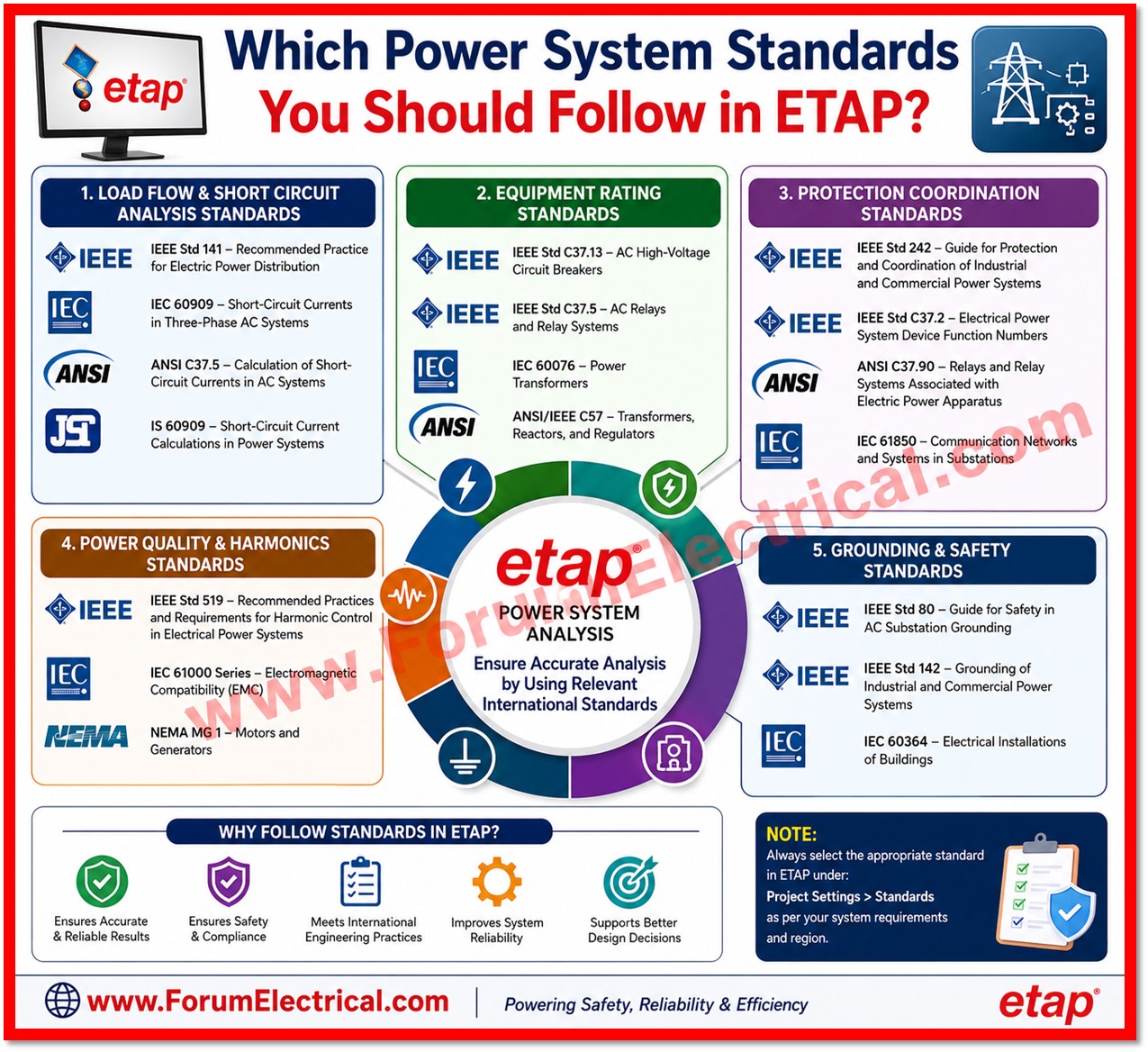
Reference Image Provided by the Respondent
Selecting the correct power system standard in ETAP is essential for accurate system modeling, analysis, protection coordination, equipment sizing and regulatory compliance.
The standard you choose should match your projects location, industry and customer requirements.
IEC (International Electrotechnical Commission): Widely used across Europe, Asia, the Middle East, and many international projects.
IEEE (Institute of Electrical and Electronics Engineers): Commonly adopted in North America and industrial facilities worldwide.
ANSI (American National Standards Institute): Used primarily for equipment ratings and electrical installations in the United States.
NFPA 70 (National Electrical Code): Applied for electrical installation safety and compliance in the U.S.
NEMA (National Electrical Manufacturers Association): Defines equipment performance and enclosure standards.
BS (British Standards): Used in the United Kingdom and some Commonwealth countries.
AS/NZS Standards: Followed in Australia and New Zealand for power system design and installations.
Always use the standard specified in your project documents, client requirements, or local regulations.
For multinational projects, IEC and IEEE standards are the most commonly adopted, while regional standards ensure compliance with local utility and statutory requirements.