Which is better thermocouple compensation cable or extension cable?
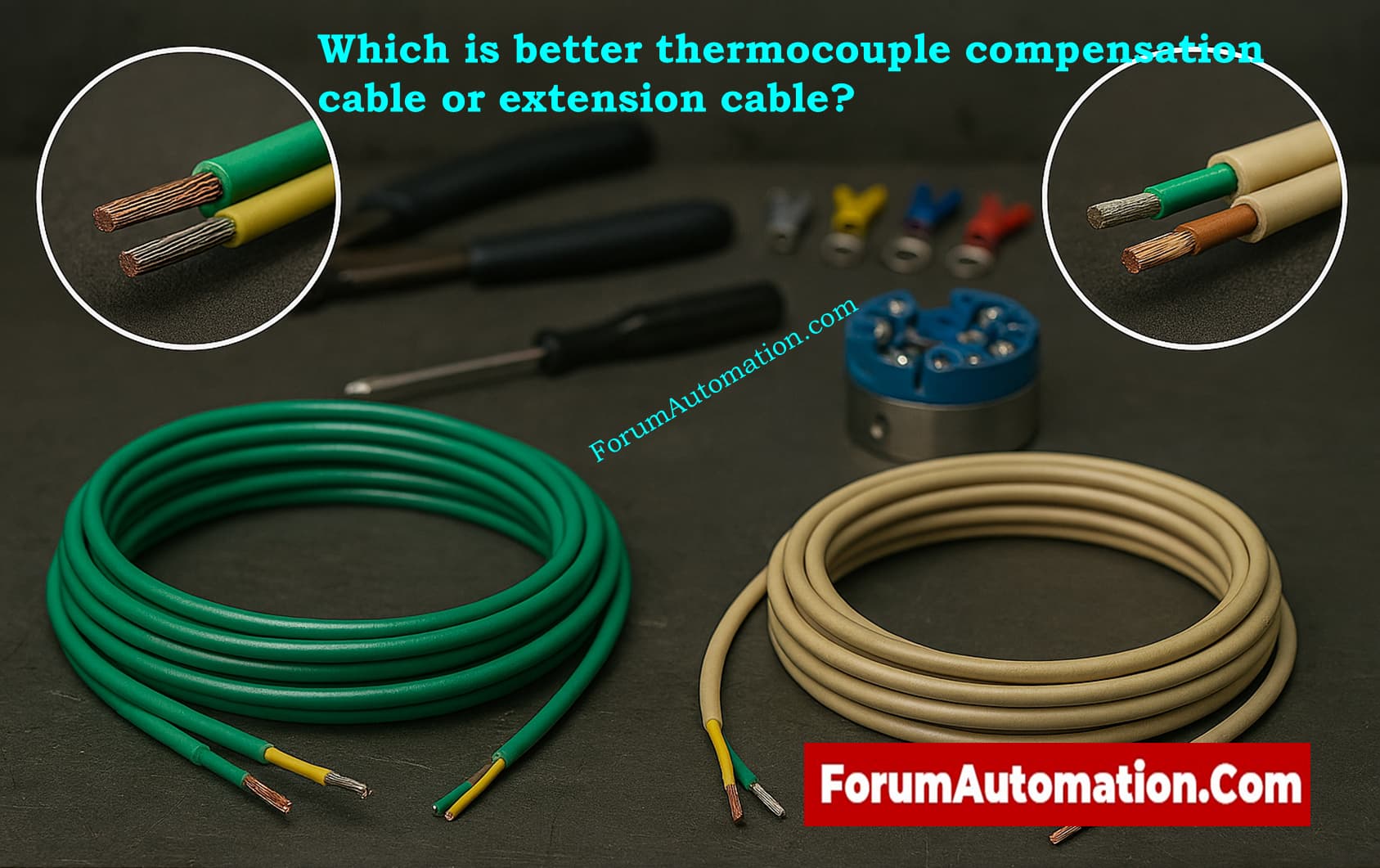
When you connect a thermocouple sensor to a measuring device that is far away, you usually require extra wiring. This extra wiring can be a “thermocouple extension cable” or a “compensating cable.” It depends on what you care about: accuracy, temperature range, affordability, or ease of use.
The same materials are used to make the conductors in a thermocouple extension cable as in the original thermocouple wires. That means that the thermocouple’s millivolt-level signal can be sent without adding new thermoelectric junctions or undesired voltages. So, an extension cable keeps the original thermocouple’s accuracy, stability, and complete temperature range. This makes it the best choice when you require very accurate temperature readings, especially when the temperature changes a lot over long distances or in a place with a lot of temperature differences.
A compensating cable, on the other hand, is made of alternative, cheaper alloys that behave thermoelectrically in a way that is similar to a real thermocouple, but only across a small range of temperatures (usually from room temperature to around 100–200 °C, depending on the insulation). This approximation makes compensating cables less accurate and less stable when the temperature is very high or very low. But they are cheaper and typically work well when accuracy isn’t very important or when the length is long and the thermocouple type is pricey (like noble-metal types). To sum up, if you want to make sure that your measurements are accurate, your signals are clear, and your device works in a wide range of temperatures, you should use a thermocouple extension cable. A compensating cable may be enough if you only require a cheap connection for moderate weather conditions and high precision isn’t important.