Which is better, 4/20mA or 0 10v?
Which is better, 4-20mA or 0 10v?
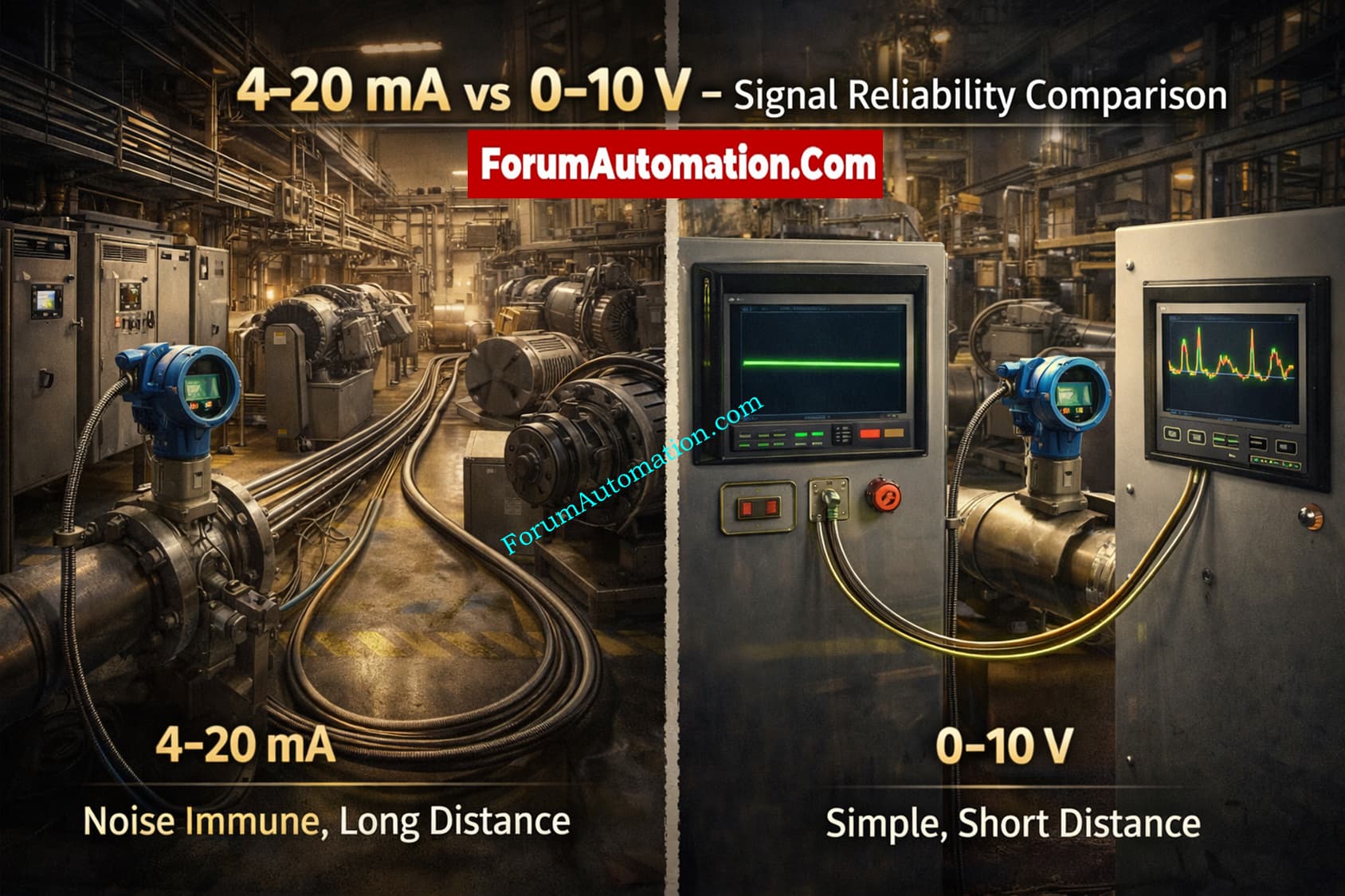
When the signal has to go through a noisy factory, a long cable run, or an outdoor region, 4-20 mA is usually better than 0-10 V for industrial instruments. The current loop is less affected by voltage drop and electromagnetic interference, which means that the receiving PLC gets a more steady signal. The 4 mA live zero also helps find faulty wires, power outages, and open circuits.
0-10 V can still be useful for tiny, tidy, cheap jobs like wiring local machines, HVAC panels, or small skids. It is simple, straightforward to use, and ubiquitous on small sensors and drives. But voltage signals are more likely to be affected by cable resistance, grounding mistakes, and noise. When commissioning, this often shows up as measurements that drift, offset errors, or unstable analog inputs when the cable route goes past VFDs, contactors, or motor feeders.
The choice depends on the state of the plant. For transmitters, long field runs, dangerous places, and important process measurements, choose 4-20 mA. Only use 0-10 V when the wiring is short, the area is quiet, and the control panel is near the device. You should also see if the PLC analog input is set to current only, voltage alone, or both.
If you care more about how reliable the measurements are than how easy the wiring is, choose 4-20 mA. If the signal is in a cabinet or a tiny local loop, 0-10 V can be fine. In current facilities, 4-20 mA is still the standard for process instrumentation since it helps maintenance teams and commissioning engineers find problems more easily, protects against noise better, and makes troubleshooting more reliable.