What signal does a relay send to a circuit breaker?
A protection relay sends an electrical trip signal to a circuit breaker when it detects a fault such as overcurrent, short circuit (or) earth fault.
This signal is typically a low voltage (LV) DC control signal (commonly 24V, 48V, 110V or 220V DC) used in protection and control circuits.
When the relay operates it closes its internal contact and completes the trip circuit, allowing current to flow to the circuit breakers trip coil.
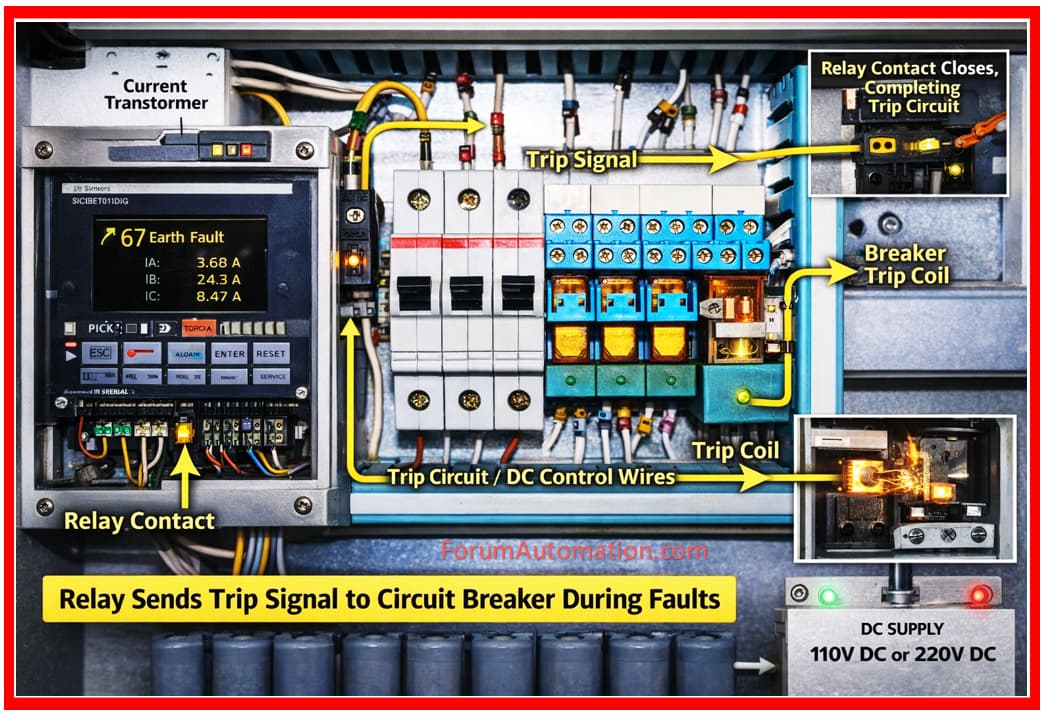
Once the trip coil is energized, it activates the circuit breakers mechanism causing the contacts to open and isolate the faulty section of the system.
In addition the relay does not physically open the breaker itself and it only sends a control signal while the actual tripping action is carried out by the circuit breakers internal mechanism.