What Real Field Issues are Commonly Found During Control Valve Stroke Checks?
What Real Field Issues are Commonly Found During Control Valve Stroke Checks?
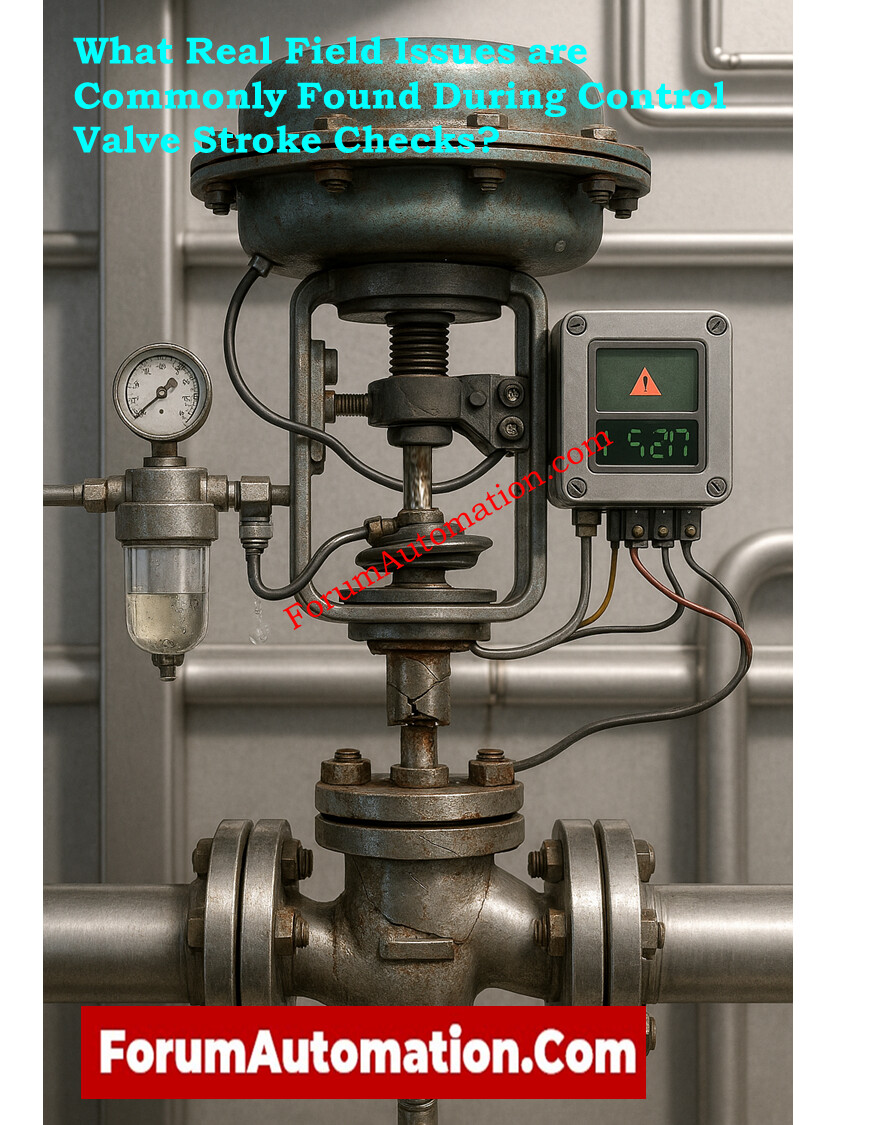
while you do a control valve stroke check, you often find mechanical, pneumatic, and instrumentation problems that aren’t usually obvious while the valve is working normally. Stiction in the valve plug or stem is one of the most common difficulties in the field. This is usually caused by worn packing, dried lubricants, or corrosion inside the bonnet. Because of this, the valve moves jerkily or slowly, making it impossible to control it exactly. Technicians often find problems with the air supply, like low instrument air pressure, moisture in the air lines, or leaks in the tubing and fittings. These problems stop the actuator from moving all the way.
Positioner failure is another big problem. If the positioner is not calibrated correctly or is slow, it will provide the wrong information to the DCS, which will cause the valve to stop before it reaches its commanded position. Carbon buildup, dust getting in, or diaphragm degradation inside pneumatic positioners can make them even less sensitive. When digital positioners are set up wrong, have old firmware, or have bad tuning parameters, they stroke slowly or in a circle.
Mechanical binding is also prevalent, especially in valves that are subjected to high temperatures or corrosive operations. During stroke tests, bent stems, broken trim, and too much friction in linkages make it hard to move smoothly. Weak springs, ruptured diaphragms, or hydraulic leaks in actuators can also cause strokes that are partial or erratic.
Problems with wiring for instruments Loose terminals, problems with grounding the shield, or signals from an I/P converter that don’t work with each other can all produce movement that isn’t steady or failure to stroke. Finally, bad installation, like putting the actuator in the wrong position or using a valve that is the wrong size, usually only shows up during stroke tests.
Early detection of these faults makes sure that control is correct, the plant runs safely, and the valve lasts longer.