What is zero elevation on a DP level transmitter?
What is zero elevation on a DP level transmitter?
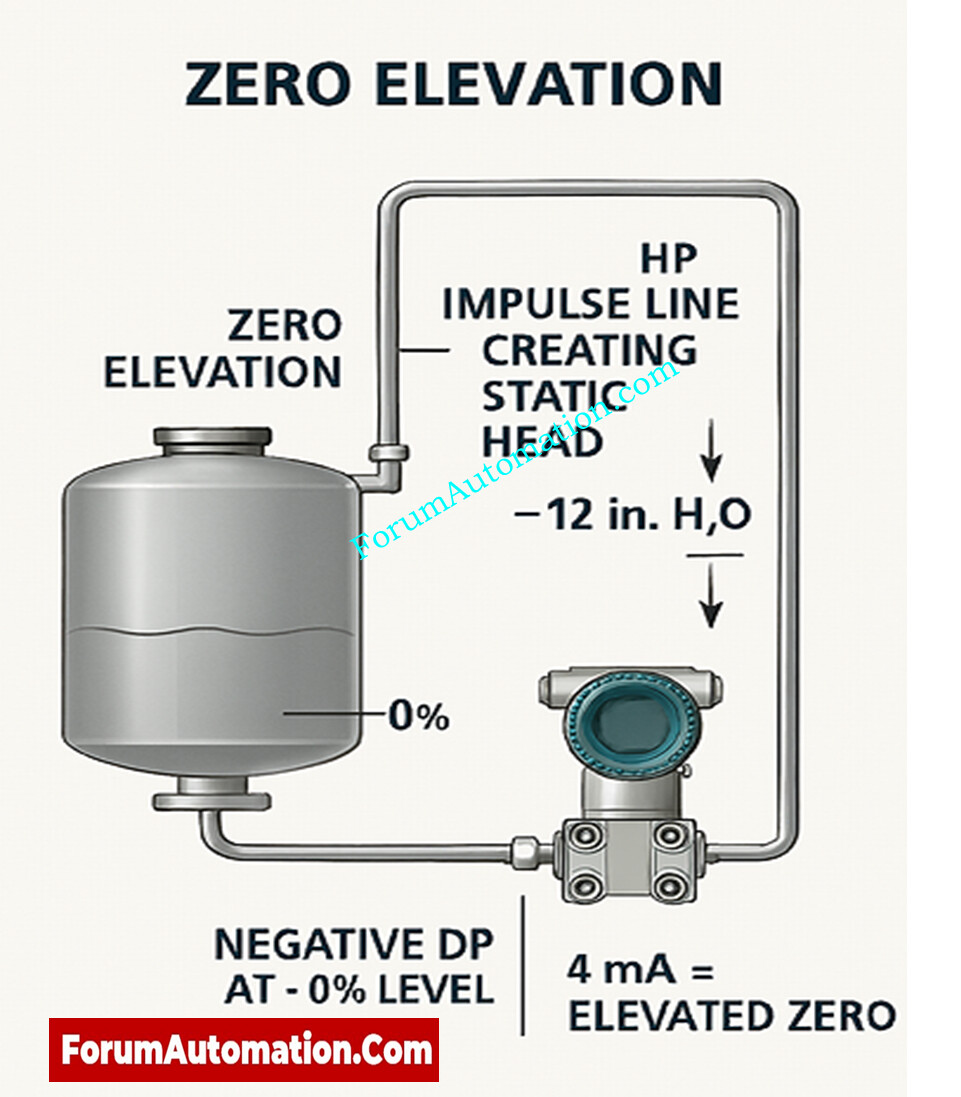
Zero elevation on a DP (Differential Pressure) level transmitter means that the transmitter must measure negative differential pressure at the zero (empty) level. This means that the 4 mA point is set higher than the actual lower pressure that is applied to the transmitter. This happens a lot because of where the transmitter is mounted, not because of the process pressure itself.
What Zero Elevation Means in Level Measurement
A DP transmitter measures the pressure differential between the high-pressure (HP) side, which is linked to the bottom of the vessel, and the low-pressure (LP) side, which is attached to the top of the vessel. This is how hydrostatic level measurement works. There is a column of liquid in the impulse line or capillary attached to the HP side when the transmitter is put above the bottom tapping. This liquid column puts pressure on the HP side even when the tank is empty, which makes the transmitter read a negative DP at zero level.
To show “zero level” as 4 mA accurately, the transmitter needs to be set up with a higher zero, which means that the lower range value (LRV) is a negative DP instead of zero.
Where Zero Elevation Is Commonly Used
You often find zero elevation in:
- Closed tanks with transmitter mounts that are higher up
- Installing remote seals
- Applications that have long vertical impulse lines
- When physical limits make it impossible to mount at the bottom nozzle
Practical Considerations
Zero elevation is a viable and popular way to calibrate, although it can make measurements less stable if the process level dips below the transmitter elevation. If you don’t employ distant sealing or adequately filled capillaries, vapor pockets or bubbles may arise.
In short, zero elevation makes up for the static head pressure created by the transmitter’s height. This lets the transmitter estimate the level accurately even when it feels negative differential pressure when the tank is empty. For industrial level measurement applications, it is important to know what zero elevation is in order to size, calibrate, and troubleshoot DP transmitters correctly.