What is the voltage of the proximity probe in Bently Nevada?
What is the voltage of the proximity probe in Bently Nevada?
The 3300 XL series of Bently Nevada proximity probes use the eddy current concept to assess shaft vibration and displacement. The distance between the probe tip and the rotating shaft changes the DC voltage output of these probes. The system is made up of three parts that work together: a probe, an extension cable, and a proximitor sensor. This makes sure that signals are properly conditioned and measurements are accurate in important rotating equipment like turbines, compressors, and pumps.
Voltage Range and Gap Setting
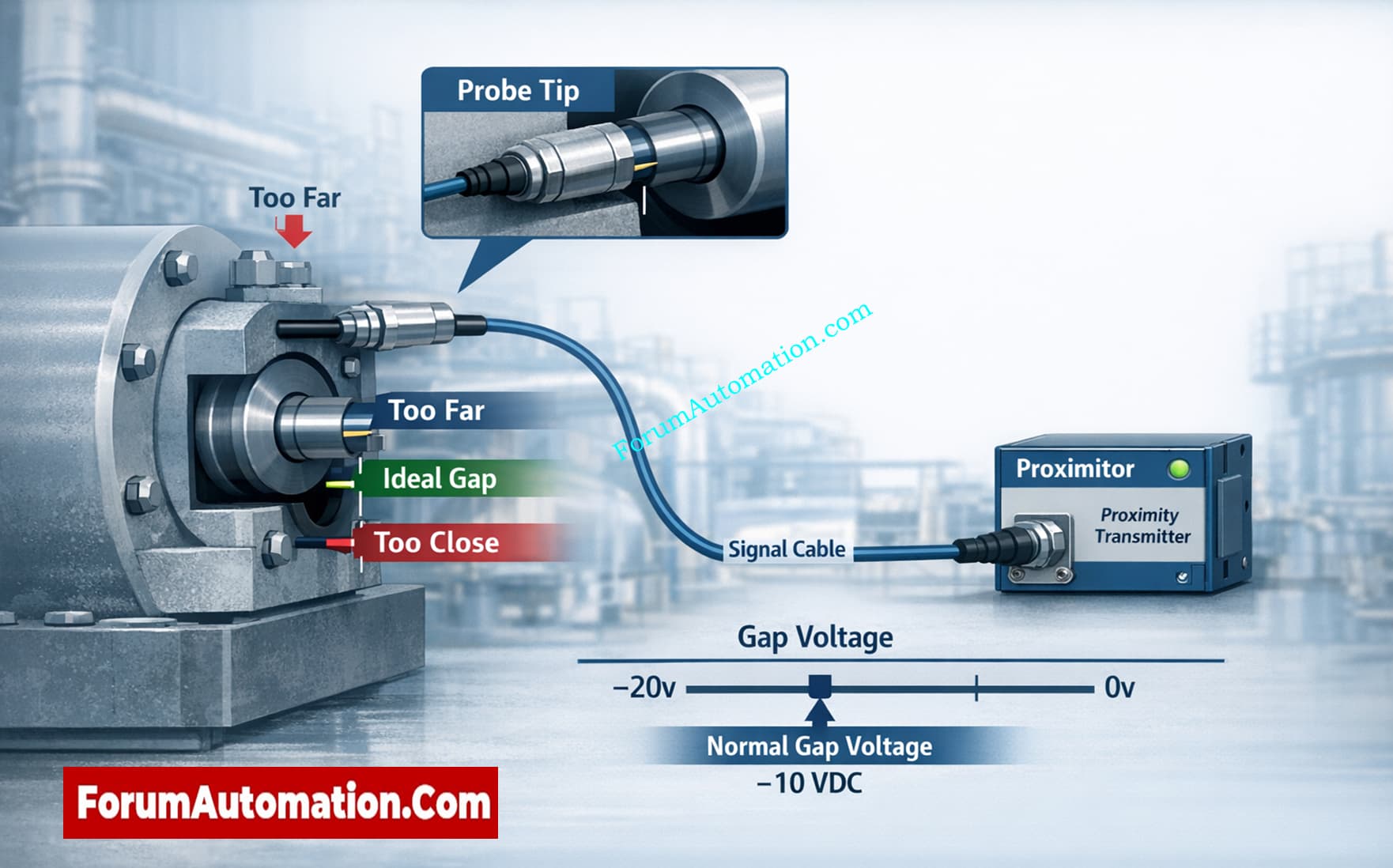
In its linear operating range, the output voltage of the proximity probe is usually between -2 V and -18 V DC. The gap voltage, on the other hand, is the most crucial thing to keep in mind when installing and calibrating. The ideal gap voltage is about minus 10 V DC, however it can be anything from minus 9 V to minus 11 V. This setting in the middle makes sure that the probe works within its linear range and can correctly pick up shaft movement in both directions without distorting or saturating the signal.
Field Practical Insight
In real-life plants, the wrong gap voltage might cause vibration readings to be wrong and alarms to go off when they shouldn’t. If the voltage is less negative, it means that the probe is too far away from the shaft. The probe is too close if it is more negative. Sudden changes could mean that the shaft is moving, that it is out of alignment, or that the probe is broken. Always check the gap voltage at the OUT and COM terminals during commissioning and again after the machine starts up to make sure that thermal expansion doesn’t affect it.