A reactor in a power system is an inductive device used to control current, limit fault levels, regulate voltage, and manage reactive power in electrical networks.
It introduces inductive reactance into the circuit, thereby restricting the flow of current.
Reactors are commonly used as current-limiting reactors, shunt reactors, series reactors, and neutral grounding reactors.
Shunt reactors are mainly installed in high-voltage transmission systems to absorb excess reactive power and control overvoltage caused by lightly loaded or long transmission lines, while series reactors are used to limit short-circuit current and reduce switching transients.
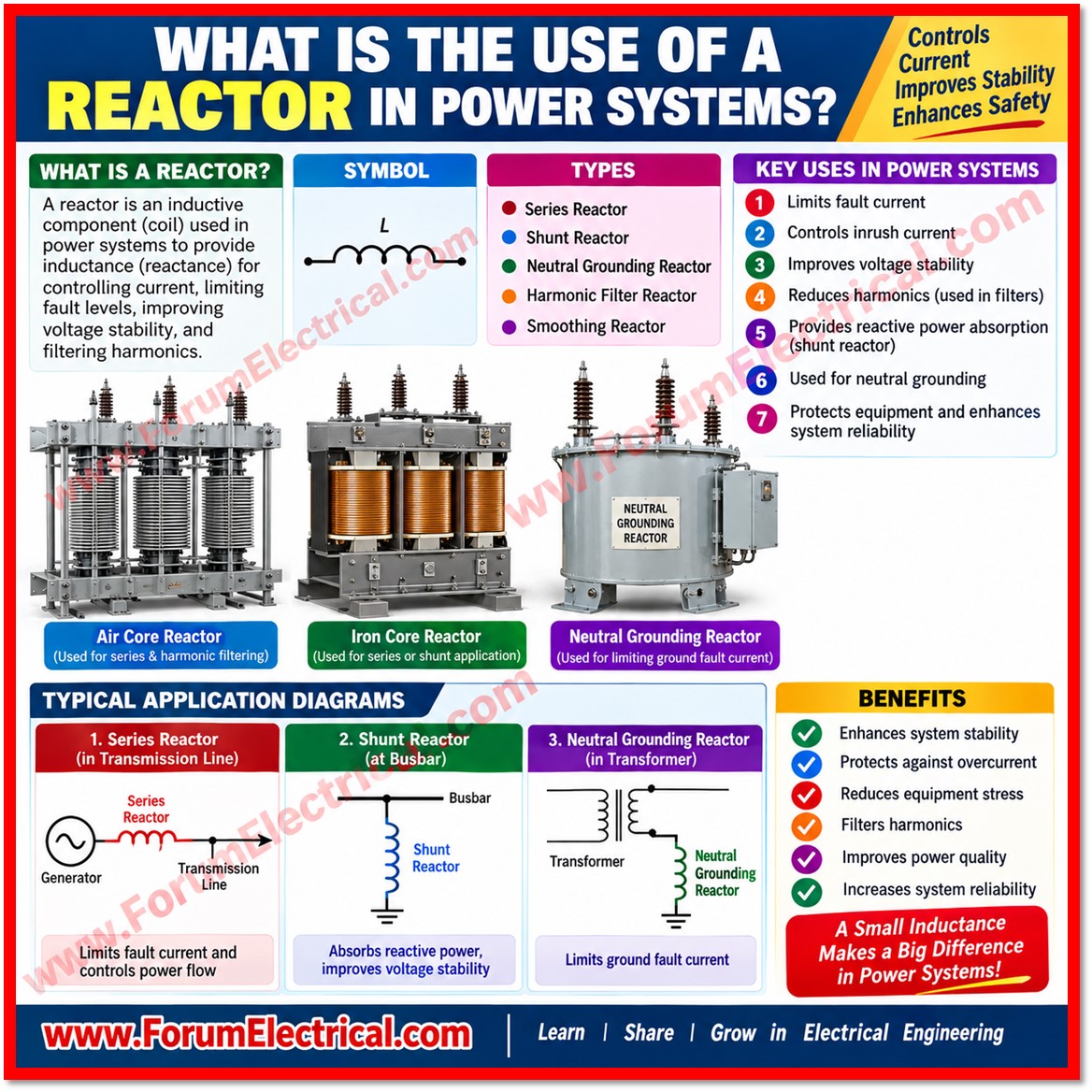
By providing controlled inductive reactance, reactors help improve system stability, voltage regulation, equipment protection, and overall power-system reliability.