What is the physical layer of PROFIBUS PA?
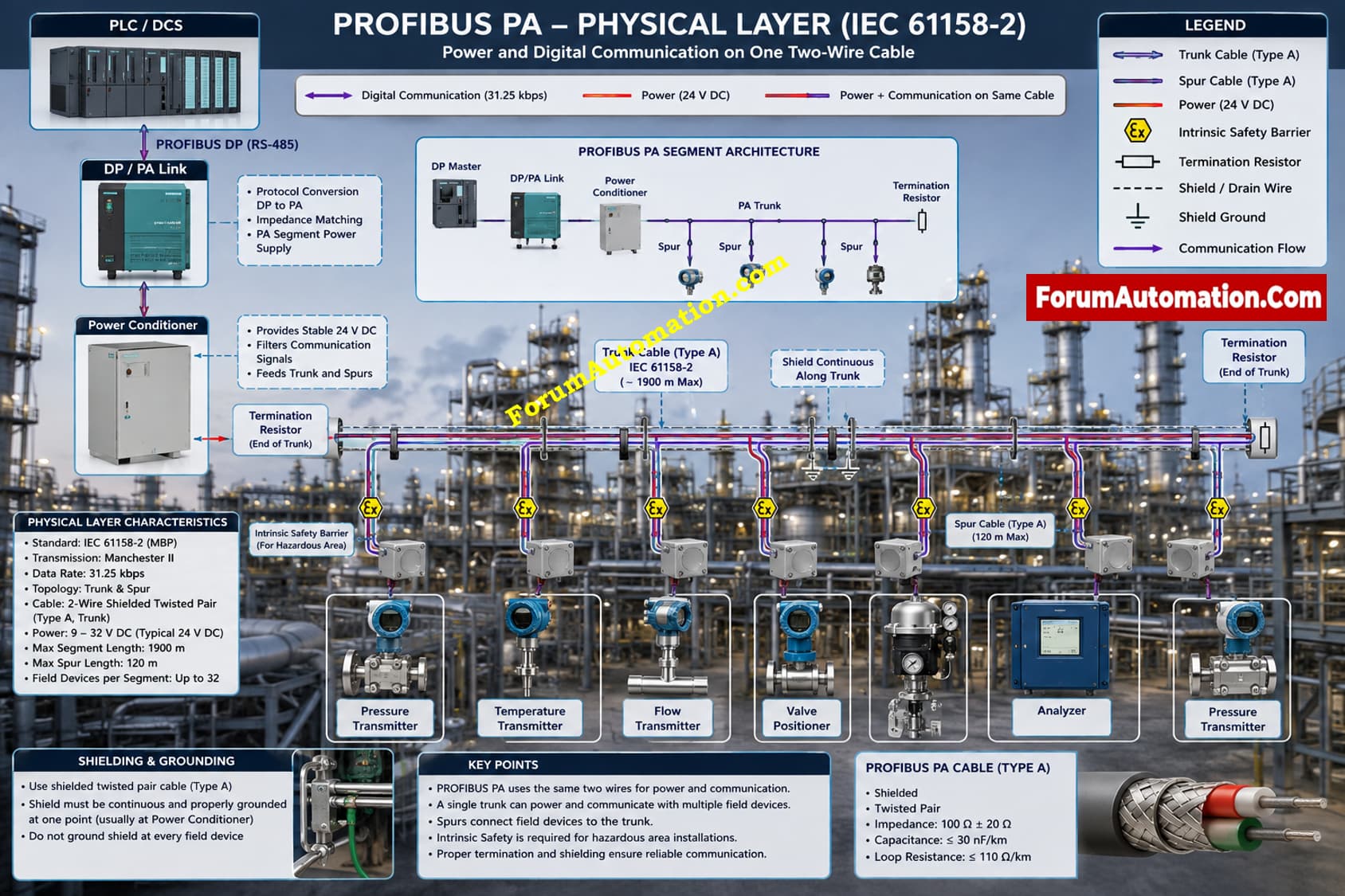
What is the Physical Layer of PROFIBUS PA?
The PROFIBUS PA physical layer is based on the IEC 61158-2 standard, and is specially intended for reliable digital communication between field instruments and control systems in process industries. PROFIBUS DP is focused on high speed factory automation. PROFIBUS PA integrates power and data on the same two-wire shielded cable, which reduces installation costs and simplifies field wiring.
Key Features
- Uses a transmission speed of 31.25 kbps .
- Supports power and communication on one wire.
- Permits lengthy cable lines required by big process plants.
- For use in hazardous regions in intrinsic safety installations.
- Supports several field devices on a single segment.
Practical Plant Application
In a refinery or chemical plant, transmitters, valve positioners and analyzers are connected to the DP/PA Link or Segment Coupler on a PROFIBUS PA segment. All devices interact digitally with the host PLC or DCS, eliminating analog signal problems and enhancing diagnostic capacity.
Engineering Benefits
- Reduced cost of field cabling and installation.
- Better diagnosis and predictive maintenance for devices.
- Accurate digital measurements with no signal quality loss.
- Device configuration easy and remote commissioning
- Reliable communication in explosive circumstances
Troubleshooting Tips
If communications are unreliable, check cable polarity, termination resistors, segment voltage, shield grounding and spur lengths. Excessive cable capacitance, faulty connectors, or incorrect installation of intrinsic safety barriers can adversely impact network performance.
PROFIBUS PA physical layer knowledge enables instrumentation experts to create resilient fieldbus networks to enhance system dependability and save downtime in process automation projects. According to IEC 61158-2, correct installation will guaranty consistent communication, efficient maintenance and long-term operational performance in modern industrial plants.