What is the key difference between LEL and uel?
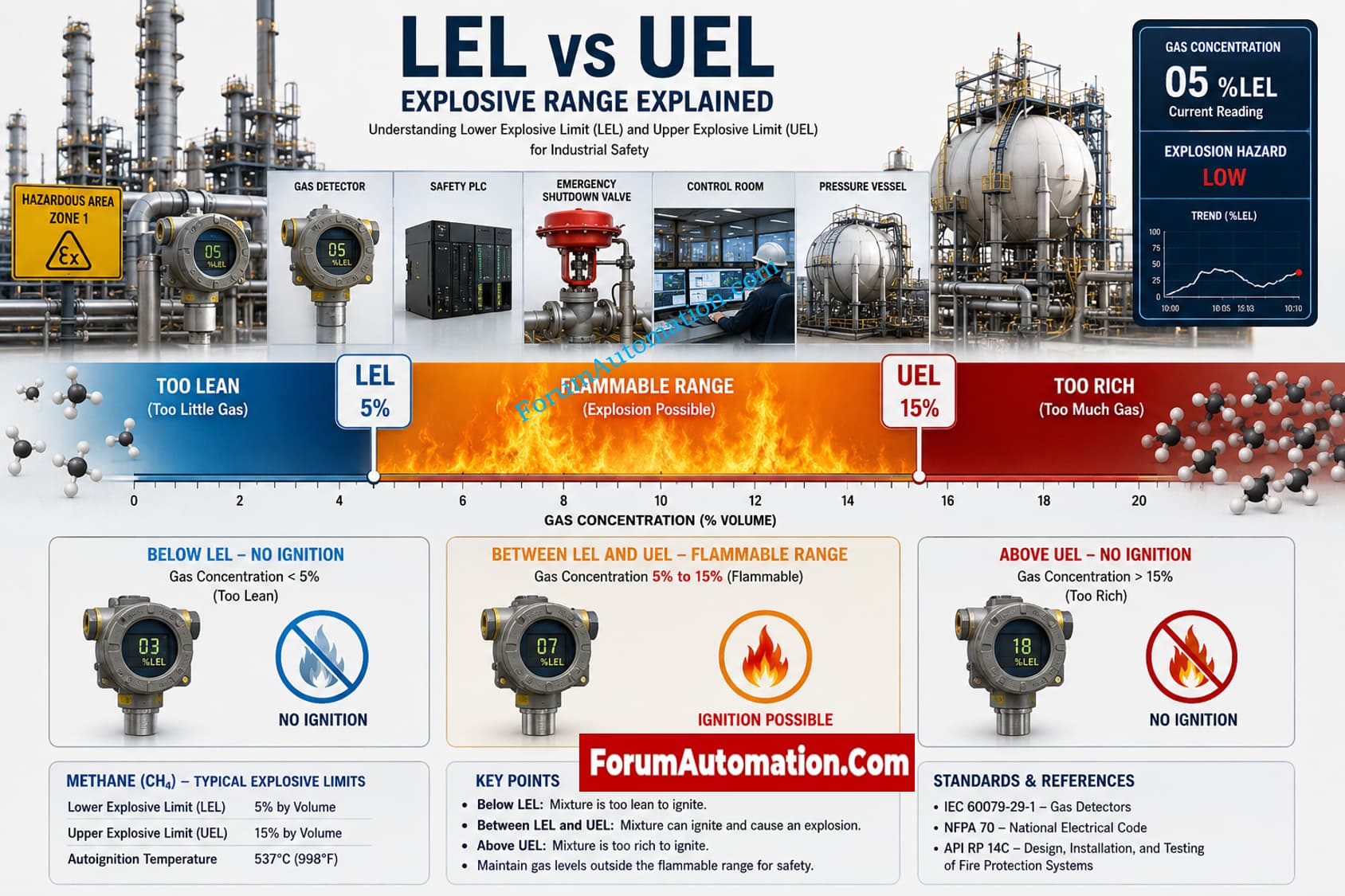
What is the key difference between LEL and UEL?
Understanding LEL and UEL
LEL & UEL The Lower Explosive Limit and Upper Explosive Limit . The flammable range of a combustible gas or vapor combined with air . These limitations are critical for safety in hazardous areas, gas detection and process risk assessment in industrial operations.
The LEL is the minimum concentration of gas in air that can burn when there is an ignition source. Below this level the mixture of gas is too lean to burn.
UEL is the highest concentration of the gas that can burn. If the mixture is above this limit, there is too much fuel and not enough oxygen to keep the fire burning.
Practical Plant Example
This idea is well illustrated by methane leaks.
- Less than 5 percent methane is below the LEL and will not burn.
- Flammable mixture, 5 to 15 percent
- The UEL is exceeded at concentrations above 15 percent, and combustion cannot take place until fresh air causes the gas concentration to be reduced.
Why It Matters in Instrumentation
Gas detector readings are often expressed as a percentage of the LEL as this gives an early warning of developing hazard. Many process facilities begin alarms at roughly 20 percent LEL and emergency shutdown systems at approximately 40 to 60 percent LEL depending on site safety philosophy.
Key Difference
- LEL is the lower explosive limit.
- UEL is the highest concentration that will burn.
- Explosive range is the space between LEL and UEL.
- These limits vary with different gases, and with different working circumstances like temperature and pressure.
Understanding of LEL and UEL assists instrumentation engineers in designing gas detection systems properly, increase plant safety and minimize explosion hazards during regular operations and emergency scenarios.