What is the error in magnetic flow meter?
What is the error in magnetic flow meter?
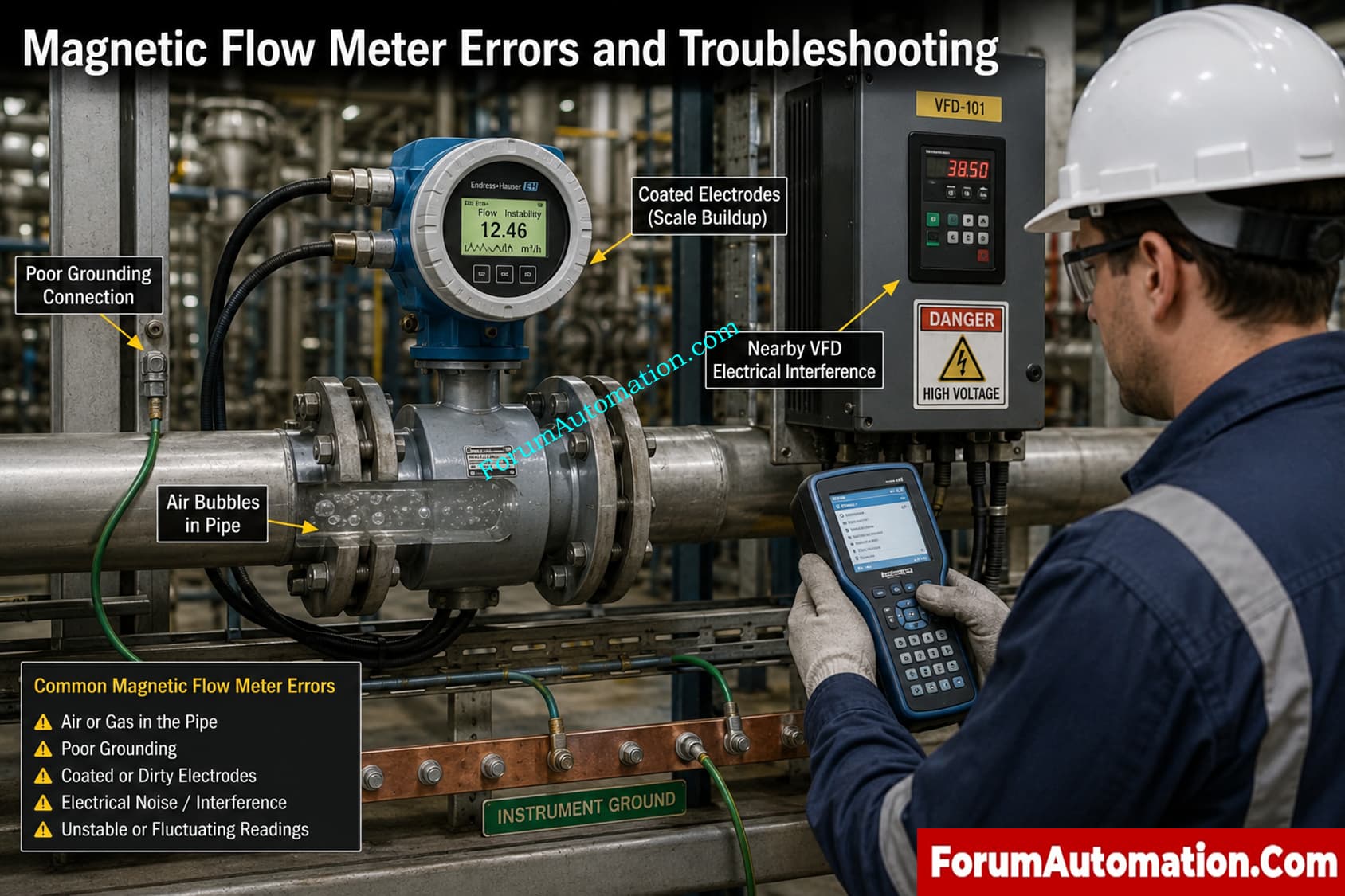
Installation challenges, grounding concerns, process disruptions and electrical interference are the main causes of errors in magnetic flow meters. Incorrect readings are generally classified as unstable flow indication, a zero drift, low flow measurement, or an abrupt variation in the transmitter output. Given the wide application of magnetic flow meters in water treatment, chemical plants, food industries, and slurry applications, it is vital to do proper troubleshooting.
Common Causes of Magnetic Flow Meter Error
- Sensor and transmitter not grounded properly
- Air bubbles or gas-filled tubes
- Sludge or chemical build-up on electrode covering
- Installation: incorrect flow direction
- Nearby VFD wires causing electromagnetic interference
- Calibration factor or zero setting wrong
- Flow disturbance near elbows or pumps
- Loose electrical connections or damage to signal cables
Practical Plant Troubleshooting
Partially full piping is one of the major causes of unreliable magnetic flow readings in actual plant conditions. The meter needs a full pipe to provide correct electromagnetic signals. It can also cause noisy output signals . Poor grounding is especially common in plastic piping systems . Electrode coating in wastewater and slurry operations can result in low flow indication or signal loss.
Best Practices to Reduce Errors
- Install meter with recommended straight pipe length
- Use adequate earth grounding rings
- Don’t put close to high voltage cables
- Perform periodic zero check .
- Electrode maintenance in shutdown periods
- Check the transmitter parameter settings after replacement
Proper installation and frequent maintenance greatly increase the accuracy and long term dependability of magnetic flow meters in industrial process applications.