What is the difference between Zone 1 and Zone 2 in IECEx?
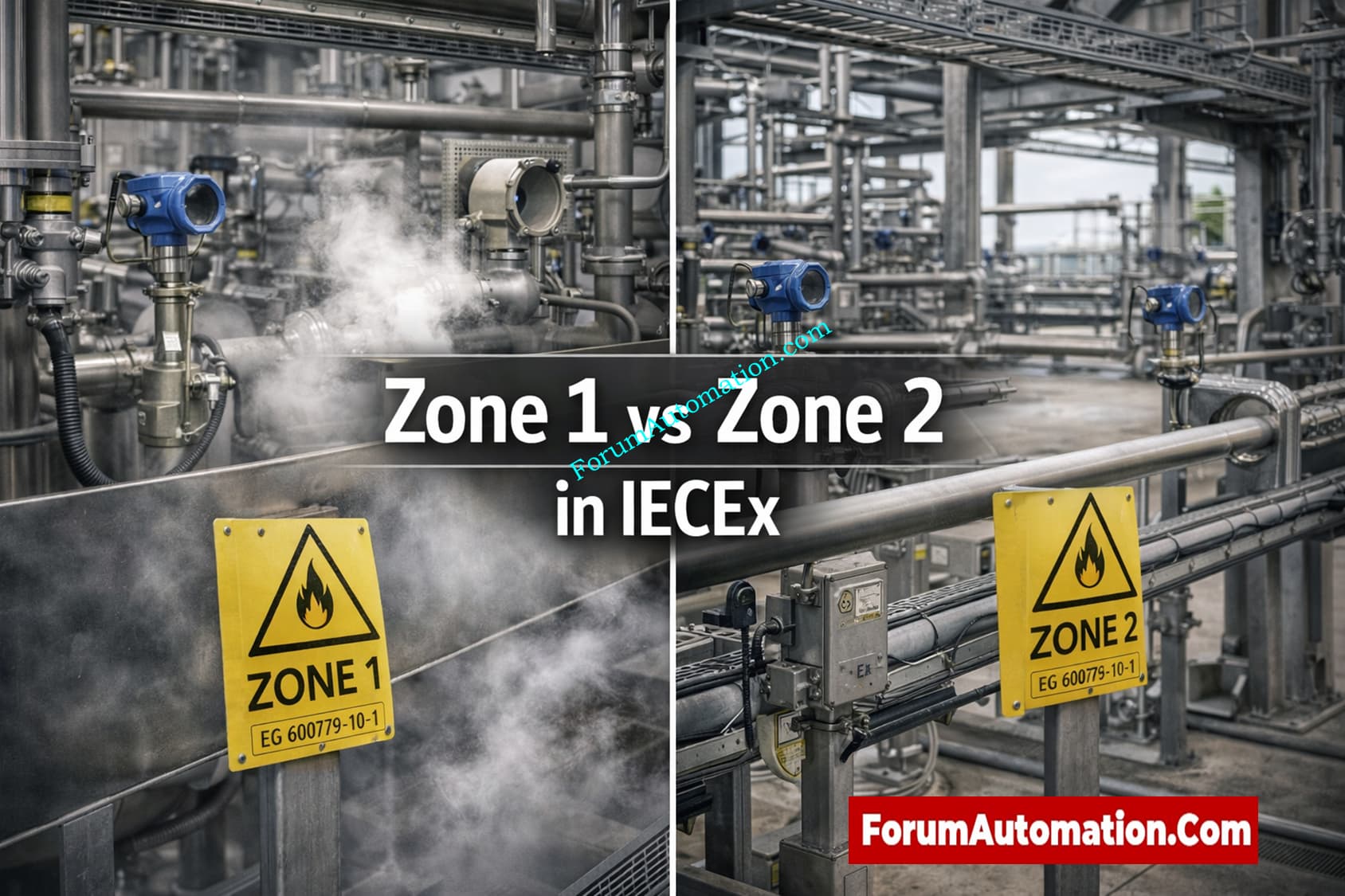
Difference between Zone 1 and Zone 2 in IECEx
Definition Based on Hazard Frequency
The IECEx zone classification system is based on how likely it is that an explosive gas atmosphere will be present and how long it will be there. An explosive atmosphere is likely to happen in Zone 1 during regular operation. In Zone 2, on the other hand, an explosive atmosphere is not expected to happen under normal conditions and only lasts for a short time if it does.
Risk Level and Engineering Interpretation
Zone 1 is a medium-risk location where leaks, venting, or process emissions are likely to happen from time to time. In Zone 2, there is a low possibility of hazardous conditions happening. These conditions only happen when something goes wrong, such equipment breaking down or a leak happening by accident.
Equipment Selection and Protection Level
Zone 1 needs stronger protection solutions, such flameproof or intrinsically safe designs that are harder to be certified. Zone 2 lets you utilize simpler safety measures, including equipment that doesn’t spark, because the risk of danger is much smaller. This has a direct effect on the cost, the way things are installed, and the upkeep that is needed.
Typical Plant Examples
Zone 1 regions are places where hydrocarbons could leak when the pump seals, compressor skids, and reactor are running. Zone 2 sites are places like pipe racks, the edges of storage tanks, and well-ventilated outdoor regions.
Practical Engineering Insight
One mistake that happens a lot on projects is not identifying dangerous regions correctly to save money. But if you classify things wrong, you could end up with unsafe equipment and big problems with compliance. Engineers should not make assumptions about zoning; they should base it on process data, leak sources, and ventilation.
Key Difference
Zone 1 is for expected hazardous presence, whereas Zone 2 is for unexpected and short-term exposure. This has a direct effect on design philosophy and safety margins.