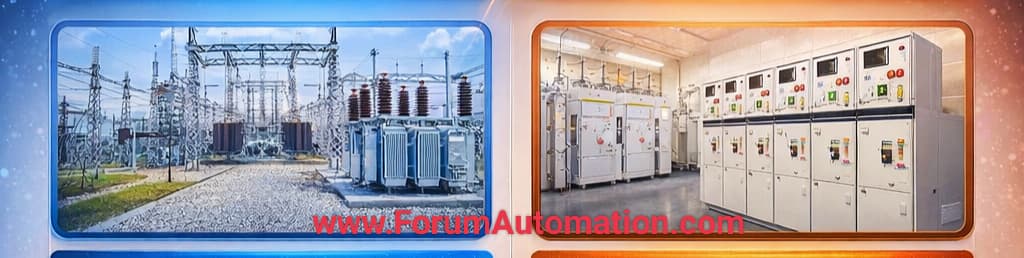
What is the difference between Substation and RMU?
Substation vs RMU (Ring Main Unit)
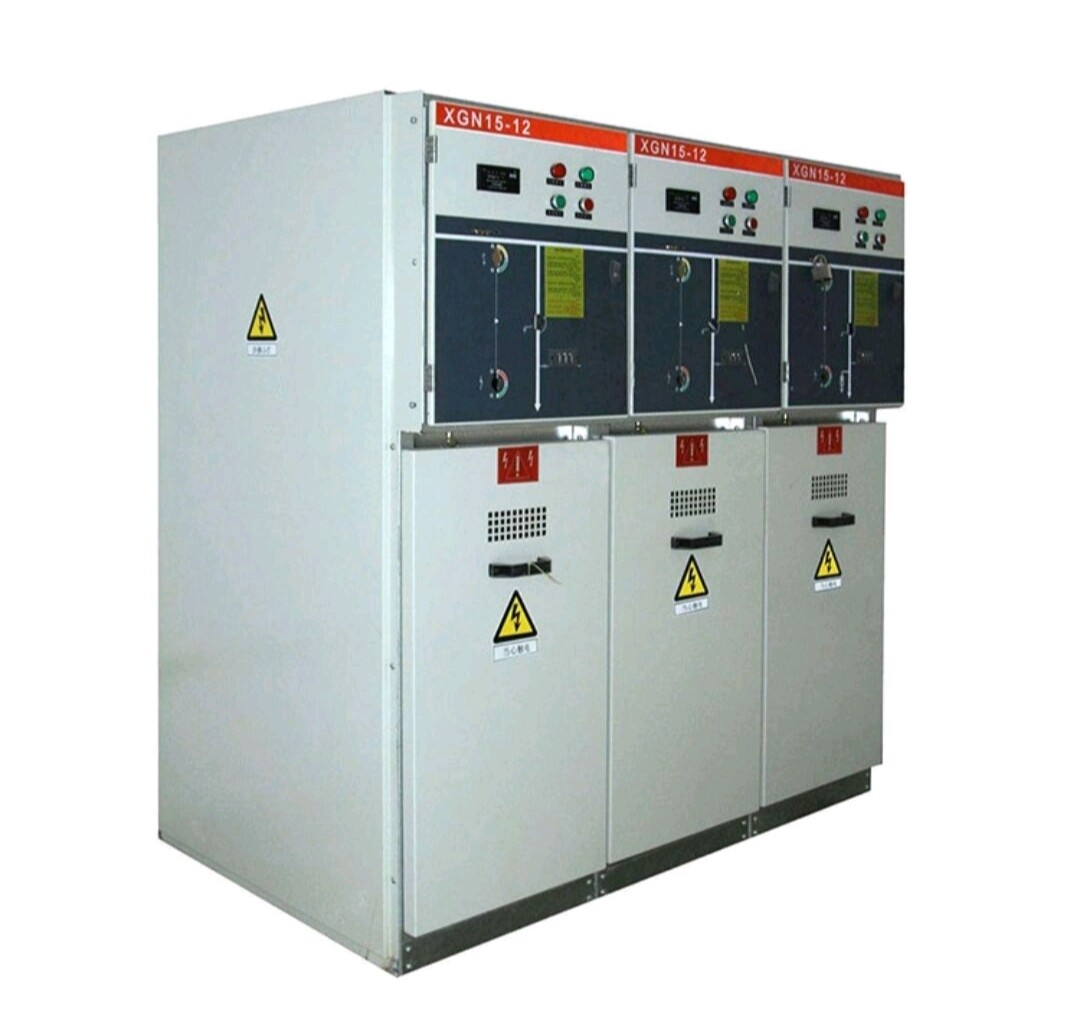
| Parameter | Substation | RMU (Ring Main Unit) |
|---|---|---|
| Definition | A facility used to transform voltage levels and control power flow | A compact switchgear unit used in ring distribution networks |
| Voltage Level | High Voltage / Extra High Voltage (11 kV to 400 kV and above) | Medium Voltage (typically up to 36 kV) |
| Function | Voltage transformation, switching, protection, and control | Switching, protection, and isolation in distribution systems |
| Size | Large installation (indoor/outdoor yard) | Compact and enclosed unit |
| Installation Area | Requires significant land and infrastructure | Requires very small space |
| Main Components | Transformers, circuit breakers, isolators, CTs, PTs, busbars | Load break switches, circuit breakers, fuses, SF6/air insulated modules |
| Application | Transmission and primary distribution networks | Secondary distribution (urban/underground networks) |
| Mobility | Fixed installation | Can be easily installed and sometimes relocatable |
| Protection Level | Advanced protection schemes (distance, differential, etc.) | Basic to moderate protection (fuse + relay combination) |
| Cost | High capital cost | Relatively lower cost |
| Maintenance | Requires regular and skilled maintenance | Low maintenance (especially sealed RMUs) |
| Reliability | High, but depends on system design | Very high due to ring network continuity |
| Operation | Can be manual or fully automated (SCADA integrated) | Often automated, suitable for smart grids |
| Typical Location | Power plants, grid stations, large industrial facilities | Urban areas, commercial complexes, residential distribution networks |
| Insulation Type | Air insulated (AIS) or Gas insulated (GIS) | Mostly SF6 or solid insulated |