What is the difference between ISO 13849 and IEC 61511?
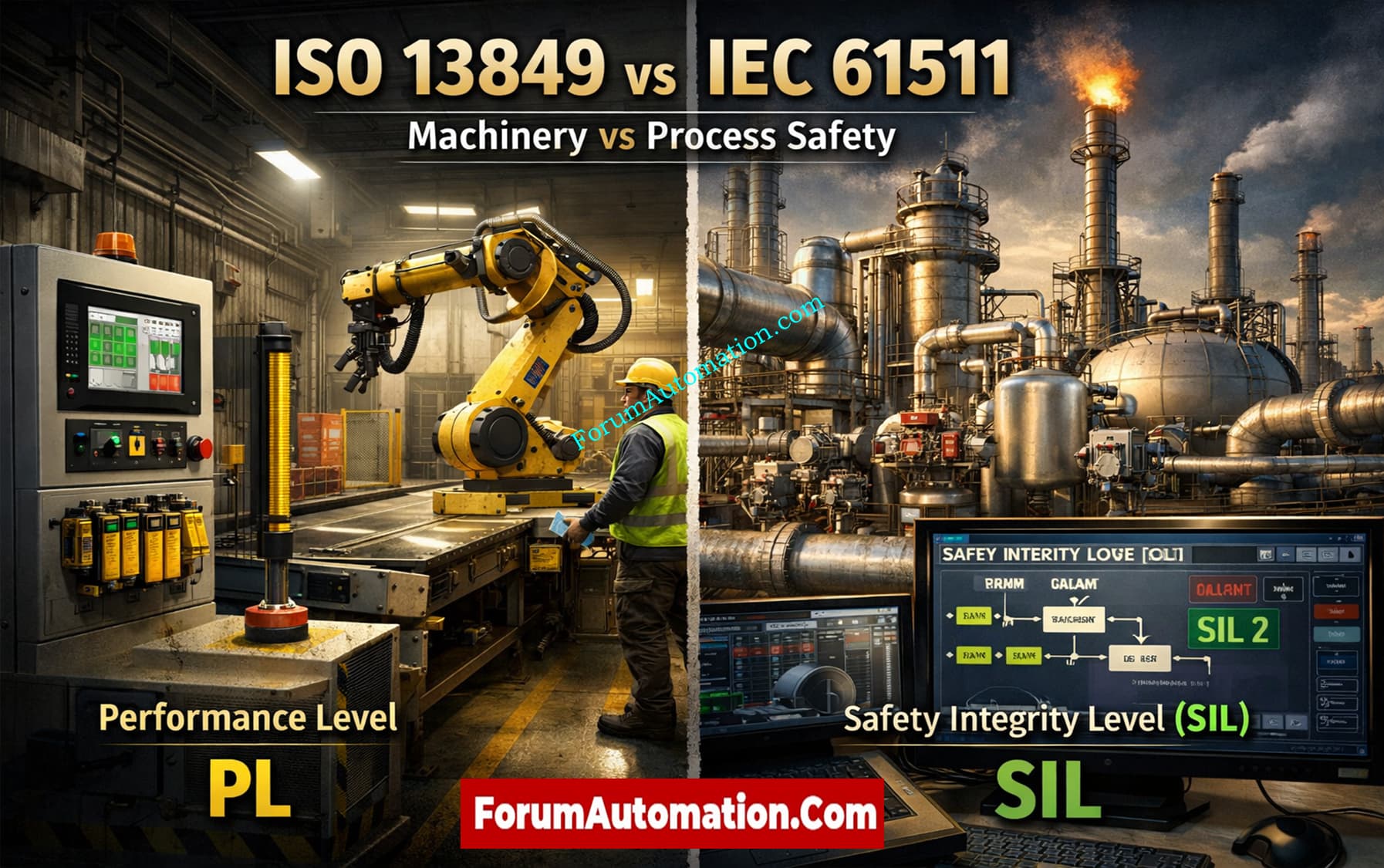
What is the difference between ISO 13849 and IEC 61511?
ISO 13849 and IEC 61511 both deal with functional safety, although they do so in various ways and for different types of businesses.
ISO 13849 is for control systems that are used to keep machines safe.
IEC 61511 is for safety instrumented systems in the process industry.
ISO 13849 is used in real life on machinery including robots, presses, packing lines, and conveyors. It concentrates on the safety-related components of control systems, uses categories and Performance Levels, and is mostly for systems that need to work all the time or are in high demand. Process plants for oil, gas, chemicals, power, and other things employ IEC 61511. It includes the whole SIS lifespan, from planning and building to using, maintaining, and changing it. SIL shows how to lower risk.
The biggest difference is the size.
ISO 13849 answers the question, “How safe is this machine control function?”
IEC 61511 answers the question, “How does this process safety loop lower the risk to an acceptable level?”
ISO 13849 is generally based on parts and architecture.
IEC 61511 is based on lifecycle and risk analysis and includes HAZOP, LOPA, SRS, proof testing, and change management.
For choosing, utilize the standard that fits the area of application. Before using machine standards for process shutdown functions or process SIS rules for a packing machine, make sure to examine the governing code. This difference is important in commissioning and troubleshooting since the criteria for validation evidence, proof test intervals, diagnostics, and documentation are all different. Choosing the right standard keeps you from having problems with audits, having to do extra effort, and making hazardous assumptions. A simple rule: ISO 13849 checks for mechanical risks, while IEC 61511 checks for process variations that could lead to loss of containment.