What is the difference between IEC 60079 and ATEX?
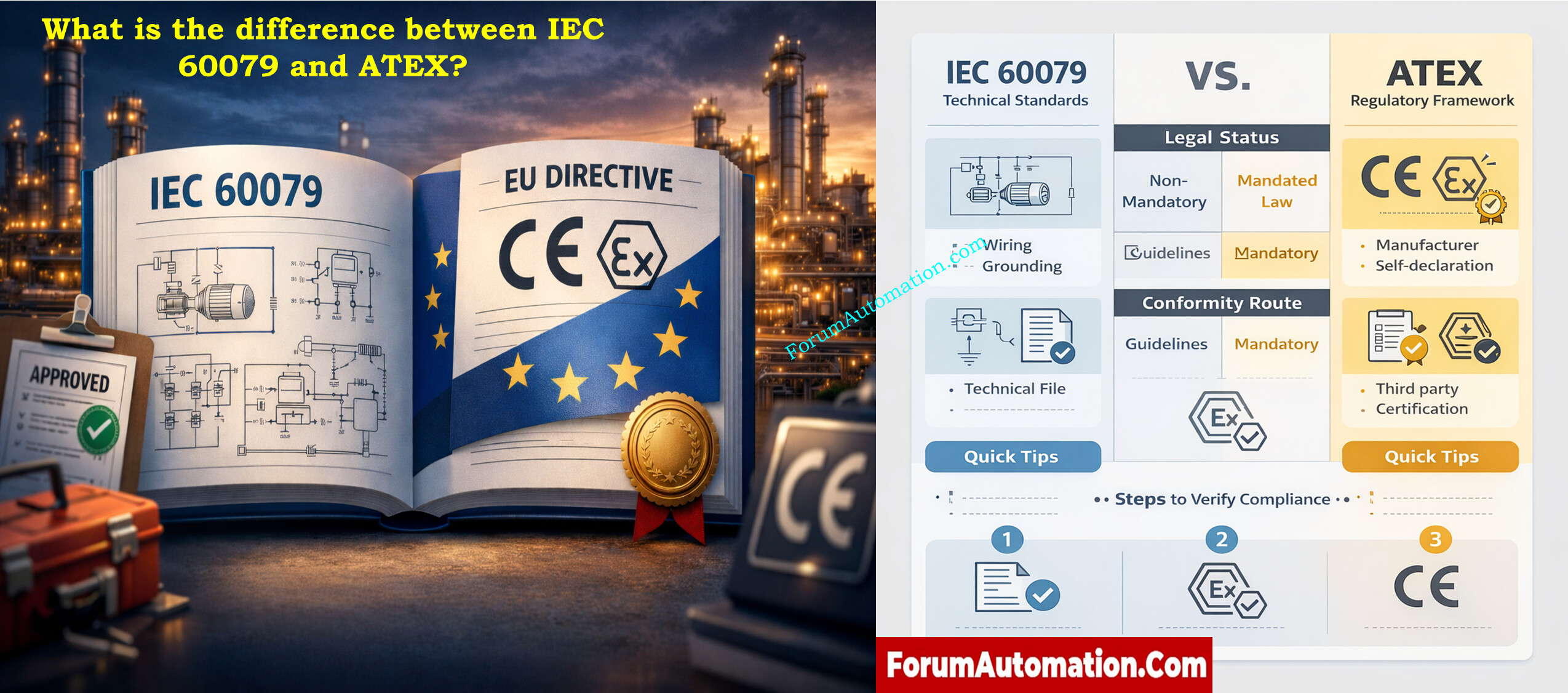
IEC 60079 vs ATEX practical difference for plant engineers
IEC 60079 is a set of international technical standards that tells you how to protect equipment and how to classify areas. ATEX is the set of standards in the European Economic Area that control the placement of equipment and safety rules in explosive atmospheres. It includes directives 2014/34/EU and 1999/92/EC. Both have similar technological content, but they differ in how they follow the law and what kind of documentation they need.
Key differences for projects:
-
Legal status vs. standards status. ATEX is a law in the EEA that requires businesses to meet certain market access standards. IEC 60079 is a set of international standards that are utilised all around the world as the technical basis for design and testing.
-
Ways to be in compliance. According to ATEX, a manufacturer can either certify that their products meet the standards themselves or get a recognised organization to do it for them, depending on the type of equipment. IECEx has a third-party certification program that helps with international recognition.
-
Marking and technical documents. ATEX needs a CE Ex mark and a technical file that looks like it came from the EU. IECEx gives out public certificates and IEC-style documents that are accepted in many places outside of the EU.
Engineering implications:
-
For projects in Europe, be sure that the acquisition paperwork say that they meet ATEX standards and what conformity module is needed.
-
For equipment that is meant for export, IECEx or a local equivalent is better since it makes it easier for people all over the world to accept it.
-
When you ask for copies of declarations, certificates, and test results, you can check to see if they are in compliance.
Make sure to check the installation methods, grounding wiring, and the relevant sections of IEC 60079, including IEC 60079 14, in the project’s electrical specifications. Keep proof of verification with the technical file and inspection records.