What is the difference between fat and fwt?
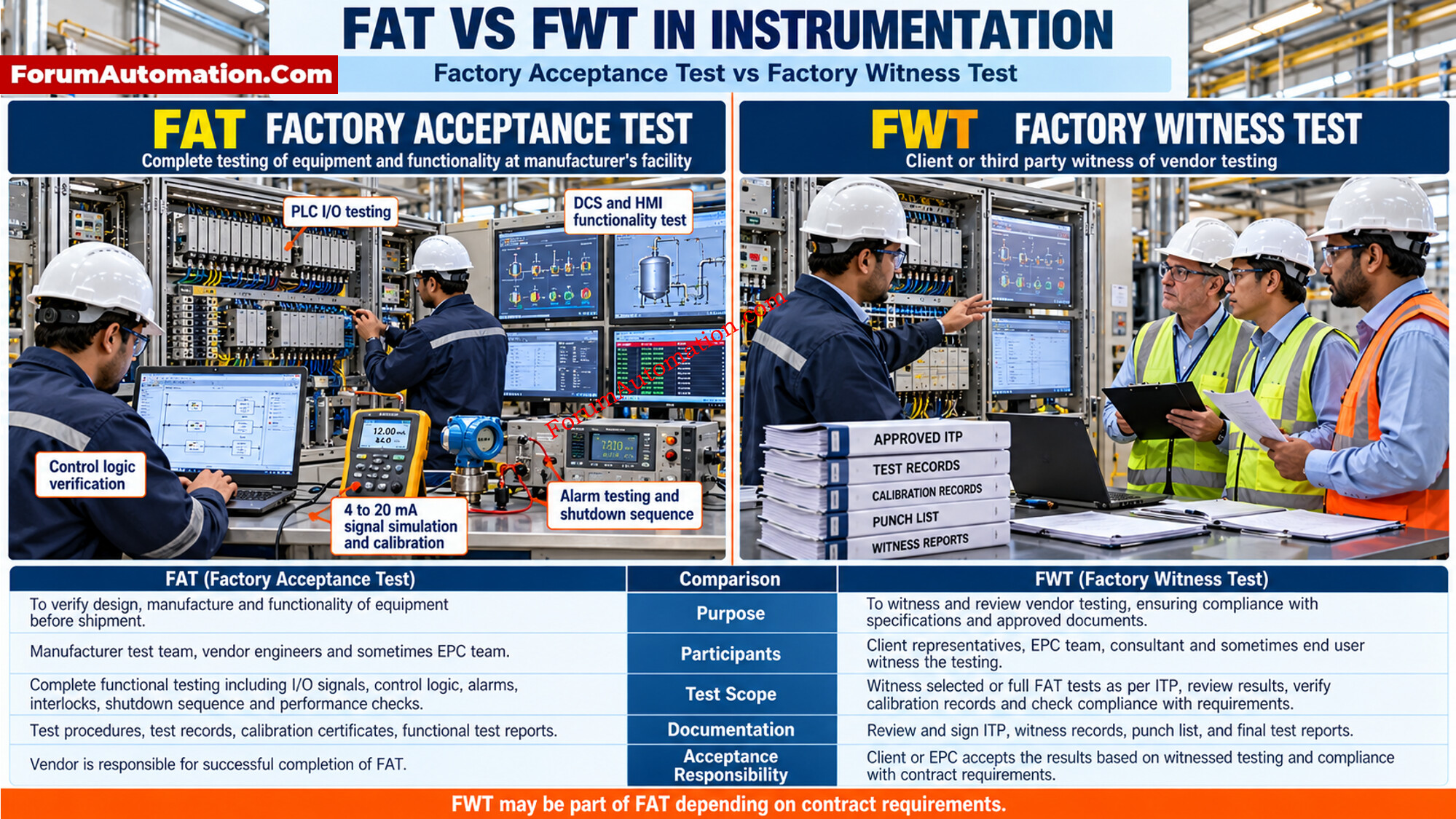
What Is the Difference Between FAT and FWT in Instrumentation and Control Systems?
FAT means Factory Acceptance Test, while FWT means Factory Witness Test. Both are performed at the manufacturer’s facility before equipment delivery, but their scope and contractual purpose can differ.
FAT: Factory Acceptance Test
FAT verifies whether equipment or automation systems meet approved specifications, drawings, functional requirements, and acceptance criteria.
Typical instrumentation FAT activities include:
- PLC and DCS hardware verification
- Input and output signal simulation
- Control logic and interlock testing
- Alarm and shutdown sequence verification
- HMI graphics and communication checks
- Documentation review and punch list preparation
FAT results support formal acceptance and shipment authorization according to project requirements.
FWT: Factory Witness Test
FWT generally refers to testing observed by client representatives, EPC engineers, or third party inspectors at the manufacturer’s facility.
Typical witnessing activities include:
- Observing specified functional tests
- Checking calibration certificates
- Verifying instrument performance
- Reviewing test records and deviations
- Confirming compliance with approved inspection plans
FWT may form part of FAT rather than representing a separate testing stage.
Practical Project Example
During a DCS FAT, engineers simulate transmitter inputs, verify alarms, and test shutdown logic.
During an FWT, client representatives witness selected tests and record observations against agreed acceptance criteria.
Key Engineering Difference
FAT defines an acceptance testing activity. FWT emphasizes independent observation of specified factory tests.
The exact distinction depends on contractual terminology.
Engineering Recommendation
Always review the approved inspection and test plan, witness points, acceptance criteria, punch list, and signoff responsibilities before testing.
Key takeaway: FAT establishes compliance; FWT provides witnessed verification.