What is the difference between ex-e and ex-d protection?
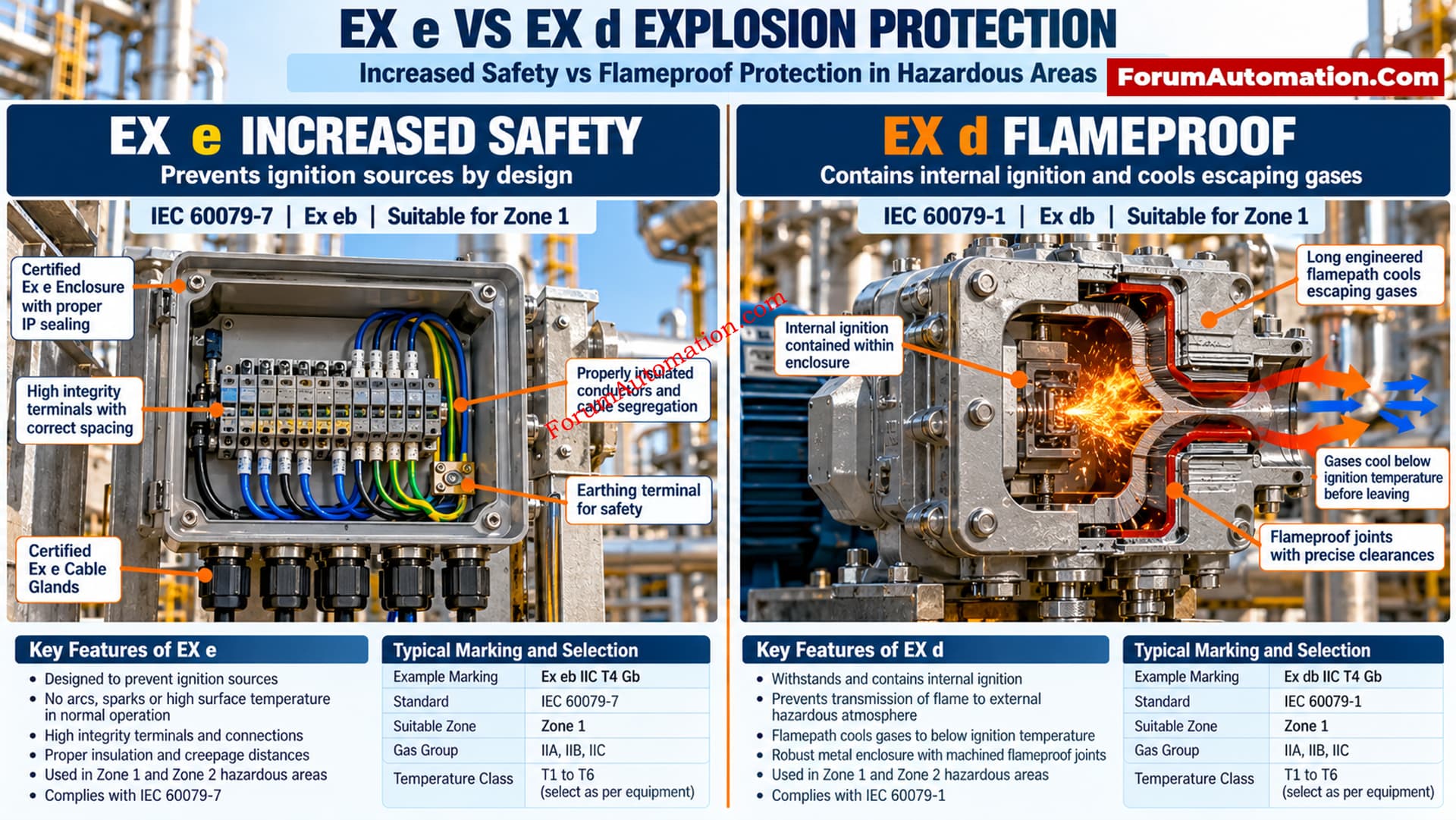
What Is the Difference Between Ex e and Ex d Protection in Hazardous Areas?
Ex e and Ex d are explosion protection methods used for electrical equipment installed in hazardous areas containing flammable gases or vapours. Their main difference is how they prevent ignition of the surrounding atmosphere.
Ex e: Increased Safety Protection
Ex e protection prevents ignition by reducing the possibility of electrical sparks, arcs, and excessive temperatures through enhanced equipment design.
Important features include:
- Secure electrical terminals and connections
- Adequate creepage and clearance distances
- Controlled operating temperatures
- Suitable insulation and mechanical protection
- Certified components and cable entries
Typical applications include junction boxes, terminal enclosures, lighting equipment, and specially designed motors.
Ex eb equipment generally supports Zone 1 applications, while Ex ec equipment is intended for Zone 2.
Ex d: Flameproof Protection
Ex d protection allows a potential internal ignition but prevents the resulting explosion from propagating into the surrounding hazardous atmosphere.
Important features include:
- Strong explosion resistant enclosures
- Precisely engineered flamepaths
- Certified cable glands and entries
- Controlled external surface temperatures
- Proper enclosure assembly and maintenance
Typical applications include electrical switches, motors, control stations, and instrument housings.
Ex db equipment is commonly suitable for Zone 1.
Practical Engineering Difference
Ex e prevents ignition sources through design, whereas Ex d contains internal explosions safely.
Selection and Maintenance
- Engineers must verify hazardous area classification, gas group, temperature class, equipment protection level, and certification.
- Never modify flamepaths or substitute uncertified components.
Key takeaway: Select protection according to certified equipment markings and installation requirements, not enclosure appearance alone.