What is the difference between ESD and SIS?
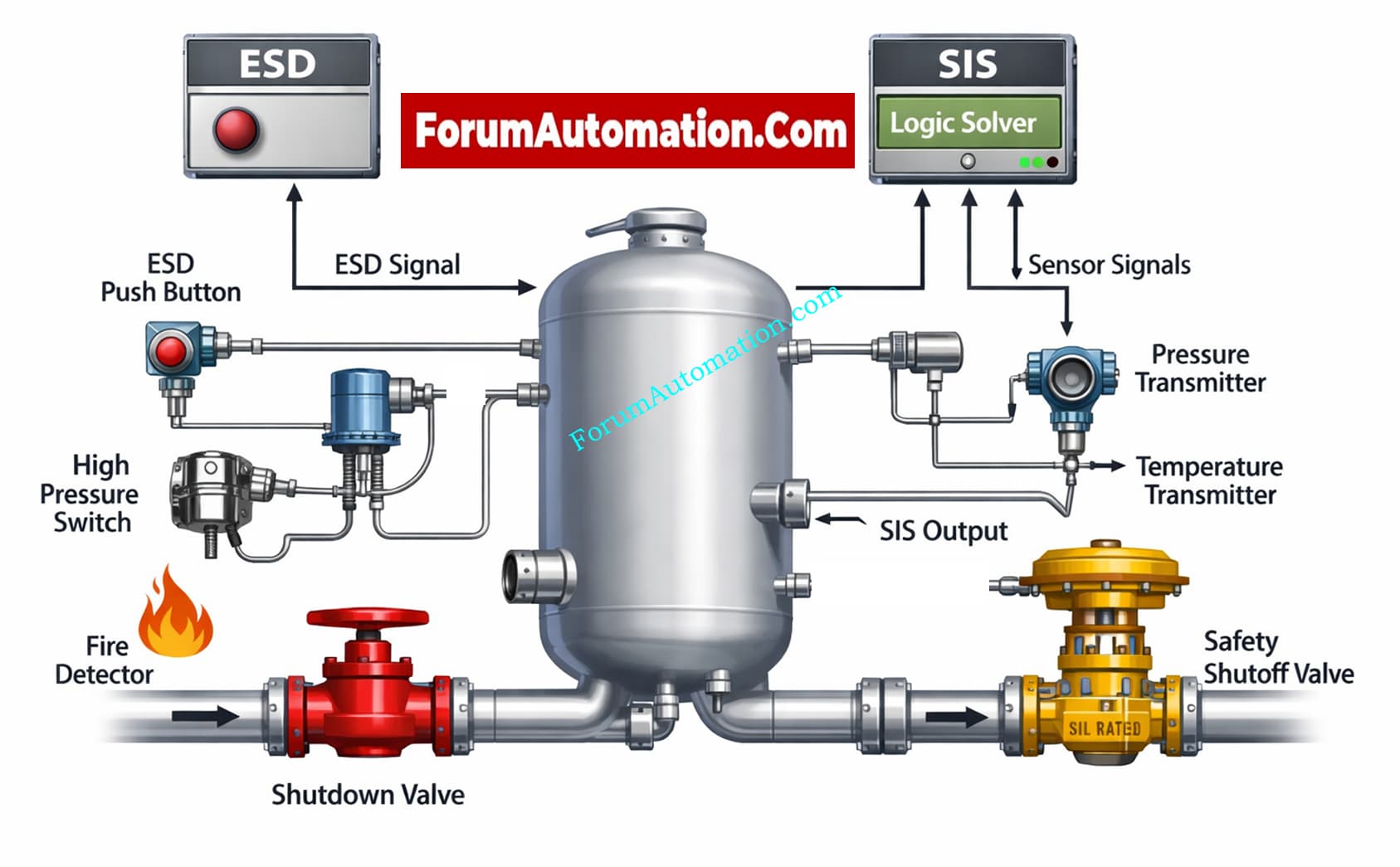
Difference between ESD and SIS
Emergency Shutdown ESD and Safety Instrumented System SIS are two different but linked layers in the architecture of process safety. In real plants, the uncertainty mainly originates from how the shutdown steps are carried out.
ESD is all about quickly shutting down and isolating things when something goes wrong or there is an emergency. Some common examples include high-pressure excursions with manual push buttons or shutdowns that start with a fire signal. SIS is a structured safety layer that lowers process risk to an acceptable level by applying Safety Instrumented Functions (SIFs).
ESD logic is usually simple and based on events. Its goal is to quickly stop the flow of energy or materials. SIS covers a full functional safety lifecycle that starts with hazard analysis and risk assessment and goes all the way through SIL assignment verification validation and regular testing.
Safety Integrity Level (SIL) is how SIS shows how much risk it can lower. Every SIF has a goal of failing on demand a certain number of times. Depending on safety assessments for the project, ESD may or may not be made to meet a SIL requirement.
To avoid common cause failures, SIS must not depend on fundamental process control. ESD can be part of SIS if it helps lower risk, however operator-initiated ESD alone is usually not seen as a safety layer.
SIS needs documented verification that testing periods are skipped, control is maintained, and changes are managed. ESD testing is usually easier and looks at how well something works instead of how reliable it is statistically.
In a lot of brownfield factories, ESD functions are there without SIL justification.
Some of these functions are turned into SIS SIFs during HAZOP and LOPA evaluations. Engineers should make sure to keep emergency actions and safety integrity needs distinct so that they don’t design protection that is too strong or too weak.