ESD vs DCS: Differences, Functions and Industrial Applications
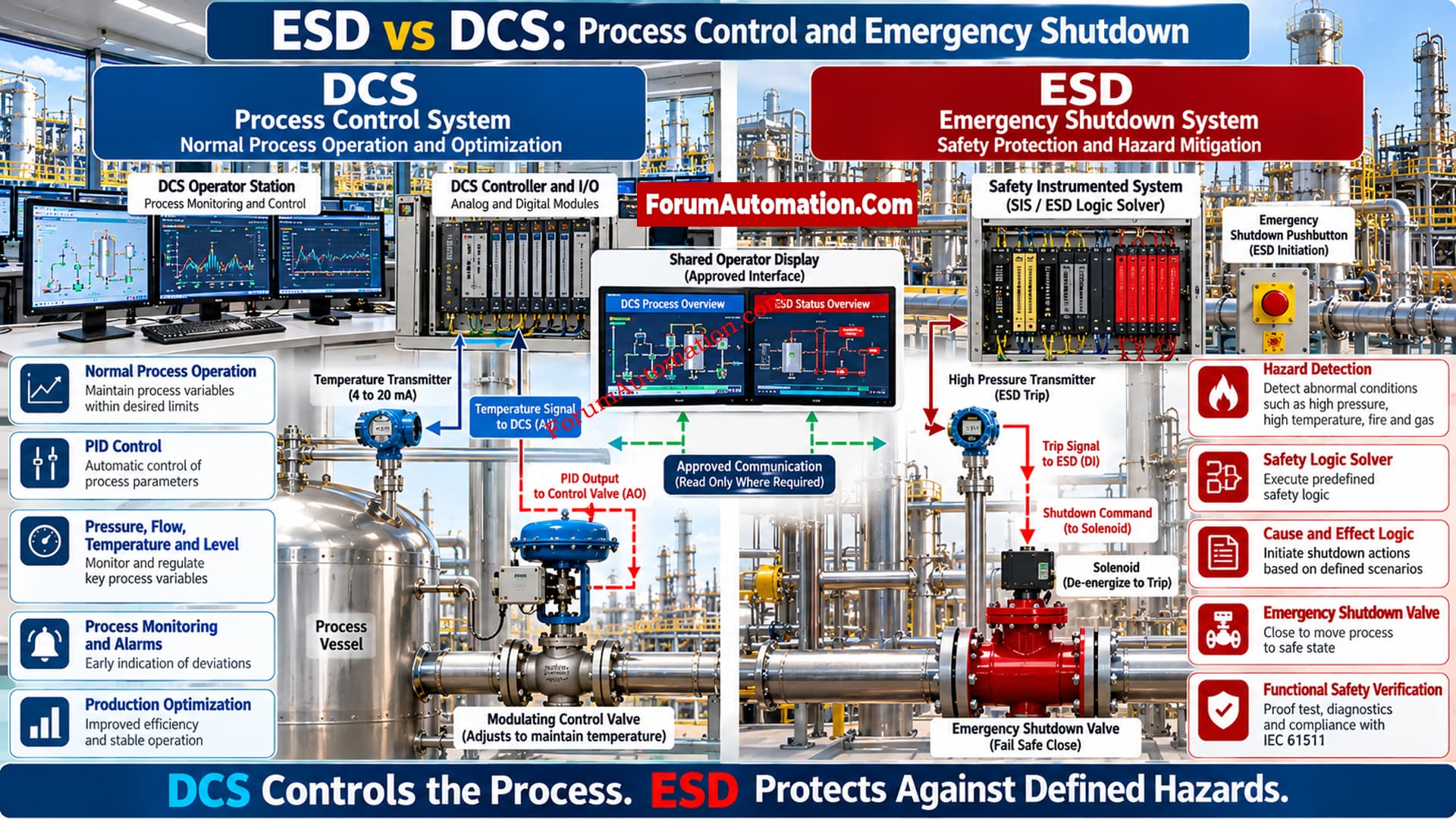
What Is the Difference Between ESD and DCS?
ESD (Emergency Shutdown System) and DCS (Distributed Control System) are two separate systems in an industrial process facility that have different functions. It is important for instrumentation engineers building dependable process control and functional safety systems to understand ESD vs. DCS.
What Is a DCS?
The DCS monitors process factors and automatically controls equipment to operate the plant normally. It receives inputs from pressure transmitters, temperature sensors, flow meters and level devices to maintain the working conditions.
Typical functions of DCS are as follows:
- PID control continuous of pressure, flow, temperature, level
- Operator interrogation, equipment sequencing and process alarms.
- Reporting and optimization of production, historical trending.
For instance, a DCS in the refinery maintains the temperature in a reactor by a control valve according to the control strategy established.
What Is an ESD System?
An ESD system detects predetermined hazardous circumstances and executes protective steps to bring the process to a defined safe condition. Where implemented as a Safety Instrumented System (SIS) its functions are designed in accordance with the applicable functional safety criteria.
Typical ESD functions include the following:
- High pressure, fire, gas or other specific trip conditions detected.
- Closing emergency shutoff valves and stopping specified equipment.
- Implementing approved shutdown sequences based on specified cause and effect logic.
ESD vs DCS: Key Differences
Primary function: DCS manages routine operations. ESD protects against defined hazardous circumstances.
control philosophy: DCS control of process variables. ESD provides protective actions as specified.
System design: Sufficient independence, integrity and verification of safety instrumented ESD functions.
Testing: The testing in DCS is performance and function of the controls. ESD testing covers trip logic, proof testing and final elements when needed.
What Should Engineers Verify?
During commissioning check cause and effect logic, trip setpoints, instrument health, valve fail locations, reset conditions, bypass management and functional independence.
Don’t think a traditional DCS by itself gives the safety protection you need. The proper architecture should be determined by the safety requirements definition and risk assessment.