What is the difference between EDP and ESD?
What Is the Difference Between EDP and ESD?
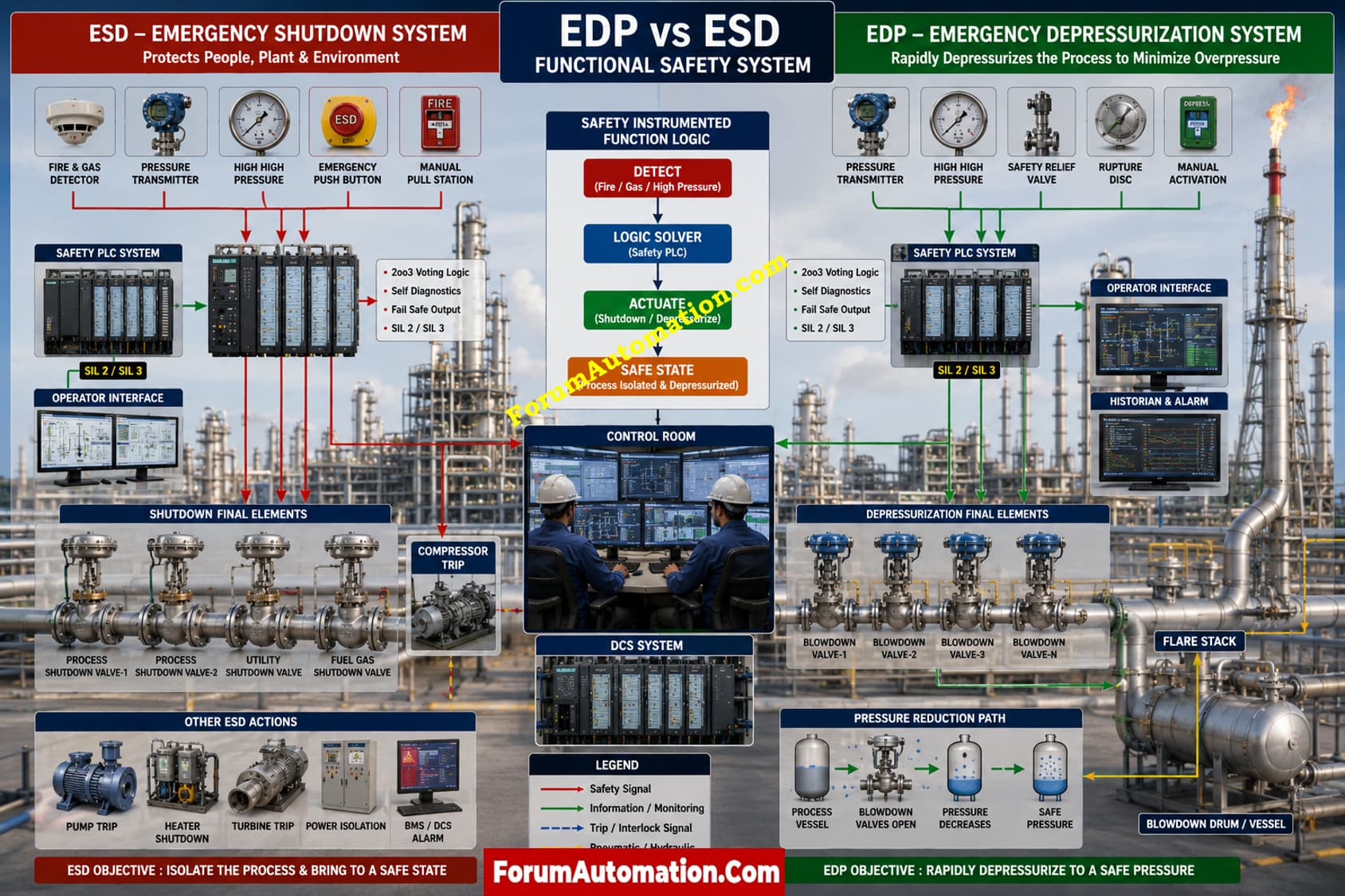
EDP (Emergency Depressurization) and ESD (Emergency Shutdown) are the basic pillars of process safety for oil and gas, petrochemical, LNG and refinery plants. Both are activated during abnormal operating conditions, but fulfill different safety purposes. Understanding the distinction is important for engineers to build effective protection schemes and to meet process safety regulations.
ESD Function
The Emergency Shutdown (ESD) mechanism terminates dangerous activities and places the plant in a safe condition. Typical ESD activities include:
- Closing shutdown valves
- Stopping pumps and compressors
- Isolating fuel supplies
- Tripping electrical equipment
- Preventing escalation of hazardous events
EDP Function
The Emergency Depressurization (EDP) system will depressurize process equipment in the event of an emergency shutdown. It functions by opening blowdown valves that release process fluids to flare or vent systems, decreasing the stored energy within vessels and pipelines.
Key Difference
EDP vents pressure trapped in the isolated equipment. ESD separates the process and prevents dangerous operation. In many facilities, ESD is initiated before EDP when certain logic confirms the shutdown criteria.
During commissioning and maintenance engineers verify shutdown logic, valve stroking, pressure transmitter inputs and functional testing of both systems. Proper integration minimizes risk of explosion, equipment damage and people exposure in emergencies.
A good ESD and EDP system meets process safety standards and enhances plant dependability and safety of personnel, equipment and the environment. Engineers in instrumentation, control and functional safety in modern process facilities need to understand their coordinated functioning.