What is the difference between ATEX and peso?
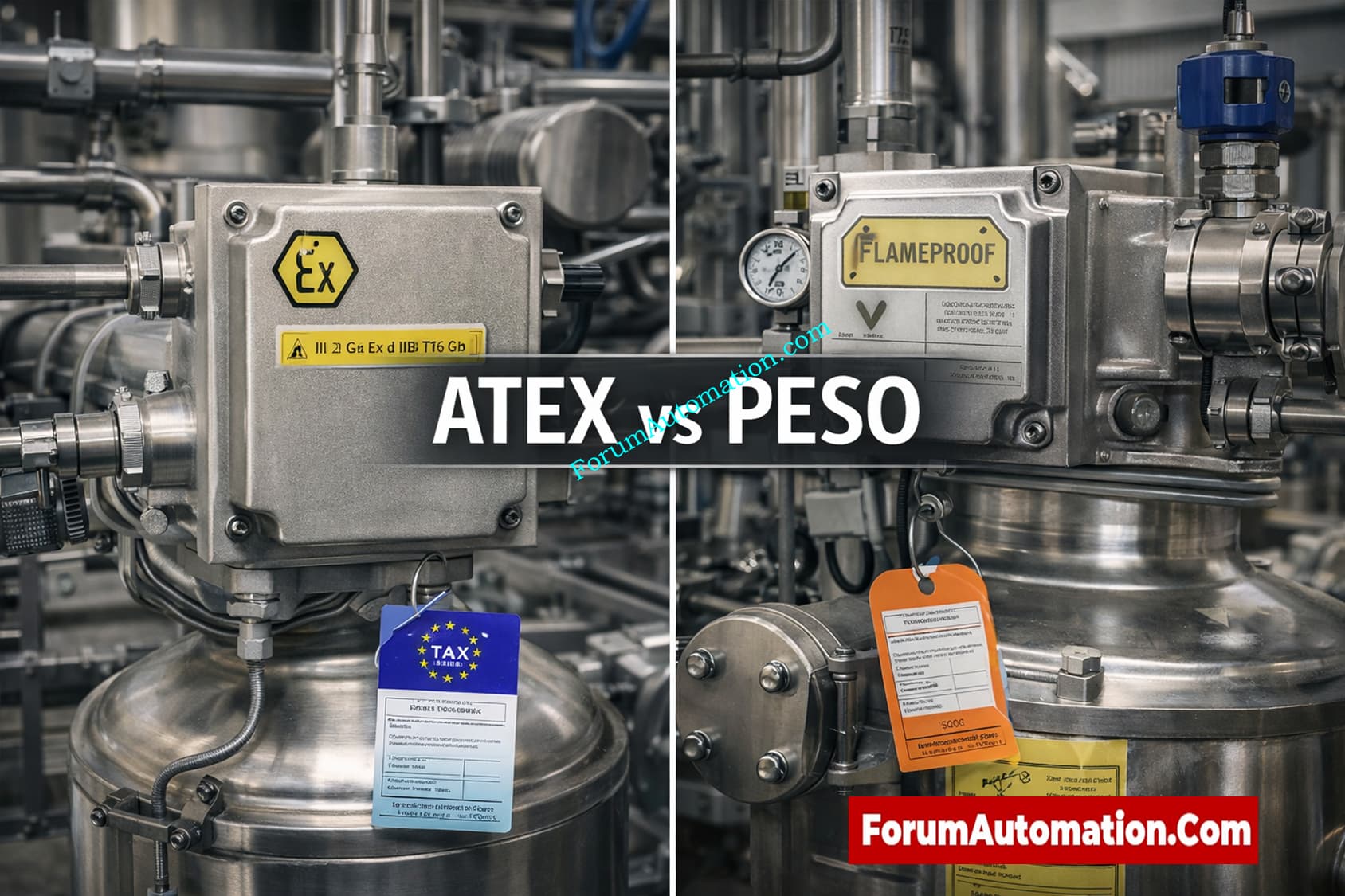
Difference between ATEX and PESO
Regulatory Background and Scope
ATEX is a set of rules in Europe that tells businesses and workers what they need to do to work safely in situations where there are explosives. It comes from EU rules and is required in the European Economic Area. PESO, on the other hand, is an Indian regulatory body that gives the go-ahead for equipment and installations that are used in oil and gas and explosive situations.
Approach to Certification
ATEX is all about making sure that products are designed and made in a way that meets standards. Before entering the EU market, equipment must meet basic safety standards and be certified by recognized agencies. PESO’s main job in India is to make sure that imported or locally made equipment meets Indian safety and installation standards.
Geographical and Practical Relevance
For projects done in Europe or sent to EU nations, ATEX certification is required. Projects in India, especially in the oil and gas, chemical, and hazardous industries, must get PESO certification. PESO clearance is still needed in India before commissioning, even if the equipment has ATEX or IECEx certification.
Engineering and Project Execution Perspective
Engineers typically use ATEX-certified tools from Europe on EPC projects. But in India, these tools can’t be used on site without PESO’s permission. This makes it very important to follow the rules while buying things and looking over documents.
Key Practical Difference
ATEX makes sure that equipment is safe by design, whereas PESO makes sure that the equipment is authorized and safely deployed in dangerous places in India. Engineers need to think about both of these things when planning a project because they go together but can’t be switched out for each other.