What is the difference between API 505 and IEC 60079?
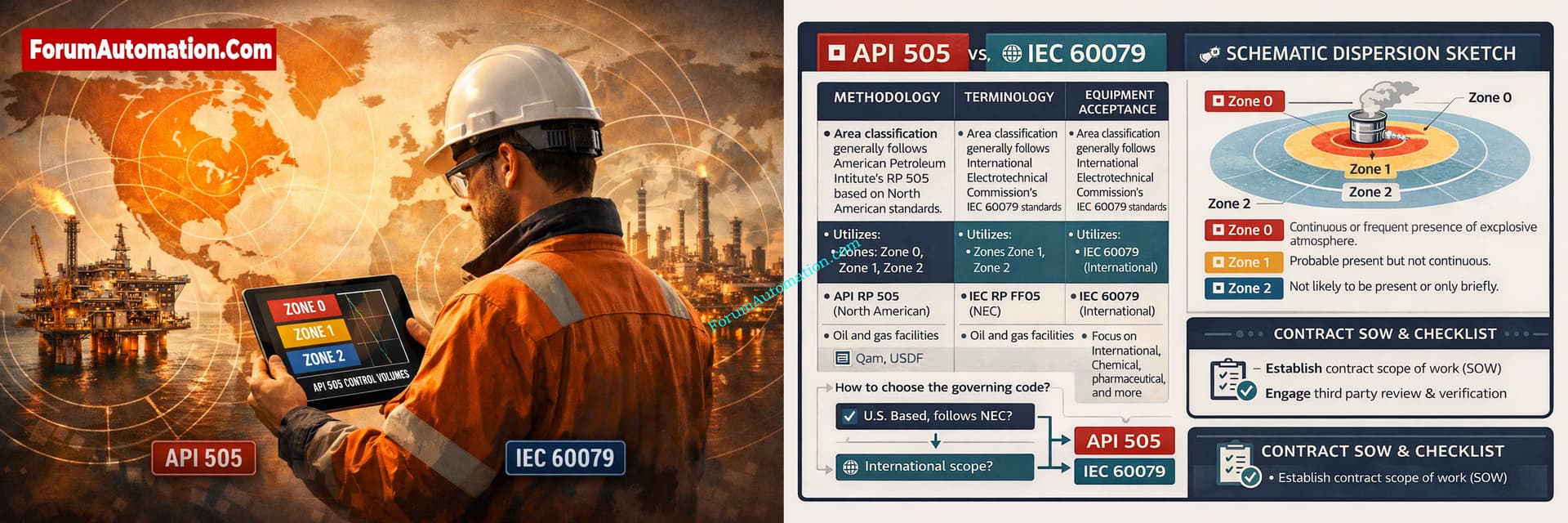
API 505 vs IEC 60079 area classification practical guidance
API RP 505 and IEC 60079 10 both show how to classify places where dangerous gases are present, but they come from different industries and use distinct approaches. API 505 is based on how oil and gas are done in North America and is in line with NEC and NFPA electrical rules. IEC 60079 10 is a member of the IEC family and helps with worldwide zone-based area classification and risk-based assessment.
Key technical differences:
-
Methodology. API 505 utilises a prescriptive method with set control volumes and safe distances, while IEC 60079 10 lets you undertake risk-based assessments and suggests dispersion modelling when it’s appropriate.
-
Words and maps. API 505 is similar to NEC and ANSI ideas that are utilised in the US. Zone 0, 1, and 2 definitions connected to gas groups and ignition danger are used by IEC.
-
Accepting the equipment. You can only employ IEC-marked equipment in API-based projects after making sure that the group equivalency protection concept and local code are both accepted.
Practical steps for projects:
-
State the governing code in the contract and the description of work.
-
If equipment is constructed to IEC but site practice employs API, prepare a mapping matrix that compares the ventilation assumptions and allowable distances for gas groups and equipment groups.
-
Use dispersion modelling or conservative prescriptive distances to check the assumptions about area categorisation, and keep the computations in the technical file.
Engineering advice:
If you’re not sure about the classification, get a third party to look it over. Make sure the classification is clear for the permit to work on electrical installation and procurement to cut down on rework during construction.