What is the difference between API 500 and 505?
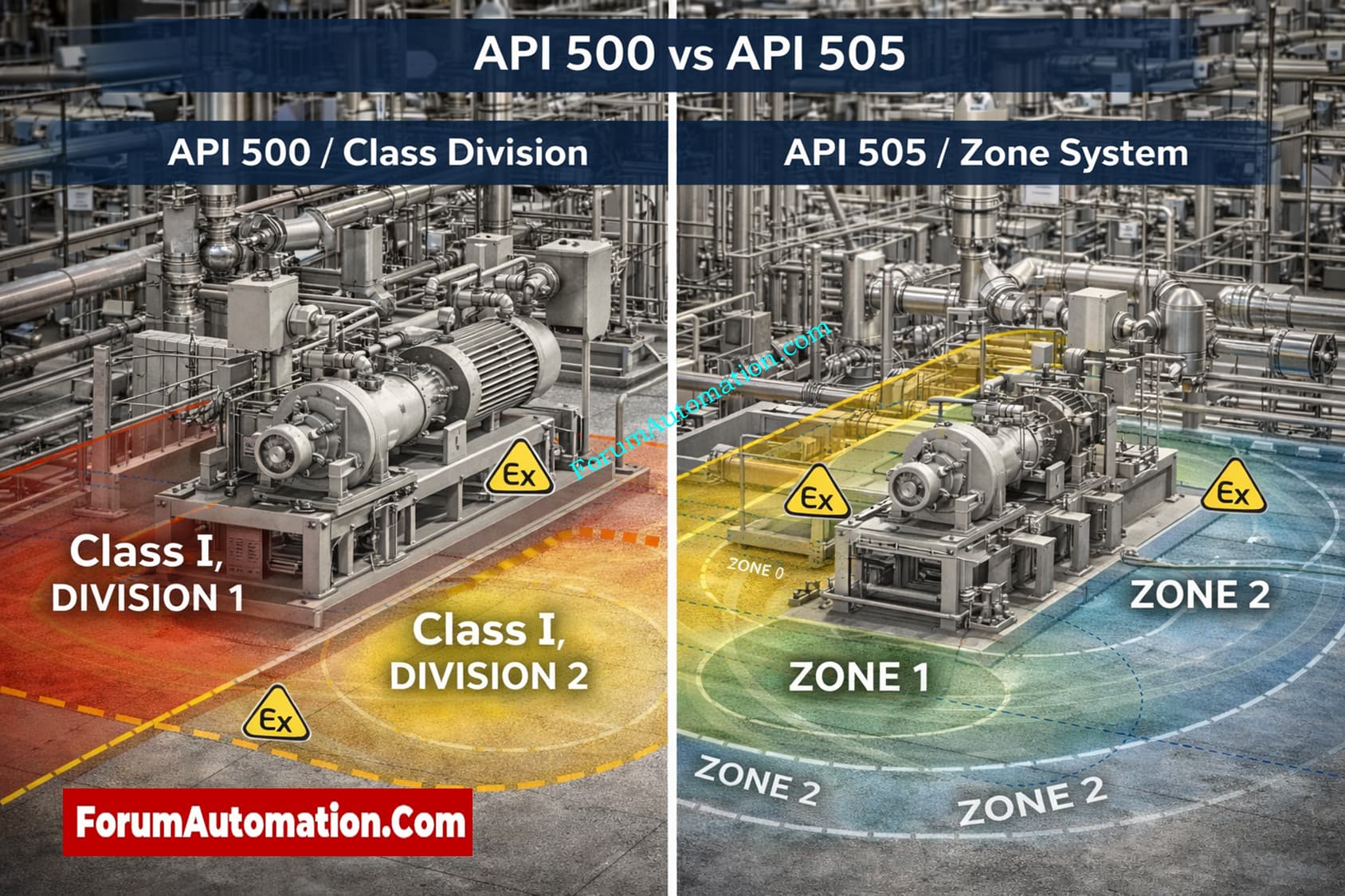
What is the difference between API 500 and 505?
Overview
API RP 500 and API RP 505 are two common standards for classifying hazardous areas in the oil and gas and process industries. They explain how to identify and control explosive hazards.
Classification Approach
API RP 500 (Class/Division System)
- Class I: gases, Class II: dust, Class III: fibers
- Division 1: hazard present during normal operation
- Division 2: hazard only under abnormal conditions
API RP 505 (Zone System)
- Zone 0: continuous hazard
- Zone 1: likely during normal operation
- Zone 2: rare or short duration
Key Technical Differences
- API 500 → Binary classification (Div 1 / Div 2)
- API 505 → Probability-based zoning (0/1/2)
- API 505 aligns with IEC/ATEX international standards
Engineering Impact
- API 500 is more conservative → larger hazardous areas
- API 505 allows optimized zoning → reduced cost and better layout flexibility
- Equipment selection differs significantly (Division-rated vs Zone-rated devices)
Practical Usage
- API 500 → Common in legacy and North American facilities
- API 505 → Preferred for EPC, offshore, and global projects
Field Insight
Mixing both systems in one facility can lead to:
- Certification conflicts
- Inspection confusion
- Procurement errors
Selection Strategy
Pick based on the project’s needs, the client’s standards, and the rules that apply. When working on overseas projects, API 505 is usually the best choice because it works better with IEC 60079 and ATEX frameworks.
Engineering Tip
Always do a full equivalency study before switching from Division to Zone. Direct mapping isn’t always right.