What is the difference between a float and a displacer?
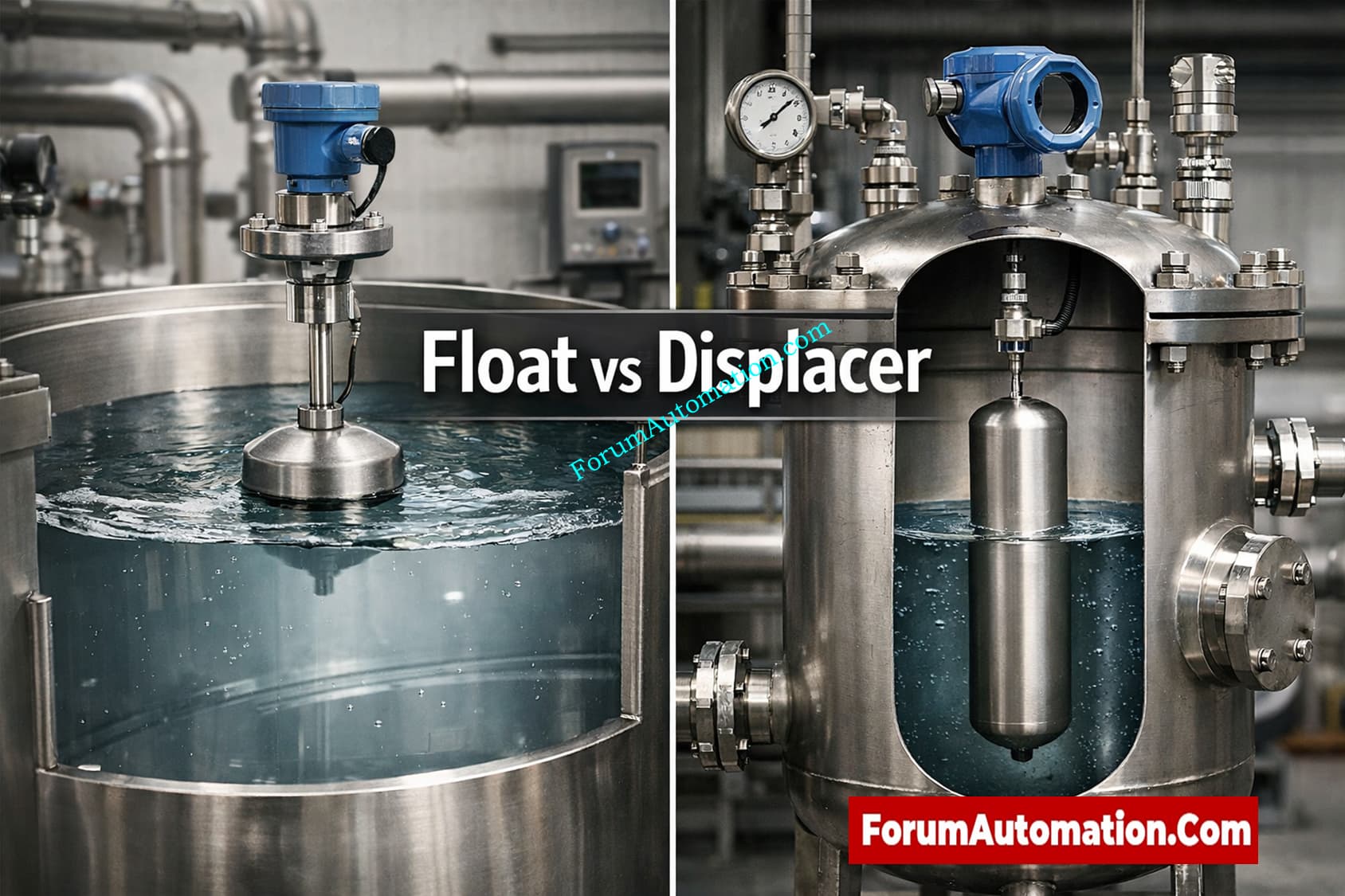
Difference between Float and Displacer
Basic Principle and Measurement Concept
Both float and displacer instruments are founded on Archimedes’ concept, yet they work very differently in the field. A float is made to sit on the surface of the liquid and move up and down as the level changes. On the other hand, a displacer stays fully or partially submerged, and the measurement is based on how the buoyant force acting on it changes, not its position.
Mechanical Behavior in Process
The device in a float system actually follows the level. Linkages, magnetic coupling, or switches send this motion to make alarms or indications. A displacer doesn’t move very far. Instead, it is held up by a torque tube or spring, and the change in apparent weight caused by buoyancy is turned into a signal that can be measured.
Field Application Differences
Float instruments are often employed in open tanks, water systems, and storage containers when the liquid is pure and the density stays the same. They are easy to use and work well for moving between point levels. Displacer instruments are better for pressurized vessels, separators, and interface applications where stability and continuous measurement are needed.
Impact of Density and Process Conditions
Float devices are less sensitive to changes in density, but they can break if the density decreases below the limits set by the float design. Displacers are very sensitive to density, thus they work well for measuring interfaces, but they need to be carefully calibrated when process conditions change.
Practical Engineering Insight
In real plants, floats often get stuck because of sludge or coating. Displacers work better in tough conditions, although they can drift because of spring fatigue or changes in density. When choosing, you should think about more than simply cost. You should also think about process pressure, density stability, and how easy it is to maintain.