What is the definition of bypassing safety controls?
What is the definition of bypassing safety controls?
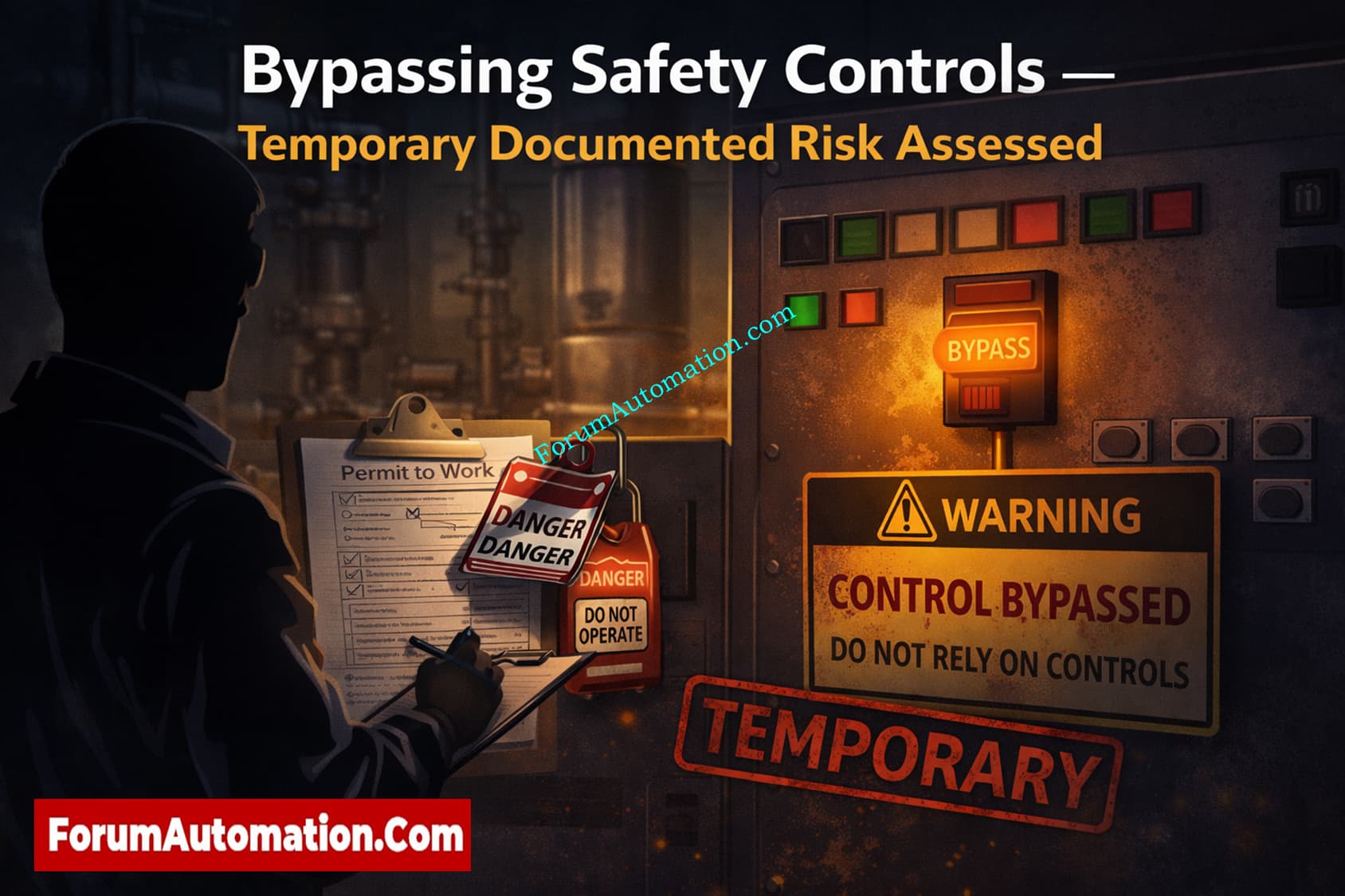
Bypassing safety controls implies turning off, isolating, or overriding a safety device’s function on purpose so that the process can keep going or maintenance can keep going. Disabling interlocks, forcing outputs, deleting hardware linkages, or temporarily stopping alarm trips are all common bypass operations. Bypasses are occasionally needed for troubleshooting, commissioning, or controlled maintenance, but they increase risk since they take away safety features that are meant to stop dangerous situations.
A solid solution must incorporate the idea of temporary recorded bypasses with tight permit to work requirements, set start and stop times, compensation controls, and supervisory approval. Best practice says that there should be established protocols for bypasses, risk assessment notifications to operations and engineering, needed signs revalidation after restoration, and updating records to keep functional safety, integrity, and compliance with standards.
Make sure to point out the distinction between risky informal ad hoc bypasses and safe, documented, and time-limited formal regulated bypasses. Lastly, remind professionals that bypassing without permission lowers Safety Integrity Level targets and could break business and regulatory safety rules. Always suggest going back to the standard safety configuration as soon as the work is done.