What is the Alarm Philosophy Defined in ISA-18.2 (2018) for Effective Alarm Management in Process Industries?
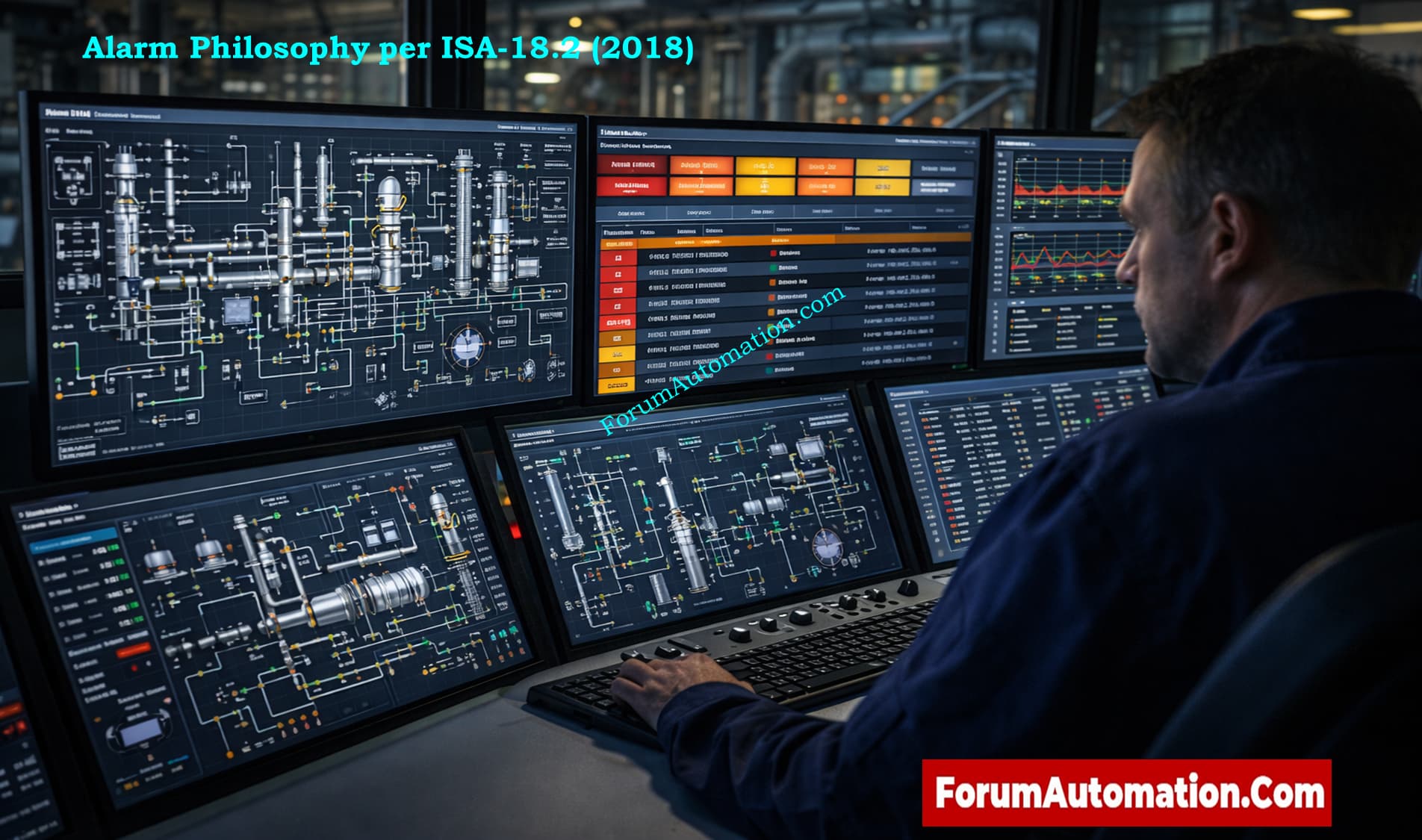
An alarm philosophy document (APD) explains how alarms help keep things running safely and efficiently. It includes what an alert is, how an operator should respond, how to prioritize alarms, and what performance goals should be met. ISA-18.2 lists the steps (rationalize, implement, monitor, and optimize) that need to be taken to keep alarms working.
Core principles
- An alert must need a person to respond; don’t alarm informational situations.
- Set alarm goals (safety, environmental, equipment protection, throughput) and measurable KPIs (nuisance rate, chattering, mean time to respond).
- Use explicit names, setpoint logic, and a priority system (High/Medium/Low) that are linked to what the operator does.
Alarm Philosophy procedure (practical)
- Rules for defining and classifying alarms.
- Prioritization criteria and what operators should do in response.
- Plan for managing alarm floods, suppression, shelving, and announcing.
- MOC procedure for changing alarm setpoints and logic.
Plant-focused implementation tips
- Begin with rationalization workshops at the control room level and include operators and maintenance.
- If you get more than 10 alarms a day, treat them as action items: don’t just silence them, fix the problem.
- Use KPI dashboards to keep an eye on alarm loads, chattering alarms, and stale alerts. Use the results to make things better all the time.
- For new projects, include alarm philosophy in the FAT/SAT acceptance tests and DCS configuration.
Troubleshooting common issues
- Alarm floods: use staggered setpoints, dependencies, and delays.
- Confusion about priorities: write down the steps for responding and have operators practice them.
Keep the APD as a dynamic document that is linked to training records, reviews of incidents, and regulatory audits to show that you are following the rules and always getting better. All the time.
1 Like
This great information!