What is SIS in process safety?
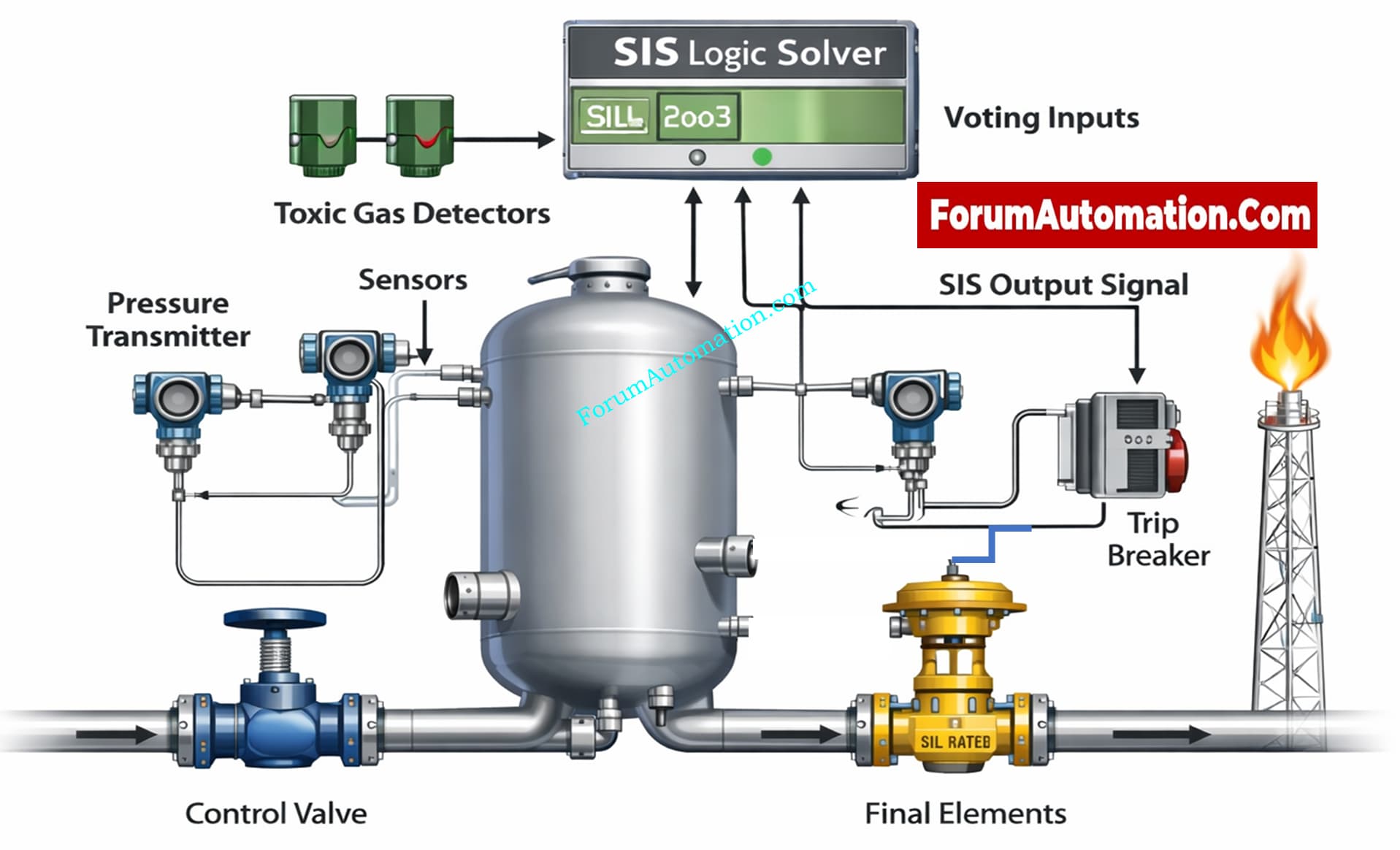
What is SIS in process safety
A Safety Instrumented System (SIS) is a separate layer of protection that automatically puts a process into a safe state when certain dangerous situations are found. Sensors, logic solvers, and final elements all work together in SIS to carry out Safety Instrumented Functions (SIFs). Every SIF reacts to a specific process change, such high pressure or high temperature, and takes steps to defend itself. SIS is said to have lowered the risk of the procedure to a level that is acceptable. The Safety Integrity Level given during hazard analysis and risk assessment operations determines how much risk is reduced. Sensors are good at finding unusual situations. The logic solver checks inputs and runs safety logic that has been accepted. Final parts, including shutdown valves, breakers, or trips, make the process safe within the time frame that is needed. SIS follos a functional safety lifecycle that starts with HAZOP and LOPA and goes through design, installation, commissioning, operation, and decommissioning. To keep the claimed safety integrity, proof testing and maintenance are necessary.
It is required that you are independent from the core process control system. Clear documentation of cause and effect, alert management, and bypass control enable operators comprehend safety actions without putting safety at risk. Bad SIS performance is typically the result of not proving testing, not managing bypasses correctly, or not keeping track of logic changes. It’s important to think about SIS as a dynamic safety system instead of a one-time endeavour. SIS isn’t just a piece of hardware or software. When normal control fails, it is a disciplined safety function supported by analysis methods and operational control that keeps people and facilities safe.