What is SIS and functional safety for IEC 61511?
What is SIS and functional safety for IEC 61511?
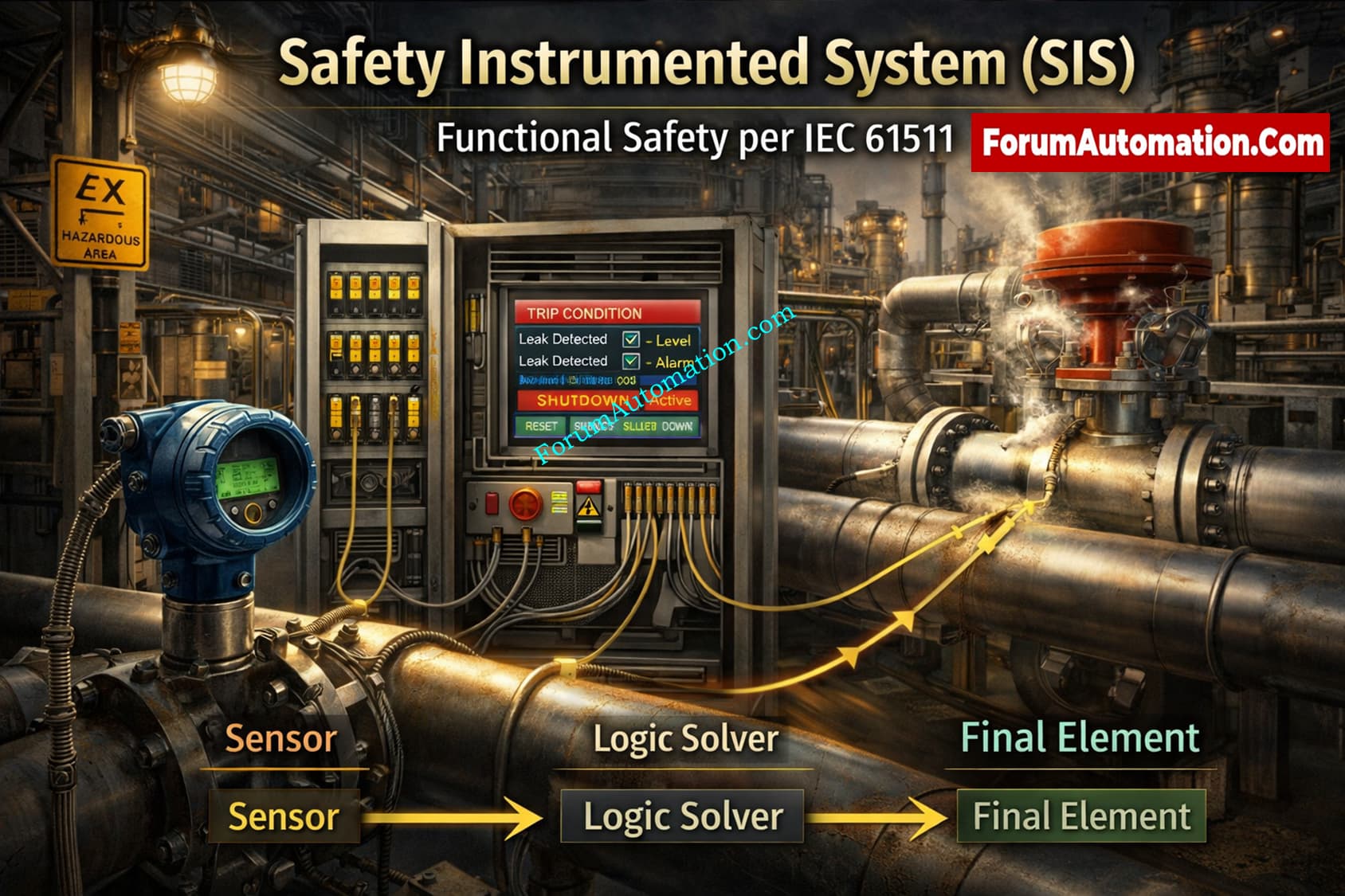
According to IEC 61511, a Safety Instrumented System (SIS) is the separate layer of protection that finds a risky process situation and shifts the plant to a safe state. It is not merely an alert or the basic control loop. Sensors, a logic solver, final elements, and the application software that goes with them are all common parts of a SIS.
Functional safety is the field that makes sure a system does its safety job right when it has to. That means that for a process plant, the safety function must act when the pressure, temperature, level, flow, gas, or fire goes above a certain level. IEC 61511 applies functional safety to process industry SIS across its entire lifespan, including hazard and risk assessment, Safety Requirements Specification, design, installation, commissioning, operation, proof testing, maintenance, and management of change.
In a real plant, for example, if a reactor could overpressure, the SIS may read a pressure transmitter, run a voting logic, and either trigger an inlet valve or shut down a pump. The process alarm can tell the operator, but the SIS does the automatic risk reduction.
It is a good idea to keep SIS separate from the core process control system, set a reasonable SIL based on a risk analysis, and check diagnostics, proof test intervals, bypass control, and bypass restoration. A lot of difficulties in the field are caused by not doing proof tests, not keeping good calibration records, annoying bypasses, or final element stiction. Even if the rationale looks good on paper, functional safety is at risk if the SIS can’t be tested or maintained effectively. During audits, the paperwork must match what is really going on in the factory and how things are done.