What is Rai and heartbeat technology?
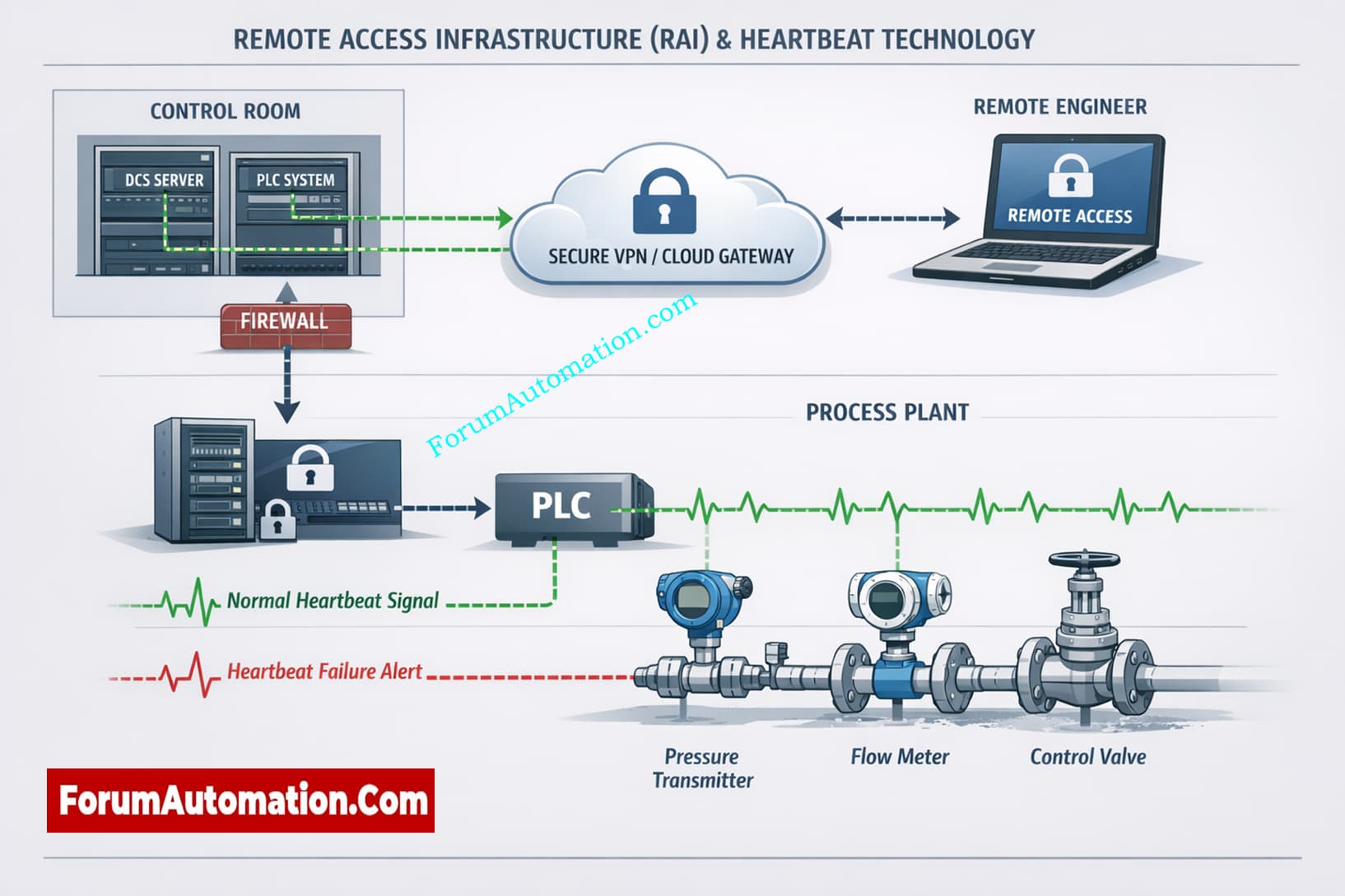
What is RAI and Heartbeat Technology?
In industrial automation, RAI (Remote Access Infrastructure) and Heartbeat technology are commonly used to make sure that systems are always available, that communication is secure, and that remote diagnostics are possible.
RAI (Remote Access Infrastructure)
RAI is a safe framework that lets you monitor, diagnose, and maintain industrial systems including PLCs, DCS, analyzers, and field equipment from a distance. It usually uses VPNs, firewalls, and authentication levels to let OEMs and plant engineers get to systems without having to be there in person.
RAI helps process industries cut down on downtime by making it easier to fix problems, update firmware, check parameters, and get professional advice, all while staying compliant with cybersecurity standards (IEC 62443).
Heartbeat Technology
Heartbeat technology is a way for automation systems, controllers, or smart field equipment to keep an eye on themselves and check their communication all the time. A “heartbeat” signal is sent back and forth between two devices, such as a transmitter and a PLC, a PLC and a DCS, or a server and a gateway.
The system will quickly know when there is a communication failure, device defect, or impaired performance if the heartbeat signal ceases or becomes irregular.
Heartbeat diagnostics can also check the health of sensors in newer smart equipment.
In modern smart instruments, heartbeat diagnostics can also monitor:
-
Sensor health
-
Electronics condition
-
Process anomalies
-
Verification status without removing the device from service
Why They Important Together
RAI and pulse technology work together to make predictive maintenance, faster problem identification, and remote condition monitoring possible. These are all very important for keeping continuous process plants like oil and gas, chemicals, and power safe, reliable, and running.