What is Load Flow Analysis in Power Systems?
Load Flow Analysis also known as Power Flow Analysis, is an essential power system study used to determine the steady-state operating conditions of an electrical network.
It calculates the following parameters based on the network configuration, load demand, generator operating conditions, and system parameters:
- Voltage magnitude and phase angle at each busbar.
- Active power (MW) and reactive power (MVAr) flow through transmission lines and transformers.
- Real and reactive power losses in the electrical network.
- Generator power output and bus voltage profiles.
- Power system loading and operating conditions.
Load flow studies are widely used in power system planning, transmission network analysis, substation design, voltage regulation, and electrical system optimization using software such as ETAP, PSS/E, and DIgSILENT PowerFactory.
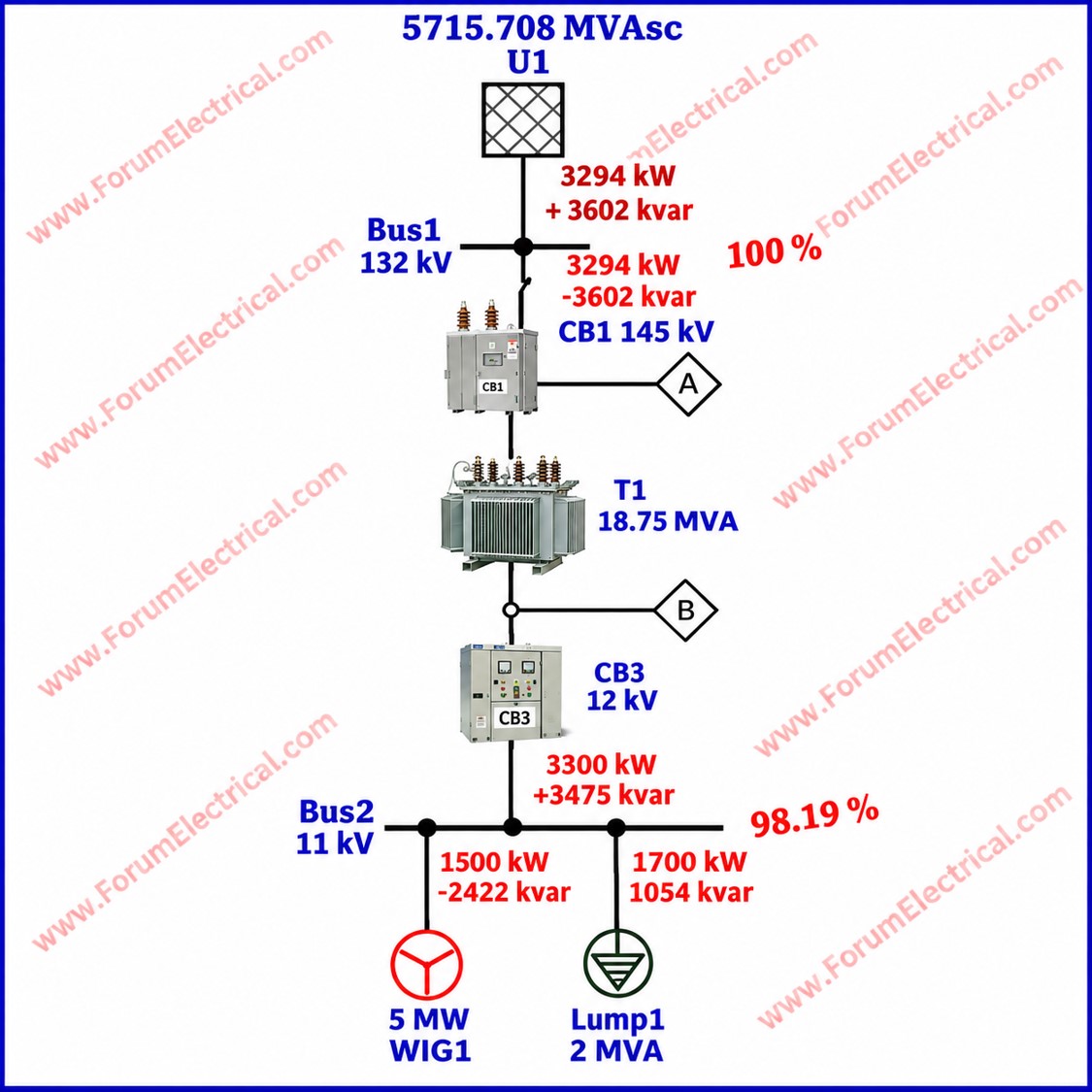
Common Load Flow Calculation Methods: Gauss-Seidel, Newton-Raphson, and Fast Decoupled Load Flow.