What is ISO 17025 calibration?
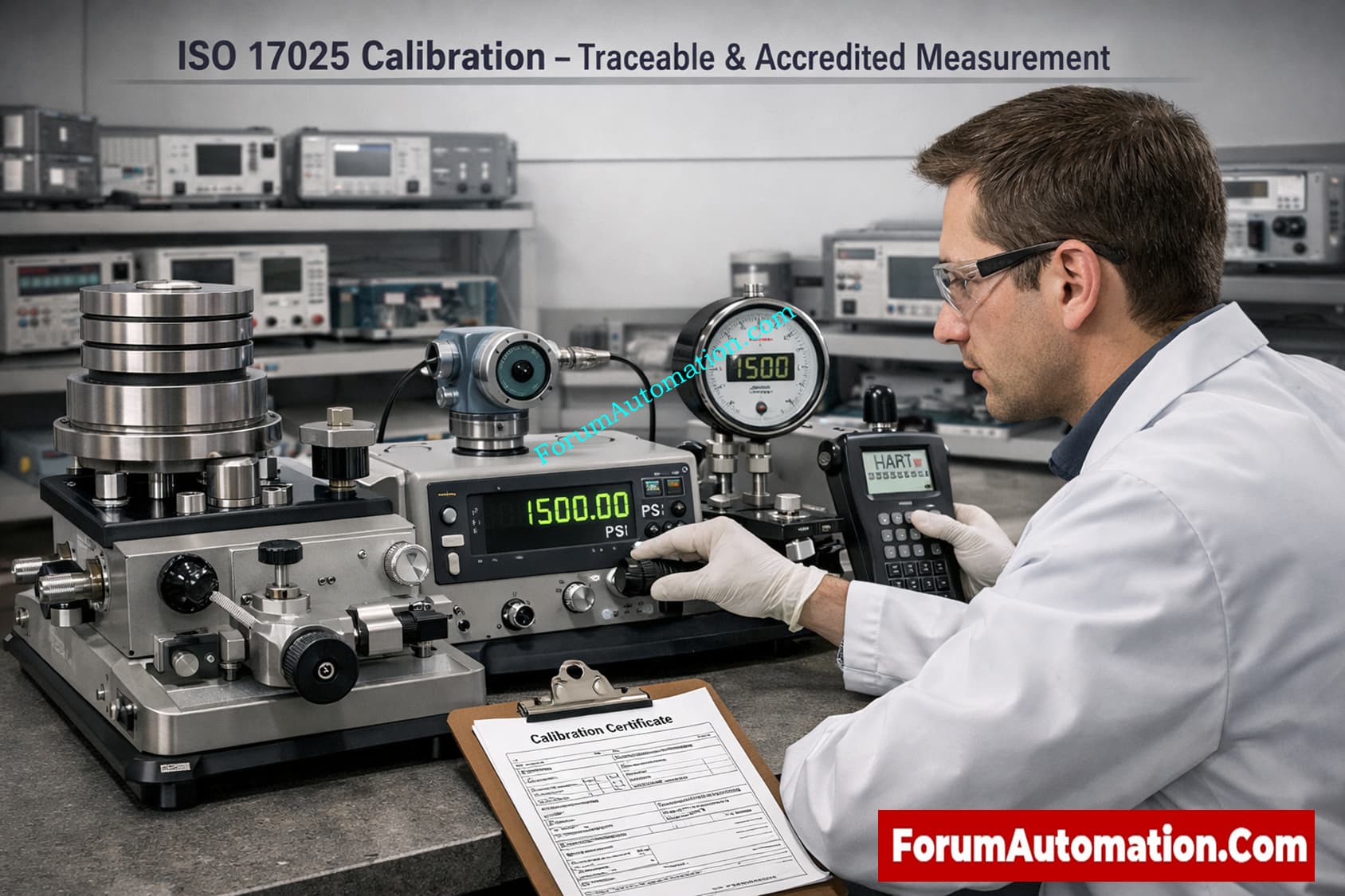
What is ISO 17025 calibration?
Quick definition
ISO/IEC 17025 is the global standard for testing and calibration labs to get certified. It sets standards for technical aspects such staff competency, calibration procedures, traceability, and uncertainty, as well as quality management, so that a lab’s calibration results are dependable and acknowledged around the world.
Why it matters in instrumentation
- Traceability: ISO 17025-calibrated equipment can be traced back to national standards like NMI.
- Measurement uncertainty: Uncertainty in measurement: labs must include uncertainty with each calibration certificate. This is very important for plant instrument acceptance criteria.
- Competence & impartiality: Auditors check the qualifications of workers, the equipment, and the procedures so that calibration reports can stand up to audits and investigations of incidents.
Practical plant scenarios
- For PSV set-point verifications, flowmeter calibrations, and safety instrument calibrations to meet regulatory or customer requirements, you must insist on ISO 17025 certificates.
- QA/QC audits: use written uncertainty to see how well an instrument works compared to the tolerances set for process control.
- Vendor calibrations: when vendors claim “NIST-traceable” ask for ISO 17025 scope and accreditation number.
Selection checklist for engineers
- Check the breadth of the accreditation and the MIC (method) coverage.
- Make sure the certificate has the date, measurement uncertainty, and technician ID.
- For field calibrations with documented environmental controls, choose ISO 17025 vendors who are located on-site.
ISO 17025 cuts down on rework, lowers the chance of disputes, and helps keep control loops working consistently, which is necessary for safe and efficient plant operation. Before accepting calibrations, always check the lab’s accreditation certificate and scope. For important safety devices, ISO 17025-accredited calibration with a known level of uncertainty is needed. This reduces plant downtime and helps with regulatory compliance and traceability checks.