What Is Fault Level Calculation in Electrical Systems and Why Is It Important?
Fault Level Calculations – Foundation of Safe & Reliable Electrical Systems
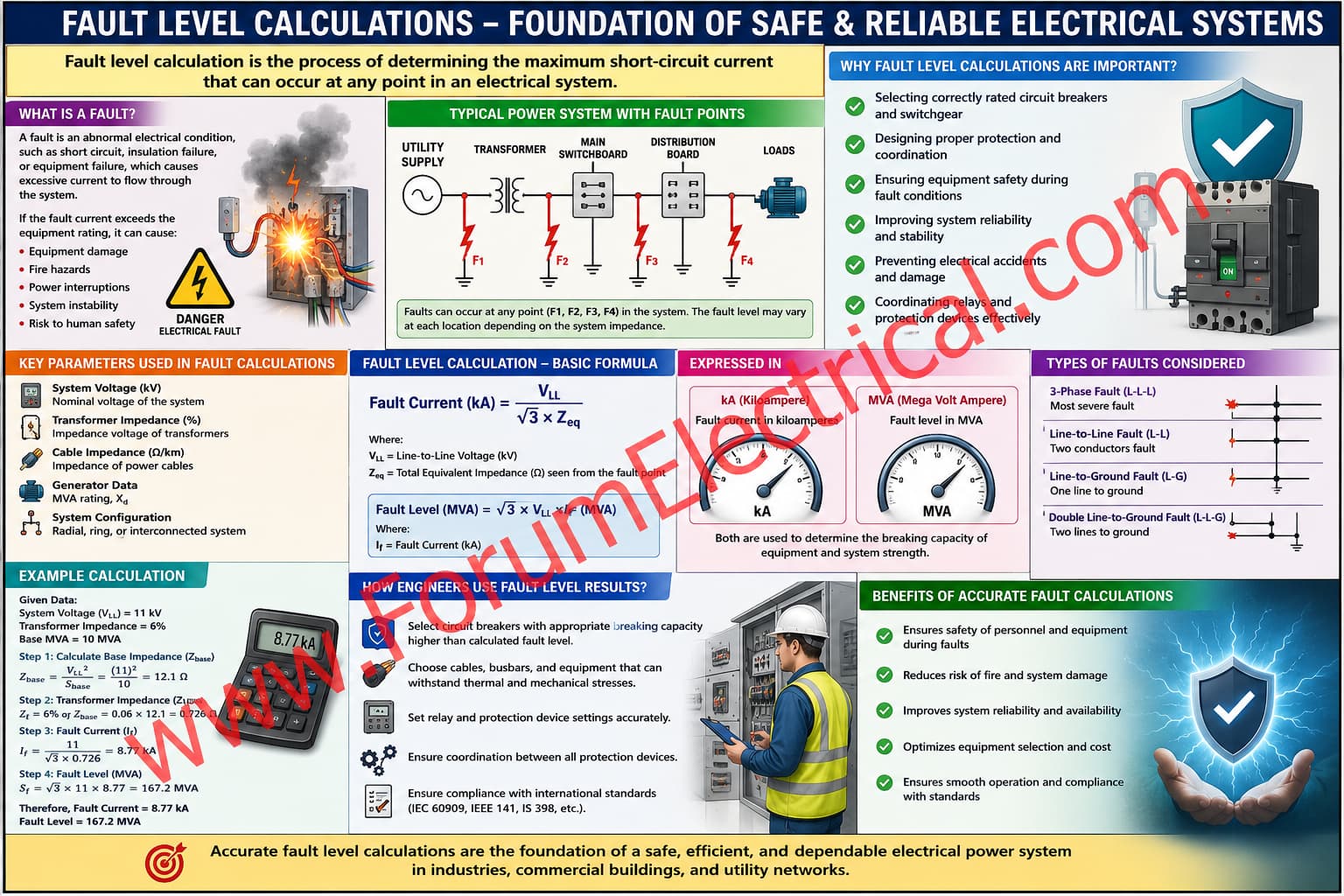
Fault level calculation is a critical part of electrical power system design used to determine the maximum possible short-circuit current at different points in an electrical network. These calculations help engineers choose the correct protective devices such as circuit breakers, relays, transformers, and cables to ensure safe, reliable, and efficient system operation.
A fault occurs when an abnormal electrical condition such as a short circuit, insulation failure, or equipment malfunction causes excessive current to flow through the system. If the fault current exceeds equipment ratings, it can lead to equipment damage, fire hazards, system failures and costly power interruptions.
Why Are Fault Level Calculations Important?
Fault level calculations are essential for:
Selecting correctly rated circuit breakers Designing effective protection systems Ensuring equipment safety during fault conditions Improving system reliability and stability Preventing electrical accidents and equipment damage Coordinating relays and protective devices effectively
The fault level is typically expressed in kA (kiloamperes) or MVA (Mega Volt-Amperes). Engineers calculate fault current using important parameters such as system voltage, transformer impedance, cable impedance, generator capacity, and network configuration to ensure accurate results.
Accurate fault level calculations form the backbone of a safe, dependable, and high-performance electrical power system in industrial plants, commercial buildings, substations, and utility power networks.