What is dust group IIIA, IIIB, IIIC?
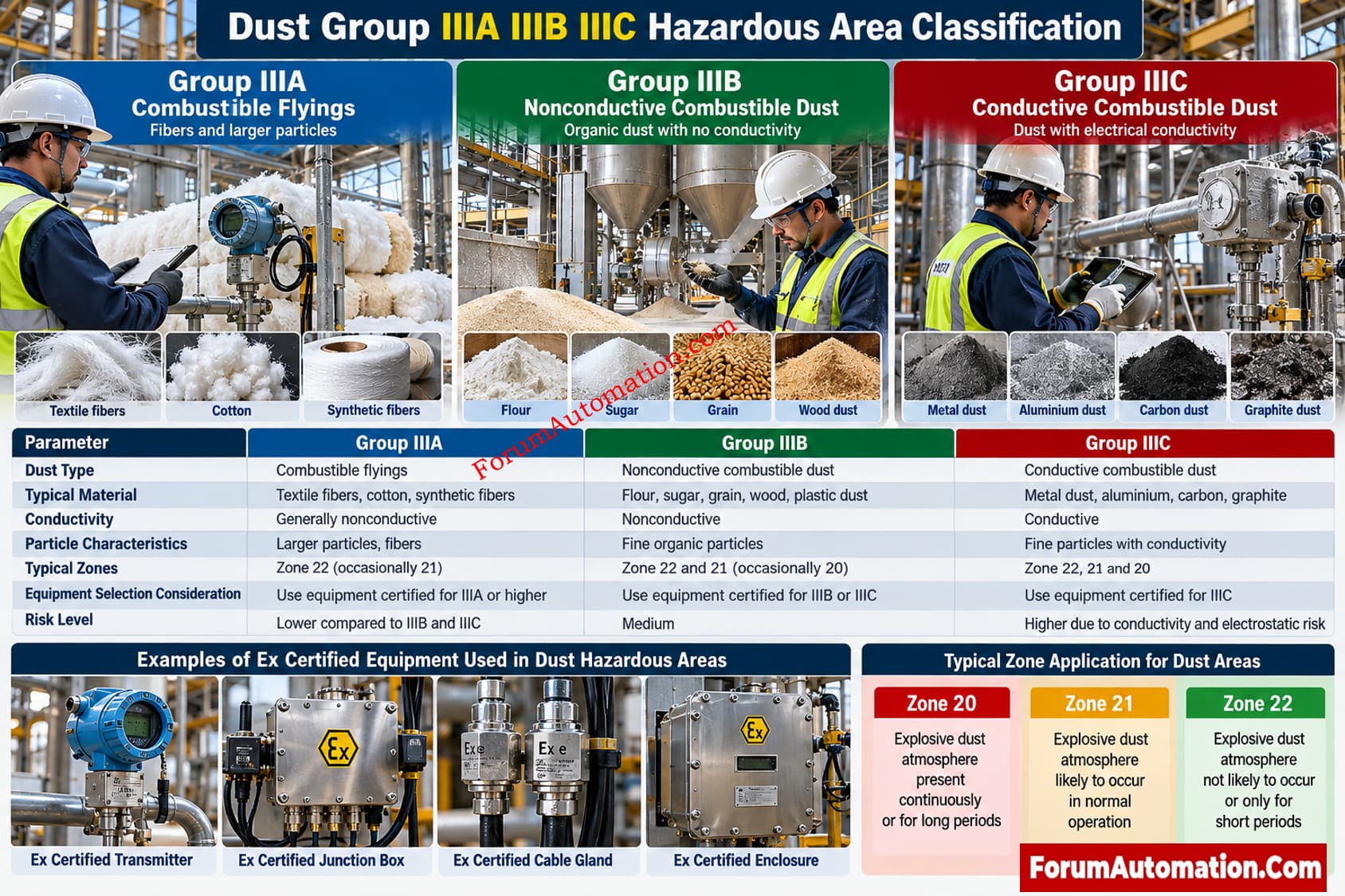
What is Dust Group IIIA, IIIB, IIIC?
Dust Group IIIA, IIIB and IIIC are IEC 60079 defined hazardous area ratings for flammable dust atmospheres. They decide what type of combustible substance it is and assist engineers in selecting electrical and instrumentation equipment.
Group IIIA
IIIA covers combustible flyings such as fibers and larger particles that can become suspended in air. Typical examples include textile fibers and similar lightweight combustible materials.
Group IIIB
IIIB covers nonconductive combustible dust. Common plant examples include flour, sugar, grain, wood and many organic powders. The dust is combustible but does not meet the conductivity criterion for Group IIIC.
Group IIIC
IIIC covers conductive combustible dust, which presents an additional electrical risk because conductive particles can create leakage paths or accumulate around electrical equipment. Typical examples include certain metal dusts.
Practical selection rule
Equipment certified for IIIC can generally cover IIIB and IIIA applications, while IIIB equipment should not automatically be used in IIIC areas. Selection also considers Zone 20, 21 or 22, equipment protection level, protection method, maximum surface temperature and specific dust characteristics.
For instrumentation engineers, do not select a transmitter, junction box, cable gland or enclosure from the dust group alone. Check the complete certification marking, including Ex protection type, EPL, temperature limitation and installation requirements for the specific installation properly.
In a plant, start with the area classification drawing and hazardous material data, then verify every instrument certificate before procurement and installation. This prevents costly certification mismatches during procurement, commissioning and hazardous area inspection.