What is Cage-guided Globe control Valve ?
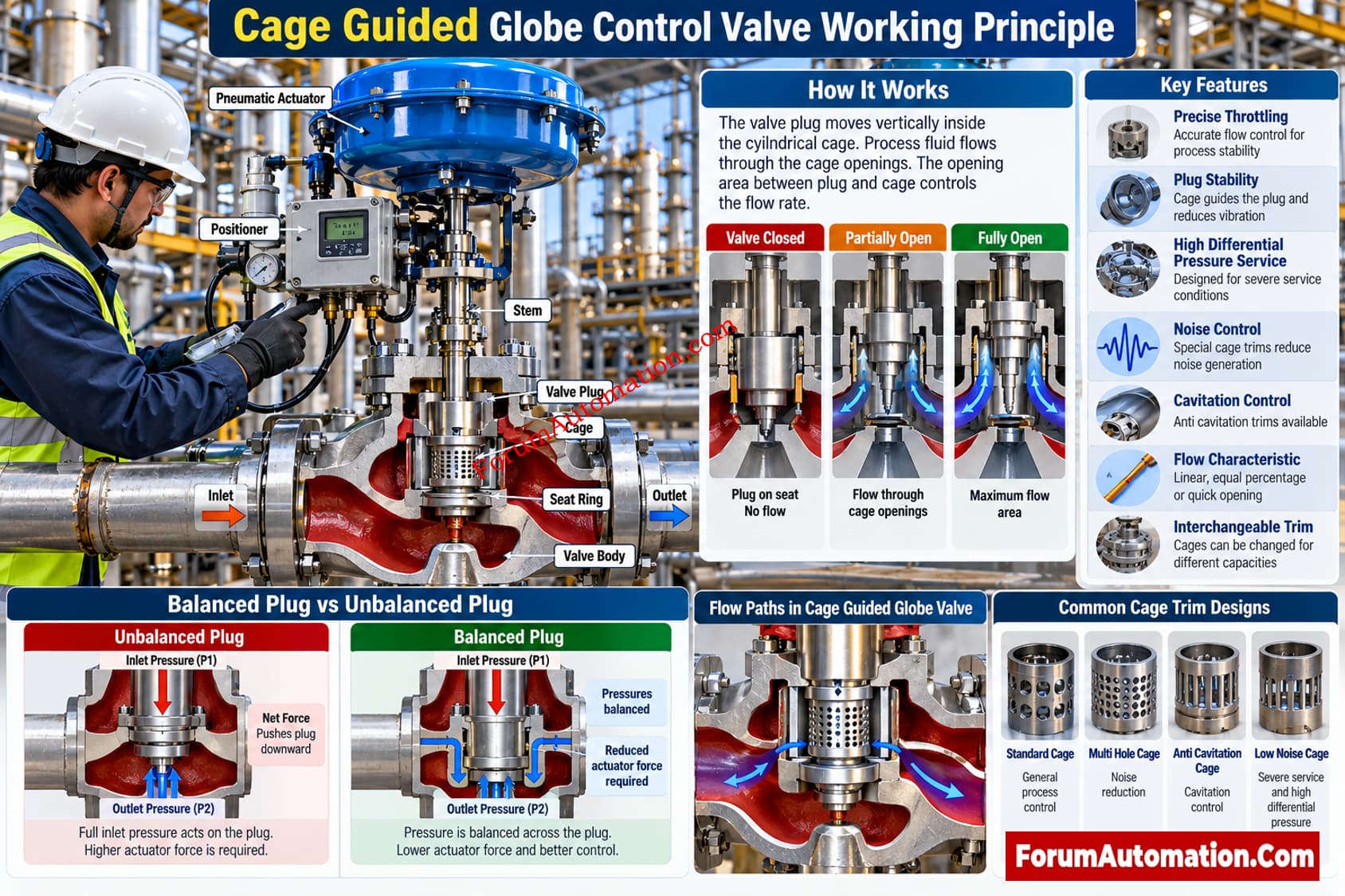
What is a Cage Guided Globe Control Valve?
A cage guided globe control valve is a linear motion control valve in which a cylindrical cage surrounds and guides the valve plug.
How it works
When the plug moves away from the seat, process fluid passes through the cage openings. The opening geometry determines valve capacity and flow characteristic. The cage keeps the plug aligned, reducing lateral movement and improving stability during throttling.
Why engineers use it
Cage guided globe valves are used for demanding process control applications because the trim can be engineered for specific operating conditions. Depending on design, the valve can use balanced or unbalanced trim. A balanced plug can reduce hydraulic force and actuator loading under high differential pressure.
Special cage designs can help manage noise, vibration and cavitation. Interchangeable cages can provide different flow capacities or characteristics.
Field selection points
Before selecting a cage guided control valve, verify:
- Normal, minimum and maximum flow rates
- Inlet and outlet pressure for every operating case
- Fluid temperature, density and vapor pressure
- Required flow characteristic
- Cavitation, flashing and noise risk
- Required leakage class and shutoff condition
During commissioning, unstable valve position, excessive noise or poor response should not automatically be blamed on the positioner. Check differential pressure, valve travel, trim condition, actuator sizing and flow direction.
The key point is that cage guided describes the guiding arrangement, not the complete valve specification. Final selection must match process duty, trim design, actuator and plant control requirements. The selected trim must also suit the fluid, pressure drop, temperature and expected operating range for reliable service.