What is ATEX 20 vs 21 vs 22?
What is ATEX 20 vs 21 vs 22?
Definition and Classification Basis
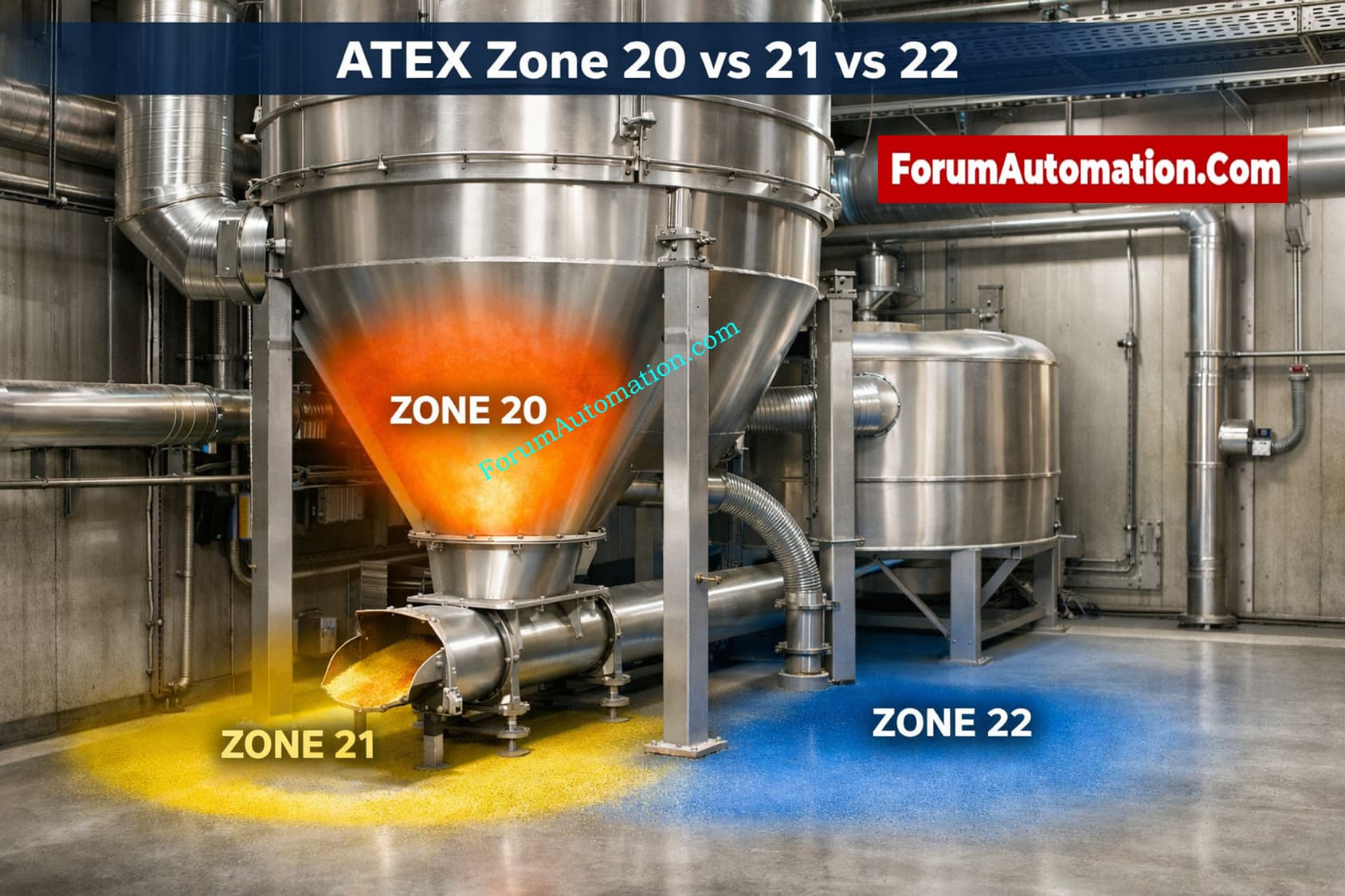
ATEX Zones 20, 21, and 22 identify dangerous dust settings based on how often and how long explosive dust clouds last. This categorization is based on IEC/EN 60079 standards and is necessary for choosing safe equipment and designing a plant.
Zone Comparison (Engineering View)
Zone 20 (Continuous Hazard)
- Dust cloud that is always there or there for a long time
- Usually found in things like mills, silos, and dryers
Zone 21 (Occasional Hazard)
- Dust cloud likely to form during typical use
- Found at transfer points, bagging stations, and places for inspections
Zone 22 (Abnormal Hazard)
- Dust only shows up when things are not normal and for a brief time.
- Areas where leaks happen, floors around them, and maintenance zones are some examples.
Key Design Considerations
Based on the grade of release: continuous, primary, or secondary
Influenced by:
- Ventilation effectiveness
- Dust particle size and explosibility
- Housekeeping practices
Equipment selection:
- Zone 20 → Category 1D
- Zone 21 → Category 2D
- Zone 22 → Category 3D
Practical Field Insights
- Internal equipment zones are frequently more important than external locations.
- Dust layers can get into the air and trigger secondary explosions, which are often worse.
- If equipment isn’t sealed well, gaskets are worn, or it is opened often, zoning can be improved.
Common Mistakes
- Not paying attention to dust building up on buildings and cable trays
- Using tools that haven’t been certified in Zone 21
- Not going back to zoning after modifications to the method or layout
Engineering Tip
Always check zoning against the actual circumstances of the plant. This is especially important in dusty process sectors like cement, pharma, and food processing, where design assumptions often don’t match up with how things work in real life.