What is an Interlocking Starter Control Circuit?
Understanding an Interlocking Starter Control Circuit is essential when controlling two motors or contactors that must never operate simultaneously. Electrical interlocking is a widely used safety and control technique that prevents conflicting equipment from running at the same time, protecting both personnel and electrical equipment.
This control circuit demonstrates how K1 and K2 contactors, START and STOP push buttons, thermal overload relays, holding (seal-in) auxiliary contacts, and normally closed (NC) interlocking contacts work together to ensure safe and reliable operation.
The NC auxiliary contact of each contactor is wired into the opposite contactor’s control circuit, creating an electrical interlock that blocks one contactor from energizing while the other is already energized.
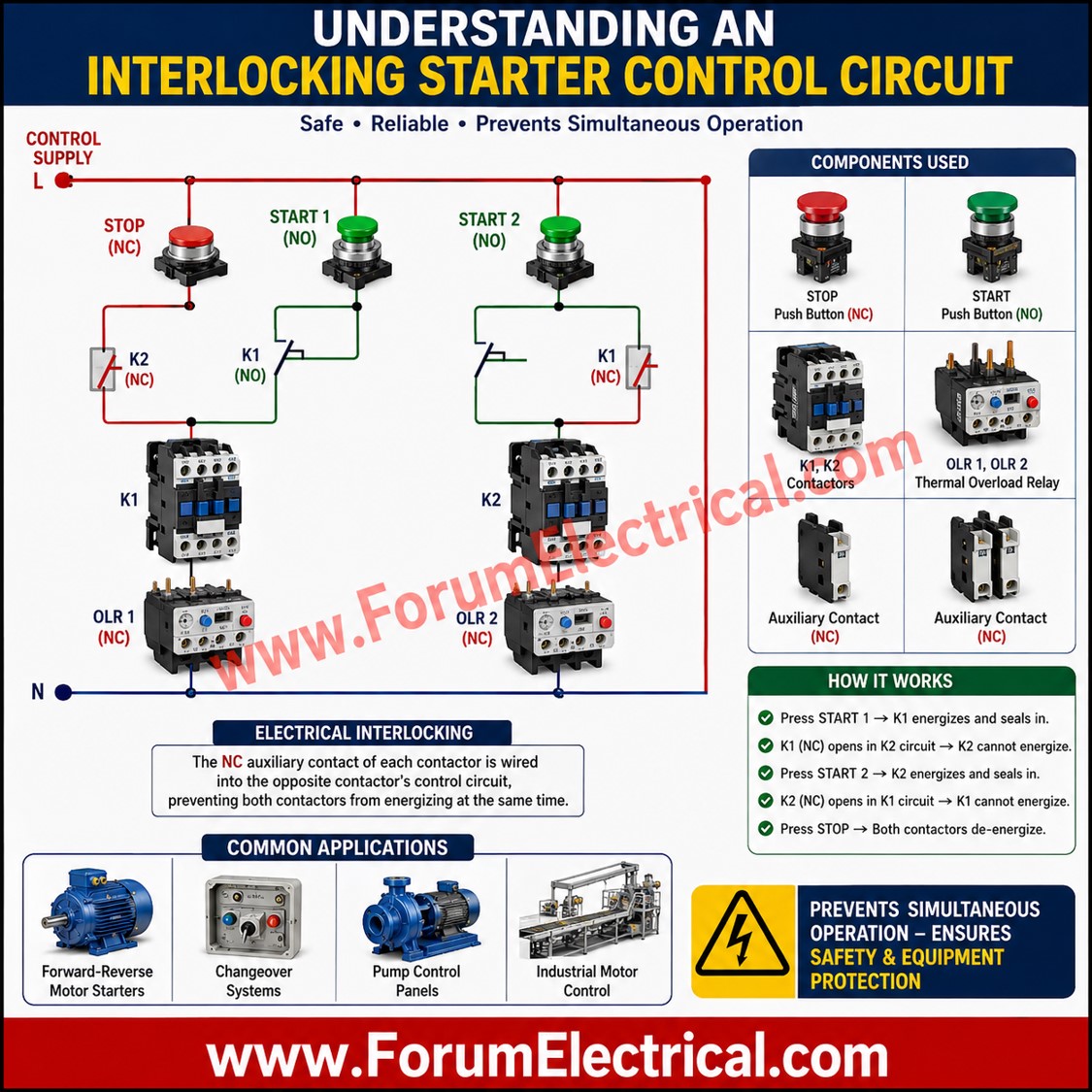
This type of circuit is commonly used in forward-reverse motor starters, changeover systems, pump control panels and industrial motor control applications, where preventing simultaneous operation is critical for safety and equipment protection.