What is an infrared analyzer?
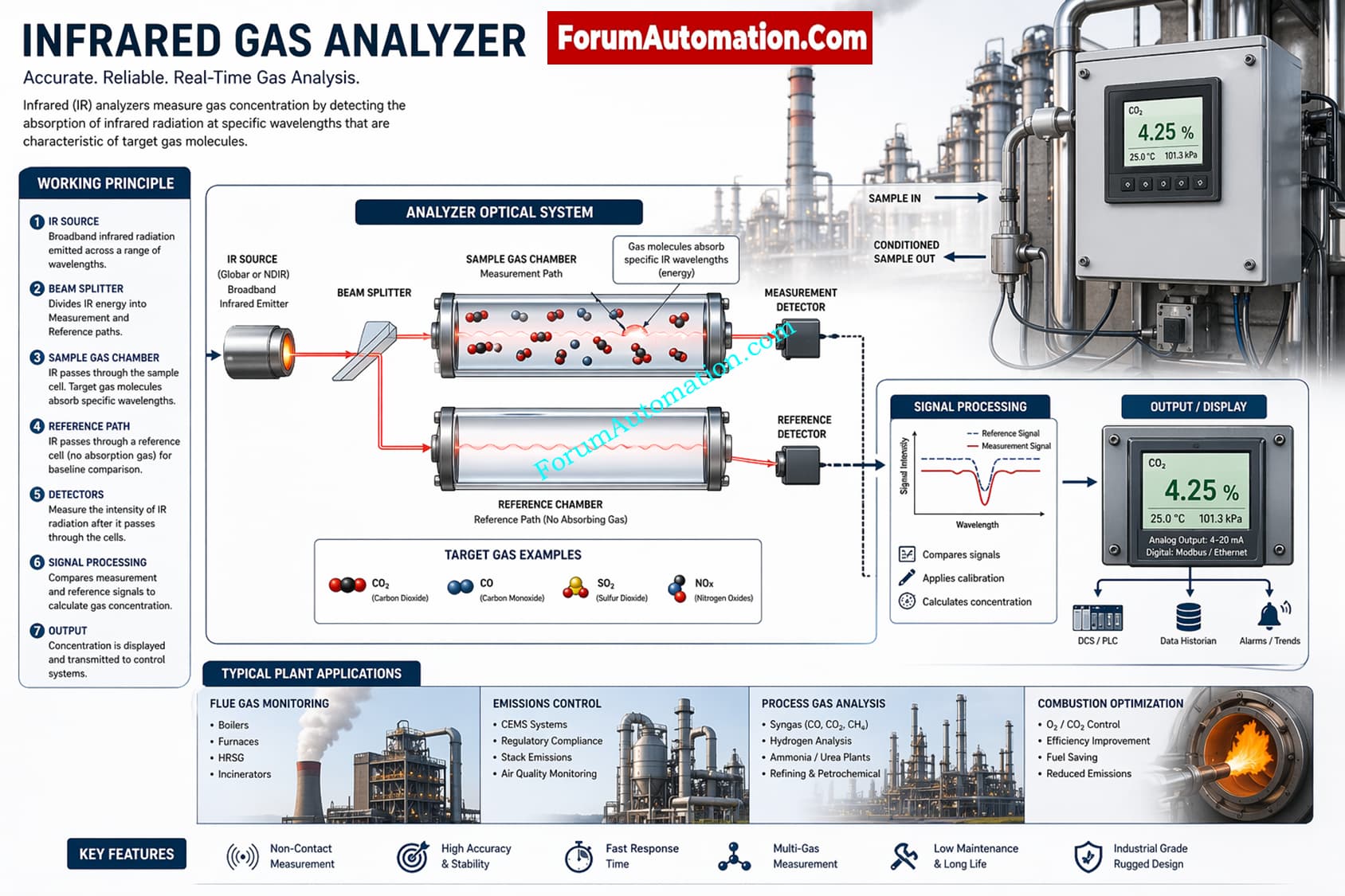
What is an infrared analyzer
Working principle
An infrared analyzer uses the fact that various gases absorb infrared light at different wavelengths to figure out how much gas is in the air. The sample gas goes through an optical route, the target gas takes in some of the energy, and the analyzer compares the signal that is left to a reference. Siemens calls this “molecular specific absorption of infrared radiation,” and Yokogawa calls it “tunable diode laser spectroscopy for process gas analysis.”
Industrial use
Infrared analyzers are used in process industries to keep an eye on combustion, manage emissions, and measure process gas. They are often used in hydrogen systems, boilers, furnaces, incinerators, and flue gas lines where readings need to be taken all the time. One reason they are so popular is that they can handle tough industrial work while still producing quick and accurate measurements when the optics and sample path are set up right.
Field meaning
Not only precision, but also the capacity to diagnose problems is the major benefit for maintenance staff. Dirty optics, damp sample gas, clogged lines, improper conditioning, or a calibration problem are all common reasons why the analyzer drifts. Sample conditioning, reaction time, gas interference, and whether the application needs extractive NDIR or in situ laser type measurement are the most important factors for EPC and commissioning teams to consider when choosing. Infrared analyzers are used in real life because they provide operators with reliable, continuous gas data for control, safety, and compliance.