What is an Earth Resistance Test? Why is it Important?
An Earth Resistance Test is an electrical safety test used to measure the resistance between an earthing system and the surrounding soil.
It verifies that the grounding system provides a low-resistance path for fault currents, ensuring the safe operation of electrical installations and protecting people and equipment from electric shock.
Purpose
The main objective of an Earth Resistance Test is to confirm that the grounding system complies with applicable standards and can safely dissipate fault currents and lightning energy into the ground. A properly maintained earthing system improves equipment reliability and enhances overall electrical safety.
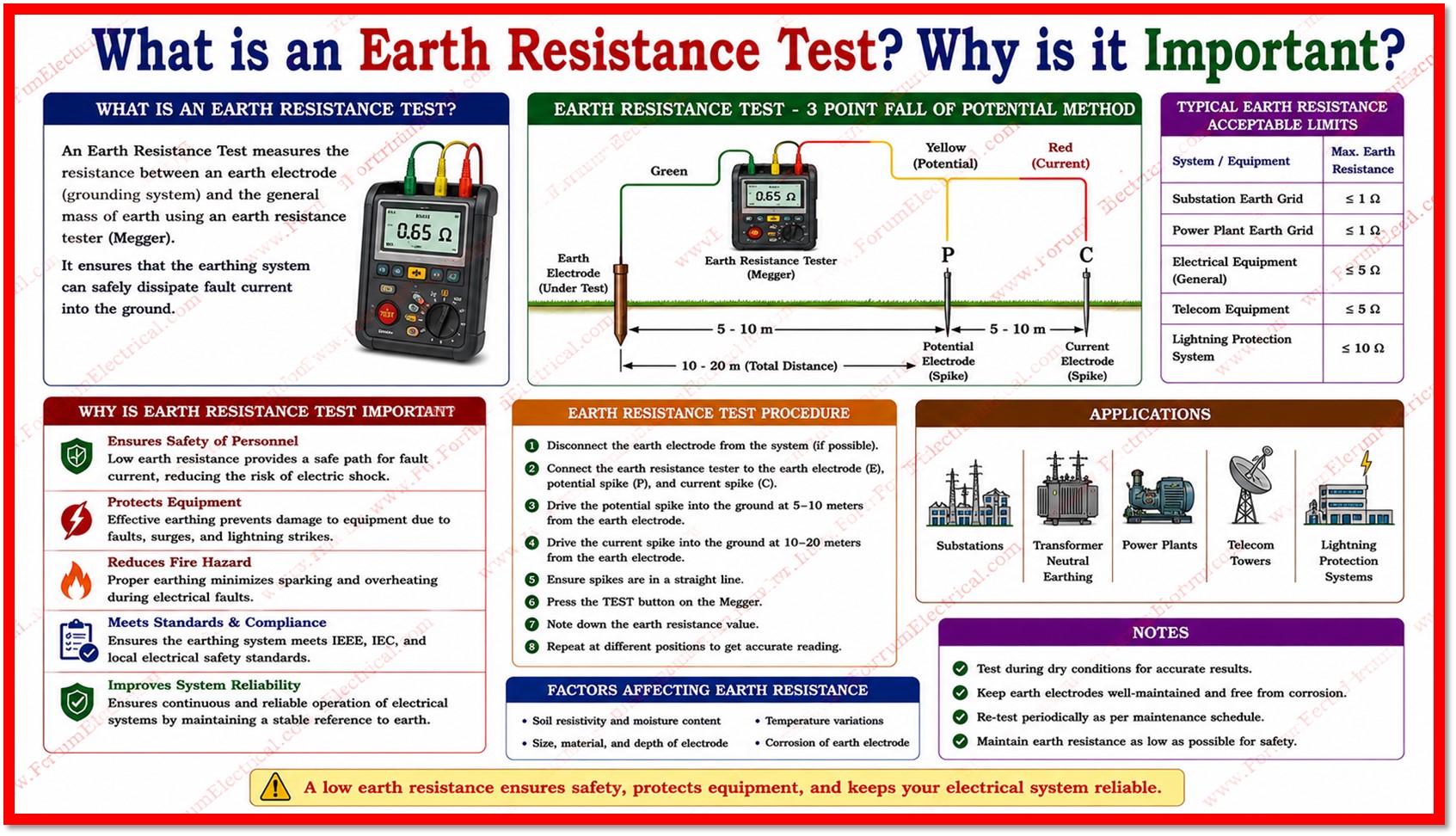
How the Test is Performed?
The test is typically carried out using an earth resistance tester with methods such as the three-point (fall-of-potential), four-point, or clamp-on testing technique. The measured resistance value is compared with the project specifications or applicable standards to determine whether the grounding system is performing effectively.
Importance
Regular Earth Resistance Testing helps detect deterioration, corrosion, loose connections, or changes in soil conditions that can reduce grounding effectiveness. It is an essential part of commissioning, preventive maintenance, and periodic inspections for substations, industrial plants, commercial buildings, and renewable energy installations.