What is a safety PLC used for?
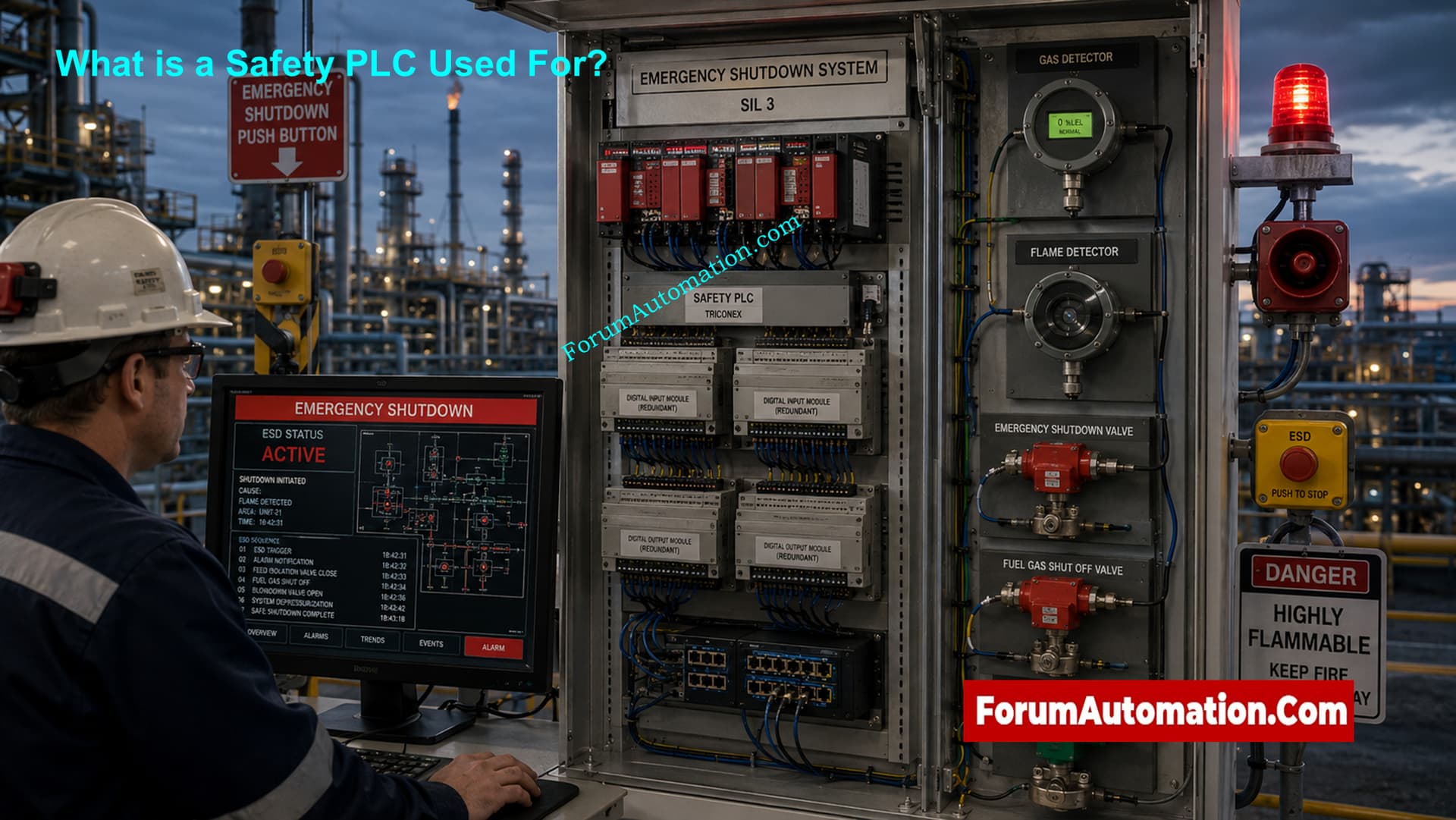
What is a Safety PLC Used For?
A safety PLC is a specialized programmable logic controller designed to perform critical safety functions in industrial automation systems. Unlike standard PLCs, safety PLCs are specifically built to meet international functional safety standards such as IEC 61508 and IEC 61511. Their primary purpose is to reduce the risk of accidents, equipment damage, and hazardous process conditions in industrial plants and machinery.
Safety PLCs are commonly used in applications where human safety and process protection are extremely important. They monitor safety devices such as emergency stop push buttons, safety light curtains, gas detectors, pressure switches, flame detectors, and safety interlocks. When an unsafe condition is detected, the safety PLC quickly takes action by shutting down equipment, isolating hazardous processes, or activating alarms and protective systems.
Industries such as oil and gas, chemical processing, power generation, pharmaceuticals, manufacturing, and mining heavily rely on safety PLC systems. Common applications include emergency shutdown systems (ESD), burner management systems (BMS), fire and gas systems, turbine protection, machine safety control, and boiler protection systems.
One major advantage of safety PLCs is their built-in redundancy and self-diagnostic capability. They continuously monitor their internal hardware and software to ensure reliable operation. Even if a fault occurs within the controller, the system is designed to move the process into a safe state.
Modern safety PLCs can also integrate with DCS, SCADA, and standard PLC systems for centralized monitoring and control. Their ability to provide reliable, fail-safe operation makes them an essential part of modern industrial safety and automation strategies used across high-risk industrial environments.